

TL;DR
Are social media lead gen ads worth it for HVAC and plumbing contractors?
Yes, but only if your follow-up is fast. X's revived lead gen ads and Meta's Instagram auto-DM tools create lower-cost, less-saturated lead channels compared to Google. Social leads are intent-adjacent, not intent-driven — they convert when you respond in minutes, not hours. Lock in your Google foundation first, then test one social channel with a narrow geography and a specific offer.
Google Local Services Ads costs more every quarter. The HVAC shop two zip codes over that started testing Facebook lead ads in 2024 is paying less per booked job than you are right now. Two new channels just opened up that most contractors haven’t touched yet.
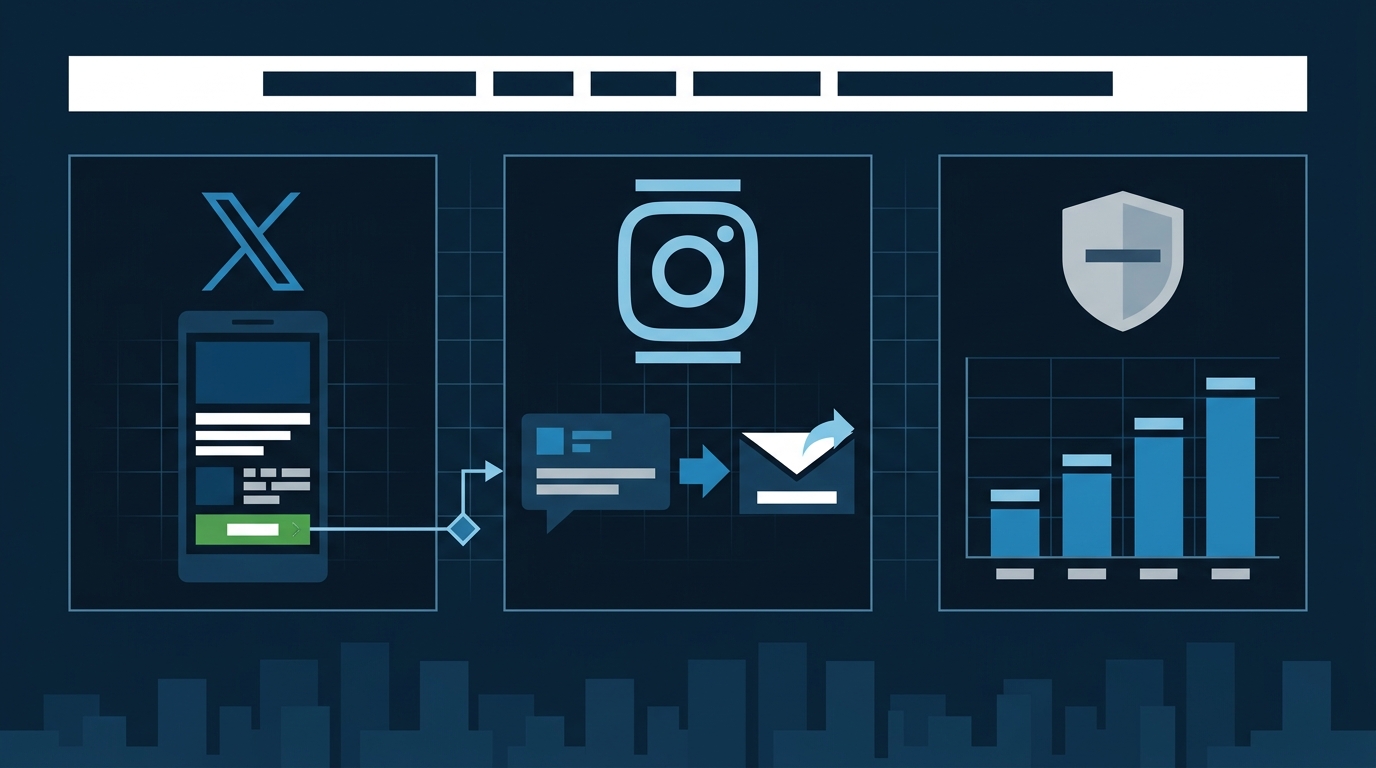
X — yes, formerly Twitter — revived its lead gen ad format in late August 2026. And Meta is testing auto-DM response for Instagram ad comments, which is a different kind of lead-capture move but points in the same direction. Social platforms are building the plumbing to capture contractor leads directly inside the app — no landing page, no form abandonment, no redirect.
Whether that’s worth your ad budget depends on one question: can your operation respond fast enough to make it matter?
What X’s Lead Gen Ads Actually Do
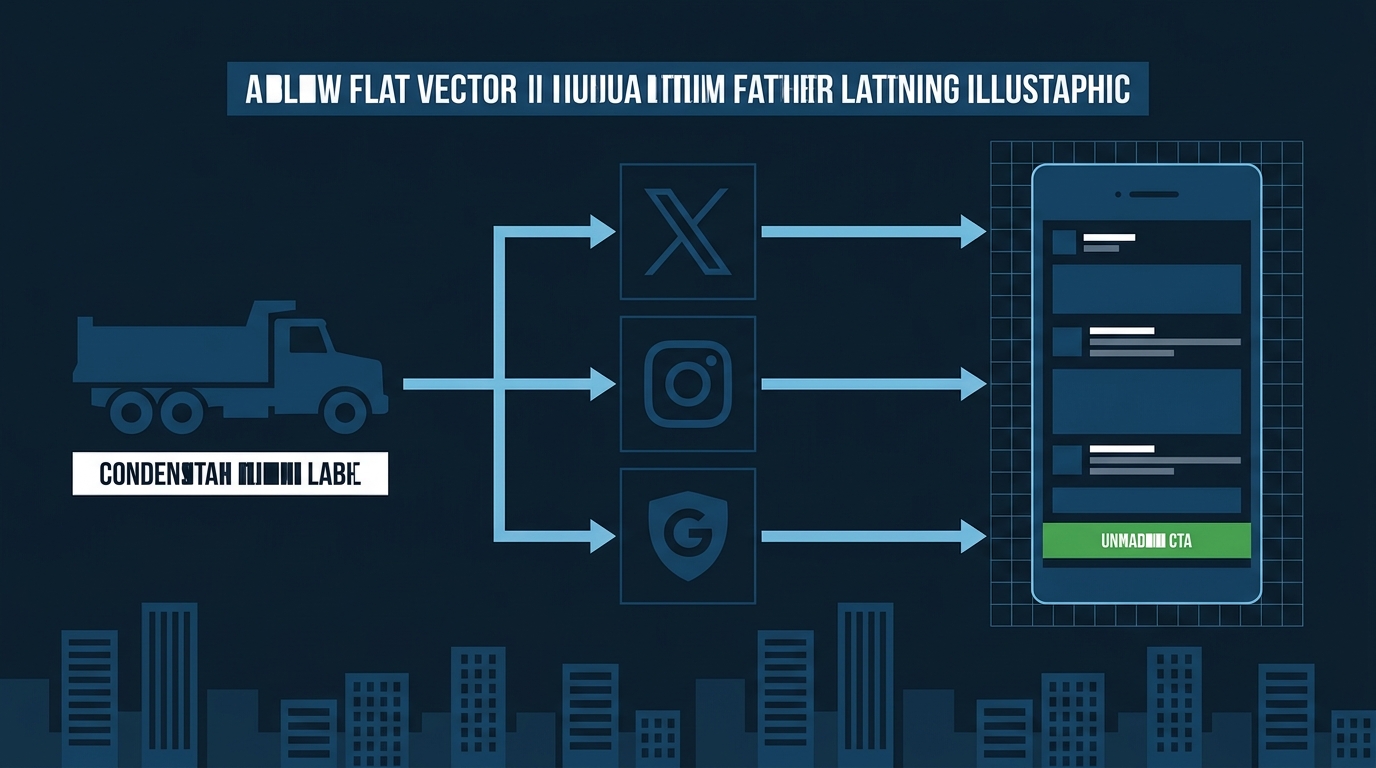
Twitter killed this format in 2016. X brought it back, and the mechanic is simple: a colored call-to-action bar runs along the bottom of your promoted post. A user taps it. A native form opens inside X — pre-populated with their information from their profile. They submit. You get the lead without them ever leaving the app.
According to X, after a user’s first submission, subsequent forms auto-fill their details, which cuts the drop-off that comes from redirecting someone to an external page and making them retype everything. The format supports image, video, and carousel promotions, and X says it’s built for booking appointments, capturing quote requests, and growing contact lists.
For a roofing company in Pasadena or an HVAC shop in Whittier, “capture quote requests” is the use case. Someone sees your truck-wrap photo in their feed, taps the bar, and their name and email are already in the form. One more tap and they’ve asked for a quote.
The catch: X’s user base has historically skewed toward news, politics, and tech — which means homeowners in the San Gabriel Valley aren’t necessarily scrolling at 9pm when the AC dies. But that’s not the only scenario where this works. Awareness plays — showing your brand to homeowners in your service area before they need you — are cheaper on X than on Google, and a low-friction lead form changes the math on what “cheap awareness” can actually return.
What Meta’s Auto-DM Feature Opens Up for Instagram
This one is subtler but potentially more useful for trades that already run Instagram ads.
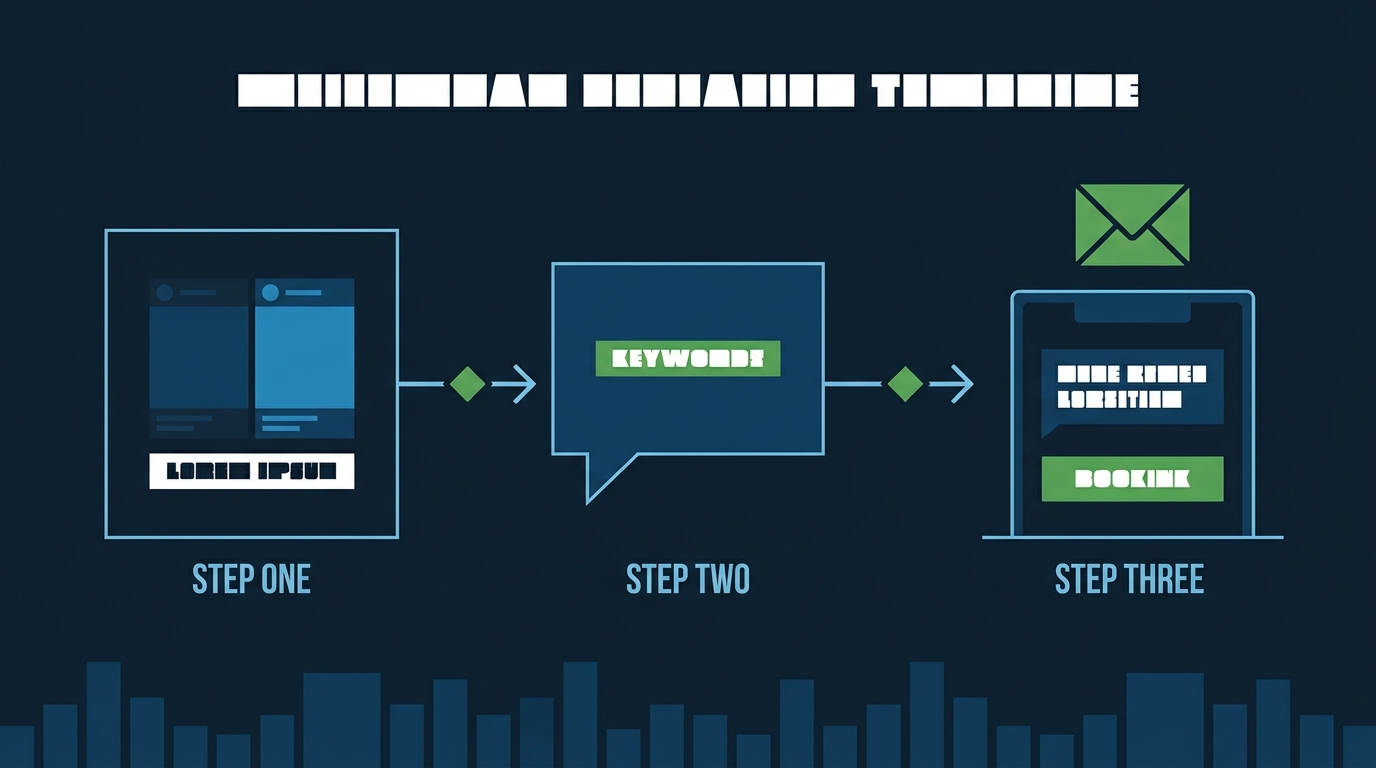
Meta is testing a “Reply to Keywords” option in Instagram ad setup. You pick up to five keywords. When someone comments one of those keywords on your promoted post, Meta automatically sends them a DM with whatever message you’ve written. The lead nurturing starts without you touching anything.
Picture a before-and-after video of a panel upgrade you just finished in Alhambra. Your ad caption says “Comment QUOTE for a free estimate.” A homeowner in Monterey Park comments it. They get an instant DM with your booking link. You get a warm lead who self-identified interest, with zero manual response time.
Inbox automation has long been available inside Meta’s own tools — what’s new here is having it directly wired to ad comments without a separate setup. It lowers the barrier to running a lead-nurturing loop on Instagram without needing a full tech stack behind it.
The Real Question: Are These Leads Any Good?
Leads from social are intent-adjacent, not intent-driven. Someone searching “emergency plumber Whittier” on Google has a burst pipe. Someone tapping your X lead gen ad saw something interesting while scrolling. Those are different buyers at different moments.
That doesn’t make social leads worthless. It means they need faster, better follow-up. A lead that comes in at 7pm and gets a call at 9am tomorrow is a dead lead. A lead that gets a text in under two minutes has a real shot at converting.
This is exactly where most contractors lose the game. They run the ad, they collect the form, and then the lead sits in an inbox until someone checks it. If you’re going to test X lead gen ads or Instagram auto-DM campaigns, the follow-up infrastructure has to be ready before you spend a dollar on the ad.
Our lead management and automation service handles this specifically — missed-call text-back, instant follow-up by text and email the moment a form submits, and a unified inbox so no lead from any channel falls through. That’s the piece that makes social lead gen actually work for a trades business.
How to Think About This Alongside Your Google Spend
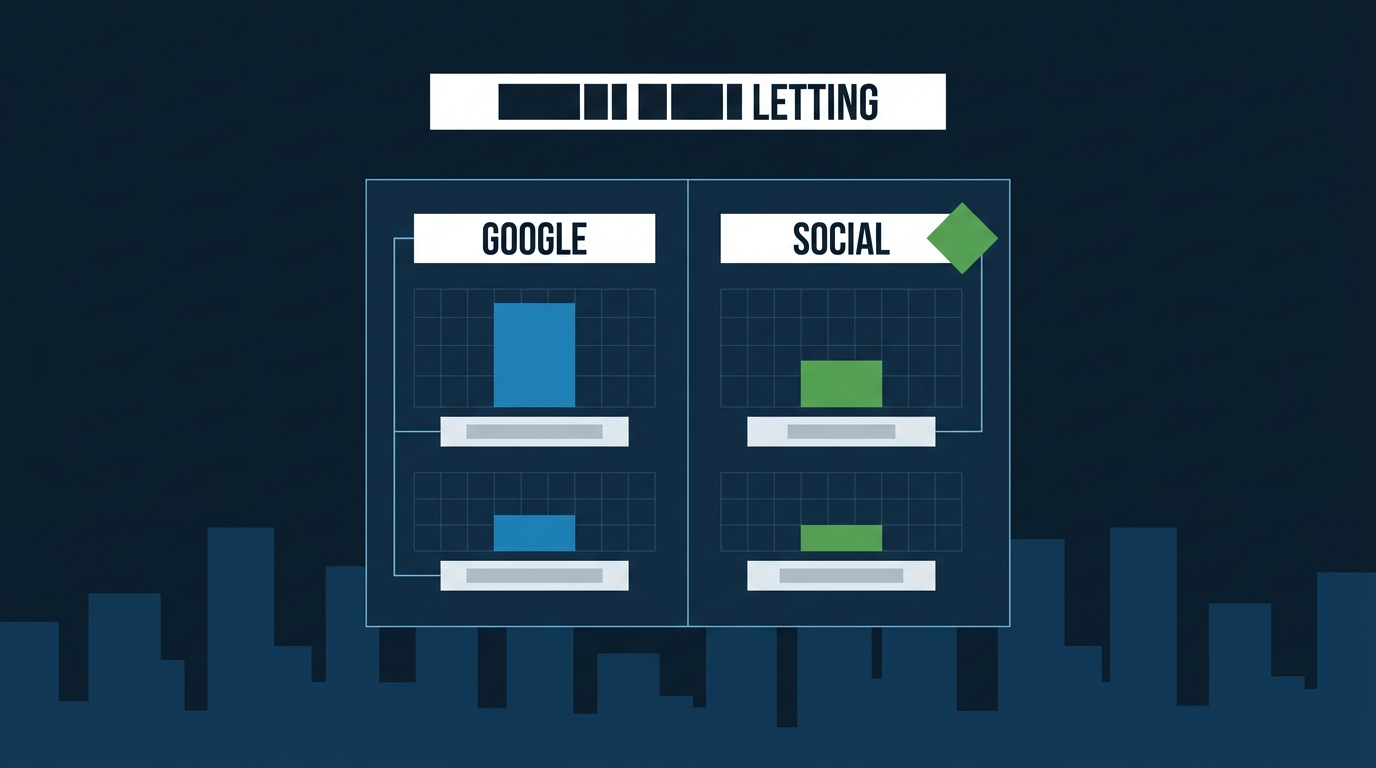
Google Local Services Ads still produces the highest-intent leads in local search. Someone who finds you through the Google Verified badge on a “HVAC repair near me” search is ready to book. Don’t pull budget from that to experiment on X.
But if you’re already running Google Ads or Local Services Ads and you have capacity to handle more leads, social platforms are less saturated right now. HVAC contractors in competitive markets are paying well over $50 per click on Google — a known industry reality that’s been climbing for years. The ones bidding on those keywords in Pasadena are probably not running X lead gen ads yet. That gap doesn’t last forever.
The playbook looks like this:
Lock in your Google foundation first. Your Google Business Profile, your reviews, and your Local Services Ads presence are the non-negotiables. A homeowner who finds you on social will almost always Google you before calling. If your GBP looks thin or your reviews are stale, the social ad spend is wasted.
Test social with a narrow geography and a specific offer. Don’t run a broad “we do HVAC” campaign. Run a “free AC tune-up estimate, Whittier and Pico Rivera homeowners” campaign with a clear image and a tight lead form. One city. One offer. Measure cost per lead against your Google baseline.
Build the follow-up before the campaign goes live. Text-back within two minutes, a booked call or appointment as the next step, and a clear handoff to your field team. If that isn’t in place, the leads will rot.
Watch the lead quality over 30 days, not 7. Social leads often take longer to convert. Someone who submitted a quote request on X might book three weeks later when their AC finally gives out. Track the full cycle before you judge the channel.
Monday Morning Move
Pick one — but go in with a real setup, not a half-built campaign.
For X: set your campaign objective to Lead Generation, geo-target by zip code in your top two service cities, layer in homeowner interest targeting, and keep the form to three fields only — name, phone number, and service type. Anything longer kills completion rates.
For Instagram: choose a single trigger word (QUOTE or ESTIMATE works well), and make sure the auto-DM that fires contains a direct booking link — not a “we’ll be in touch” message. Warm leads go cold fast when the next step is vague.
Before either goes live, make sure your follow-up is automated. Run your current lead response setup through our free Lead ROI Calculator to see what a faster response time and a second channel would actually mean for your monthly booked jobs. The math usually makes the case faster than any ad platform will.
The contractors who test X and Instagram lead gen in the next six months will pay a fraction of what latecomers pay in 2027. That window is the whole argument.