

TL;DR
Does my service page copy still matter if AI agents are reading my schema and feeds?
Yes. Schema and feeds are incomplete—they can't convey trust, guarantees, or the specific details that turn a visitor into a caller. Well-written, structured service pages fill those gaps for both human readers and AI systems, and pages with clear headings and lists earn more AI citation credit than bare text.
Someone’s going to tell you — maybe your web guy, maybe a marketing consultant — that your HVAC or electrical service pages don’t need real copy anymore. “AI reads your schema and your feeds now. Just make sure those are clean. The copy doesn’t matter.”
It’s a tidy argument. It’s also wrong, and believing it will cost you jobs.
The Feed-and-Schema Myth, Unpacked
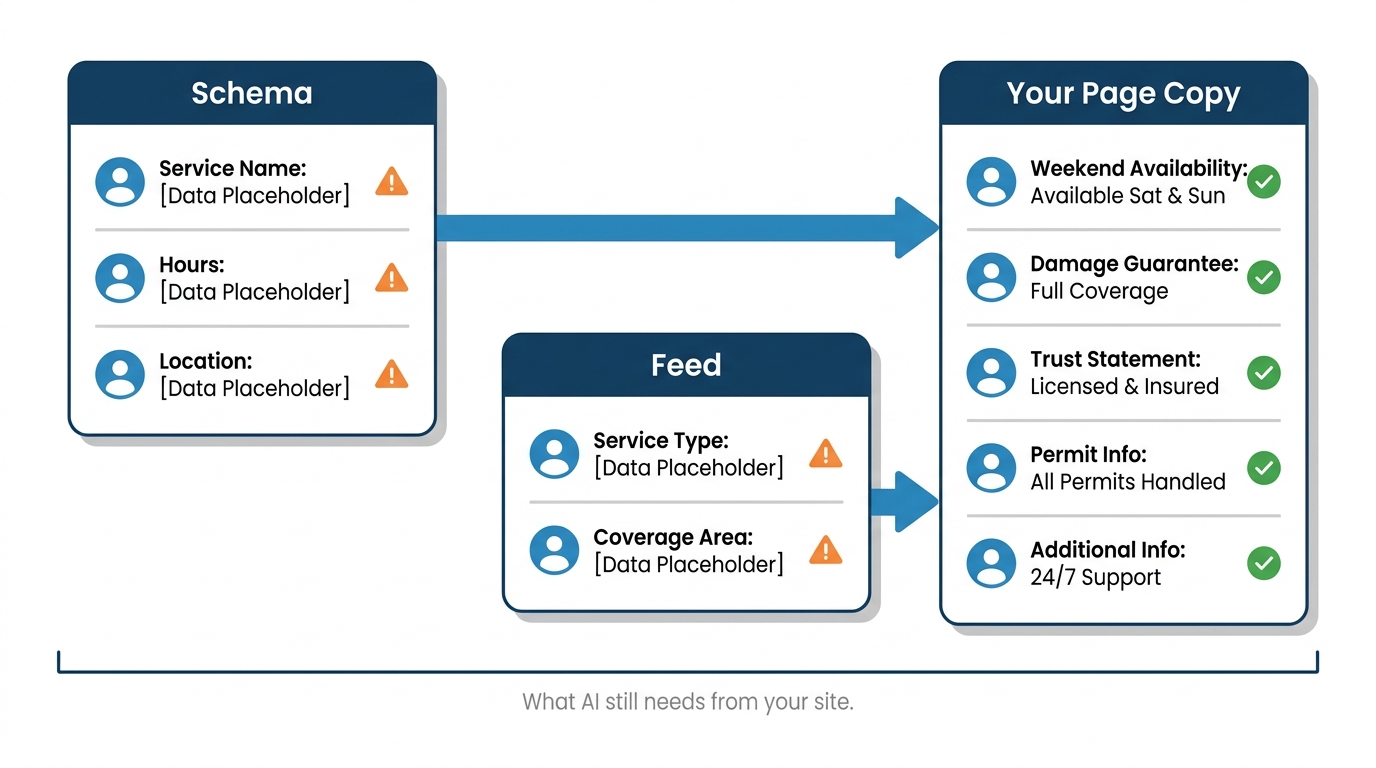
Here’s the logic behind the claim: AI agents like ChatGPT and Perplexity scrape structured data and service feeds to pull facts about your business. So if your schema says you do AC installation in Pasadena and your hours are correct, why does it matter what your service page actually says?
Because schema is incomplete on many sites, or contains errors, so AI systems need other sources to validate what they find in structured data. The feed says you do duct cleaning. The schema says you serve the San Gabriel Valley. But neither one says whether you show up on weekends, what happens if the tech damages something, or why a homeowner in Whittier should trust you over the three other HVAC companies ranking nearby.
That gap is where your copy lives — and where your competitors who stripped their pages down to schema are losing.
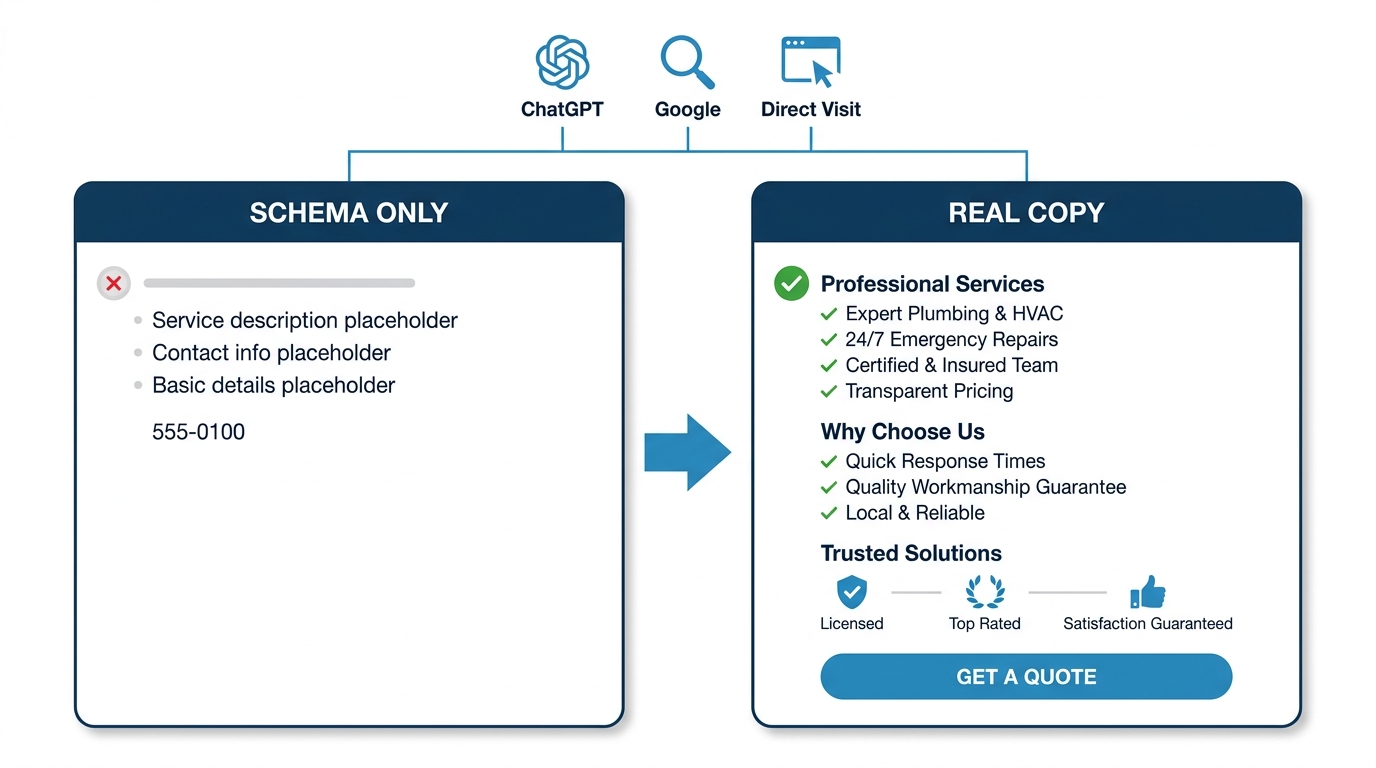
AI Is One Channel. Your Page Has to Work for All of Them.
Think about how a homeowner in Glendale actually finds a roofer after a storm. They might ask ChatGPT first. Then they search Google. Then they click two or three results and read. Then they check reviews. Then they go back to one of those sites and call — or don’t.
At every stage after the AI answer, your page is doing the selling. And AI is still in its infancy and cannot currently support a business on its own — people still visit websites directly, follow PPC links, watch YouTube reviews, and respond to email lists. A homeowner who got your name from ChatGPT still lands on your site and makes a judgment call in about eight seconds.
If your service page is a sparse list of bullet points and a phone number, that judgment goes against you.
Adam Riemer, writing for Search Engine Journal, put it plainly from personal experience: he researched a travel jacket across five companies, and three had lackluster website experiences that made it easy to narrow down to two. Those three felt like knock-off companies — nothing human about the content, key details missing. He eventually bought from Amazon because the brand’s own site lacked trust signals like a clear return policy. The brand lost the direct sale not because AI ignored them, but because their page didn’t close.
For a roofing contractor in Burbank, the stakes are higher. The homeowner isn’t buying a jacket — they’re deciding who to let on their roof. The page copy is your pitch, your handshake, and your proof that you know what you’re doing.
Structured Copy Gets Cited More by AI — Not Less
Here’s the part that should flip the whole “copy doesn’t matter” argument on its head.
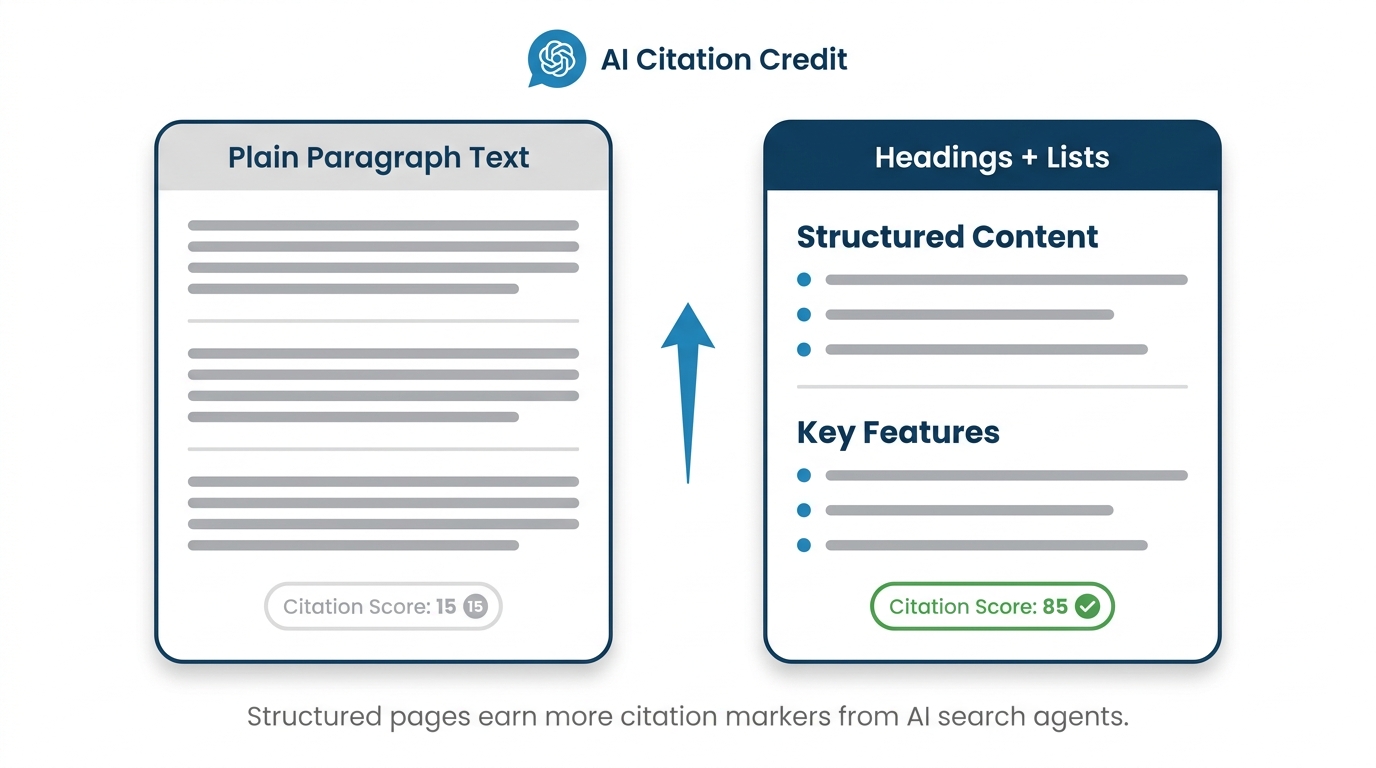
Search Engine Journal reported on research testing whether formatting changes affected how often AI search agents cited a source. The finding: pages rewritten with headings and lists received more citation markers per answer compared to the same pages written as plain paragraphs.
More citation credit, not less. AI rewarded pages that were clearly written and well-structured — the same things that make a human reader trust you.
The same reporting noted that raw position in search results made source order look more influential than it actually was. When researchers controlled for quality and swapped page order, the citation impact shrank dramatically. You can’t game your way to AI citations through position alone. The content quality is what earns the credit.
So if you want AI to pull from your site — and you do — write pages worth pulling from.
What This Looks Like for an Electrical or HVAC Contractor
Take two electrical contractors in Pasadena. Both have their schema set up correctly. Both have service area pages. Both are listed in the same directories.
Contractor A’s service page says: “We offer residential and commercial electrical services. Licensed and insured. Call us today.”
Contractor B’s page explains what an electrical panel upgrade actually involves, how long it takes, what permits are required — LA County requires a permit for any panel upgrade, which typically adds one to two weeks to the timeline and involves a city inspection — what signs mean you need one now versus in a year, and what their guarantee covers if something needs to be revisited.
When a homeowner asks ChatGPT “do I need an electrical panel upgrade in Pasadena,” which contractor’s page gets cited? Which one earns the call when the homeowner clicks through?
Contractor B wins both. Not because they gamed anything — because they wrote something worth reading.
This is exactly the edge that our website design and development service is built around: mobile-first pages with conversion copy that works for human visitors and AI crawlers alike, not generic templates stuffed with keywords and empty bullet points.
What to Fix on Your Pages This Week
You don’t need to rewrite everything. Start with your highest-value service pages — the ones for the jobs that pay the most or that you want more of.
For each one, ask: does this page answer the question a nervous homeowner would ask before calling? Does it explain what the job involves, what could go wrong, how you handle it, and why they should trust you specifically? Does it give a real reason to call you instead of the next result?
If the honest answer is no, the page is losing you jobs — from Google, from AI, and from every other channel sending traffic your way.
Run your site through our free AI Search Readiness Score first — it checks your schema, your Google Business Profile, your reviews, and whether AI crawlers can actually access your pages, and tells you what to fix. Then use that as the brief when you rewrite the pages that are coming up short.
Write the pages like you’re talking to someone standing in their living room with a water stain spreading across the ceiling. That’s who’s reading — human or AI, the answer is the same person.