

TL;DR
Can I filter unhappy customers before asking for Google reviews, and what do I do if scammers are posting fake 1-star reviews on my profile?
Filtering customers before requesting reviews is against Google's policies and can cost you hundreds of reviews. If scammers flood your profile with fake 1-stars, do not pay them — flag every fake review, report the reviewer profiles, and submit Google's Merchant Extortion Contact Form. Consistent, legitimate review volume is your best long-term defense.
Your Google Business Profile rating is the first thing a San Marino homeowner sees when they search for a remodeling contractor at 8pm on a Tuesday, and 18 profiles are competing for that call. We audited all 18 for this post; 16 of them have a review base so thin that one bad week would move their rating. It doesn’t matter how good your crew is if that number looks wrong — either inflated by a process Google will eventually punish, or tanked overnight by scammers who want your credit card number.
Two threats are quietly damaging home-service businesses right now. One is something owners do to themselves thinking it’s smart. The other is something criminals do to you. Both can destroy a rating you spent years building. Here’s what each one actually is, what happens when Google catches it, and exactly how to fight back.
Review Gating: The “Smart” Move That Isn’t
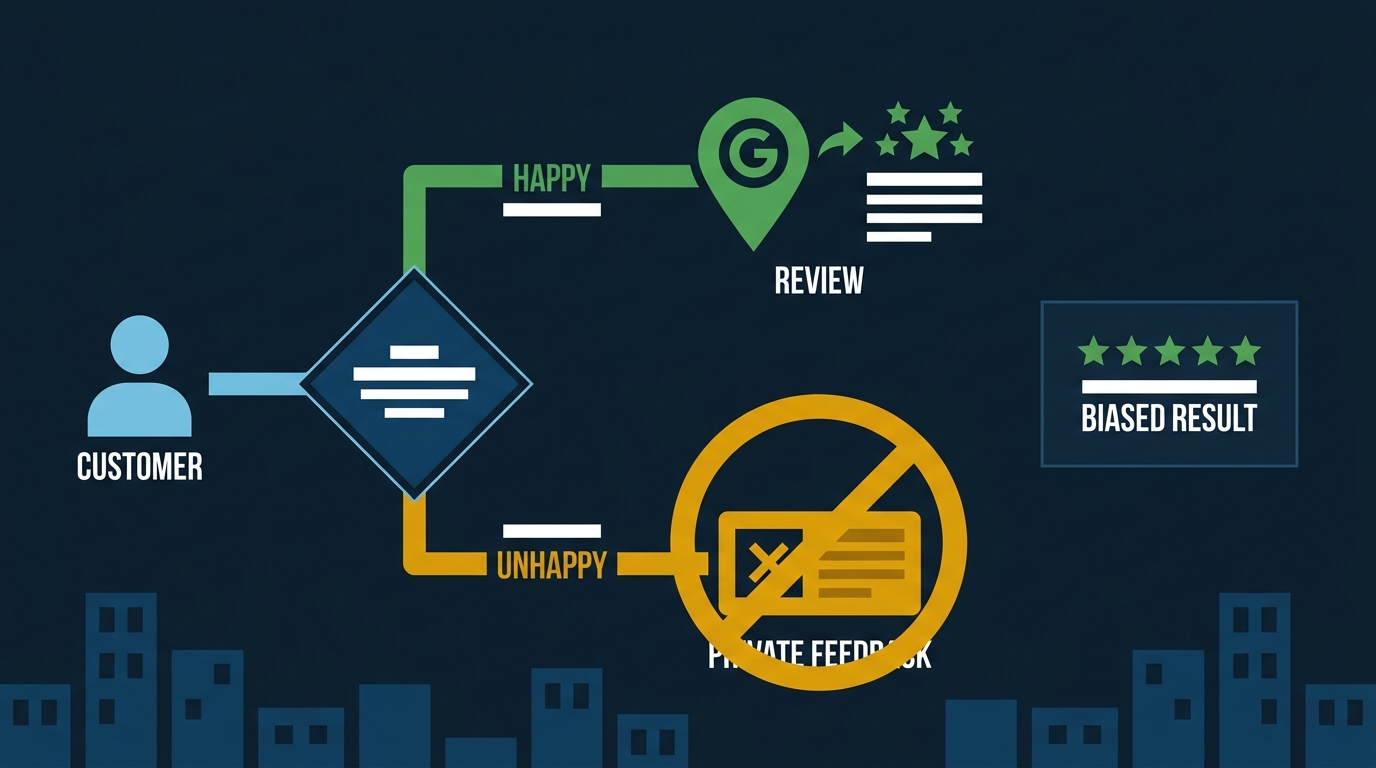
Review gating is when you filter customers before asking them to leave a Google review. The typical setup: you send a post-job email asking whether the customer had a good or bad experience. Happy customers get a link to your Google profile. Unhappy customers get a private feedback form and never see a review link at all.
It feels logical. You’re terrified of a 2-star review from the one customer whose expectations you couldn’t meet. The problem is that Google’s Maps User Generated Content Policy explicitly prohibits it — and has since April 2018, when they added this language to their guidelines: “Don’t discourage or prohibit negative reviews or selectively solicit positive reviews from customers.”
Google updated those rules again in 2025, making it even clearer: offering any incentive — payment, discounts, free goods — in exchange for a review, a revision, or the removal of a negative review is a violation. Same goes for directing unhappy customers to a private channel while only pushing satisfied ones toward Google.
What happens when you get caught?
It’s not a warning. According to Sterling Sky’s documented cases, one business had over 80% of its reviews stripped — dating back two years before the policy was even formally written. They went from 464 reviews at a 4.1 rating to 78 reviews at a 3.9 rating overnight. A second business had all 30+ reviews removed entirely after being reported for using a third-party gating tool.
Here’s what that means in practice: if you’ve been running a gating tool for two years, Google can claw back every review you collected during that window. Two years of work, gone.
How to collect reviews without violating policy:
The rule is simple. Send the review request to every customer, regardless of how you think the job went. You can still run internal satisfaction surveys — just send them separately, not as a gateway to the review link. Every customer gets the same ask. That’s it.
The Extortion Scam: When Criminals Come for Your Rating
This one isn’t your mistake. It’s happening to plumbers, electricians, roofers, and remodelers across the country, and it’s sophisticated enough that Google built a dedicated form just to report it.
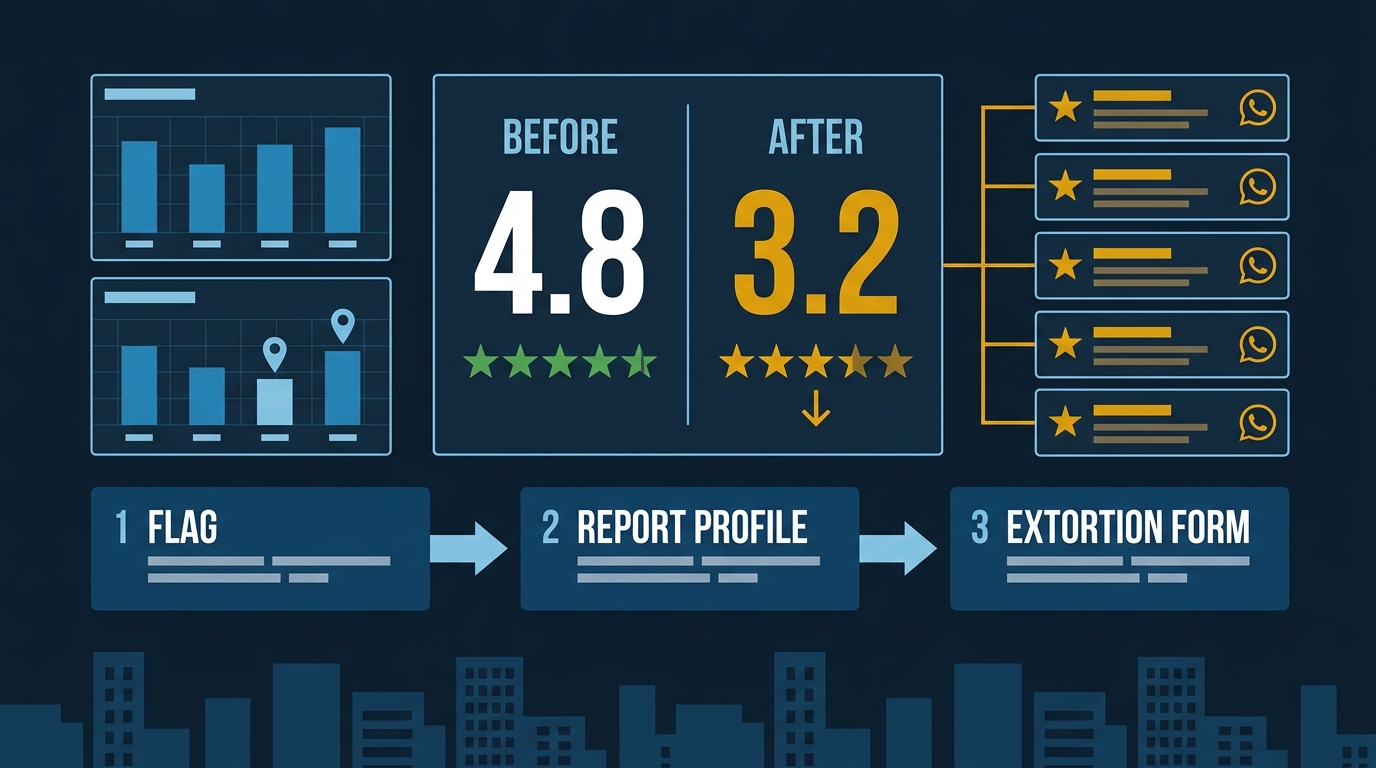
Here’s the pattern. Within 24 hours, your profile gets hit with 15 or more 1-star reviews. They’re not vague — they contain detailed, fabricated stories of bad service, unprofessionalism, or worse. Each reviewer profile has a WhatsApp number or suspicious link in their bio. The profile photos are often identical across accounts.
Then you get a message. Pay us and we’ll take the reviews down. Or: pay us and we’ll replace them with 5-star reviews.
Your rating drops from a 4.8 to a 3.2 in a single day. The phone stops ringing. That’s not a tech problem — that’s your livelihood.
Google’s automated systems often miss these attacks because the fake reviews mimic real customer language. The burden of proof lands on you.
Three steps, in order, and don’t skip any of them:
Step 1 — Flag every single review. Not just one. Every fake review in the attack. Click the three dots next to the review, select “Report Review,” choose “Spam or Off-topic.” Then ask staff or trusted contacts to flag the same reviews from their own devices. Multiple flags from different accounts signal to Google that something is wrong.
Step 2 — Report the reviewer profiles, not just the reviews. Scammers reuse the same fake accounts to hit multiple businesses. Reporting the profile is often more effective than reporting individual reviews. You can only do this from the Google Maps mobile app: tap the reviewer’s name, tap the three dots in the top right, select “Report profile.”
Step 3 — Submit the Google Merchant Extortion Contact Form. Google created this specifically for businesses facing blackmail through reviews. Response times vary, but it puts your case in a dedicated queue for extortion, separate from the standard review reporting process. Use it.
Do not pay. Paying doesn’t guarantee removal and marks you as a target for future attacks.
Why Your Review Volume Is Your Best Defense
Here’s the connection between these two threats that most people miss: businesses that try to game their review count through gating end up more vulnerable to extortion, not less. A profile with 30 manufactured 5-star reviews has no cushion. A profile with 200 real reviews built over three years can absorb a coordinated 1-star attack without its rating collapsing.
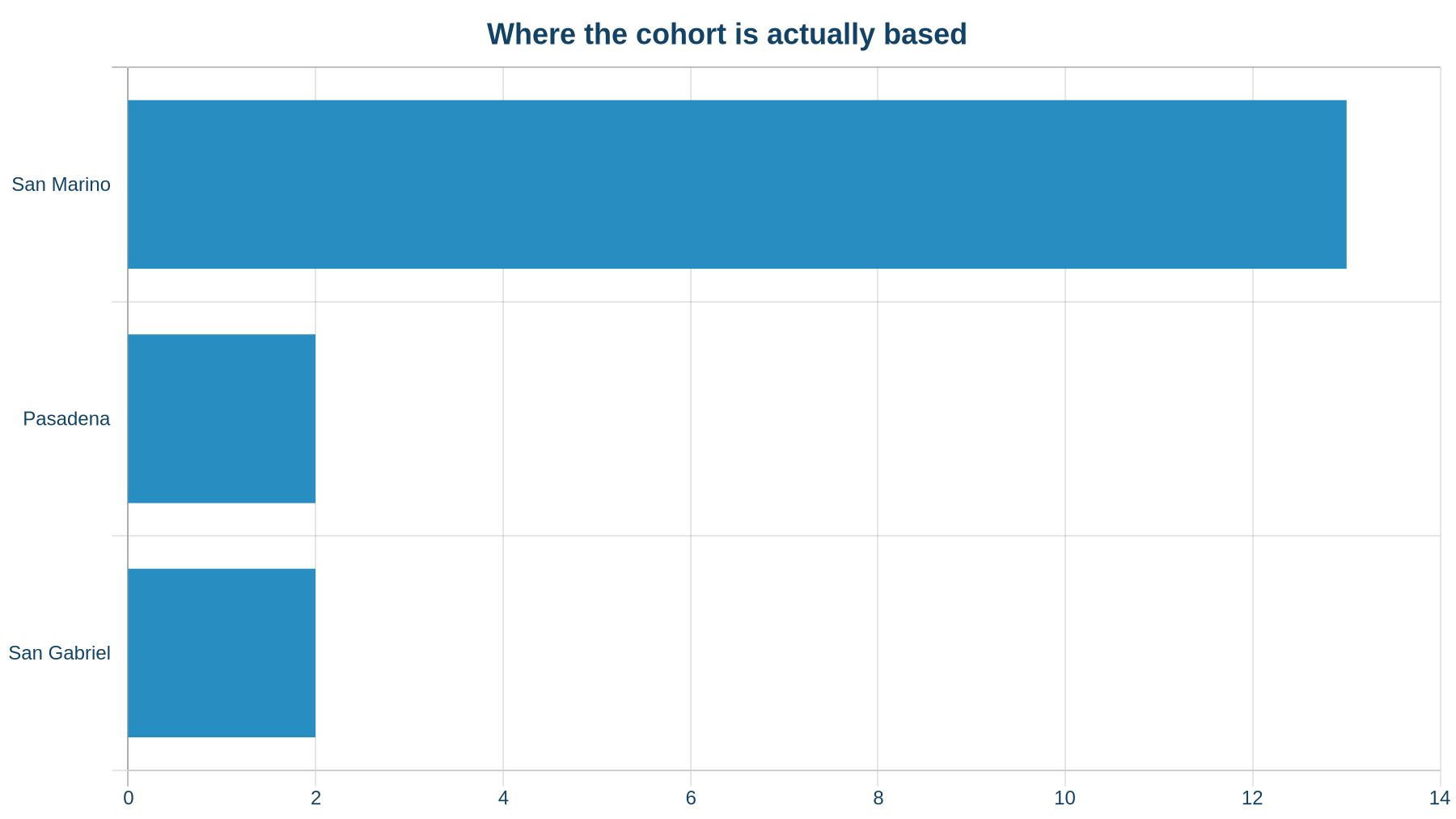
Our audit of the 18 remodeling contractor profiles competing for searches in San Marino makes this concrete. Thirteen of the 18 are based in San Marino itself, two in Pasadena and two in San Gabriel, so this is a crowded, local field for a small residential city, not a market being poached from outside. When we asked Google’s Maps-grounded AI for a remodeling contractor in San Marino, only 2 of the 18 profiles were surfaced, and one of the two was a Pasadena contractor. Being one of the 13 local profiles did not help the 11 local profiles that were skipped. The gap was review health.
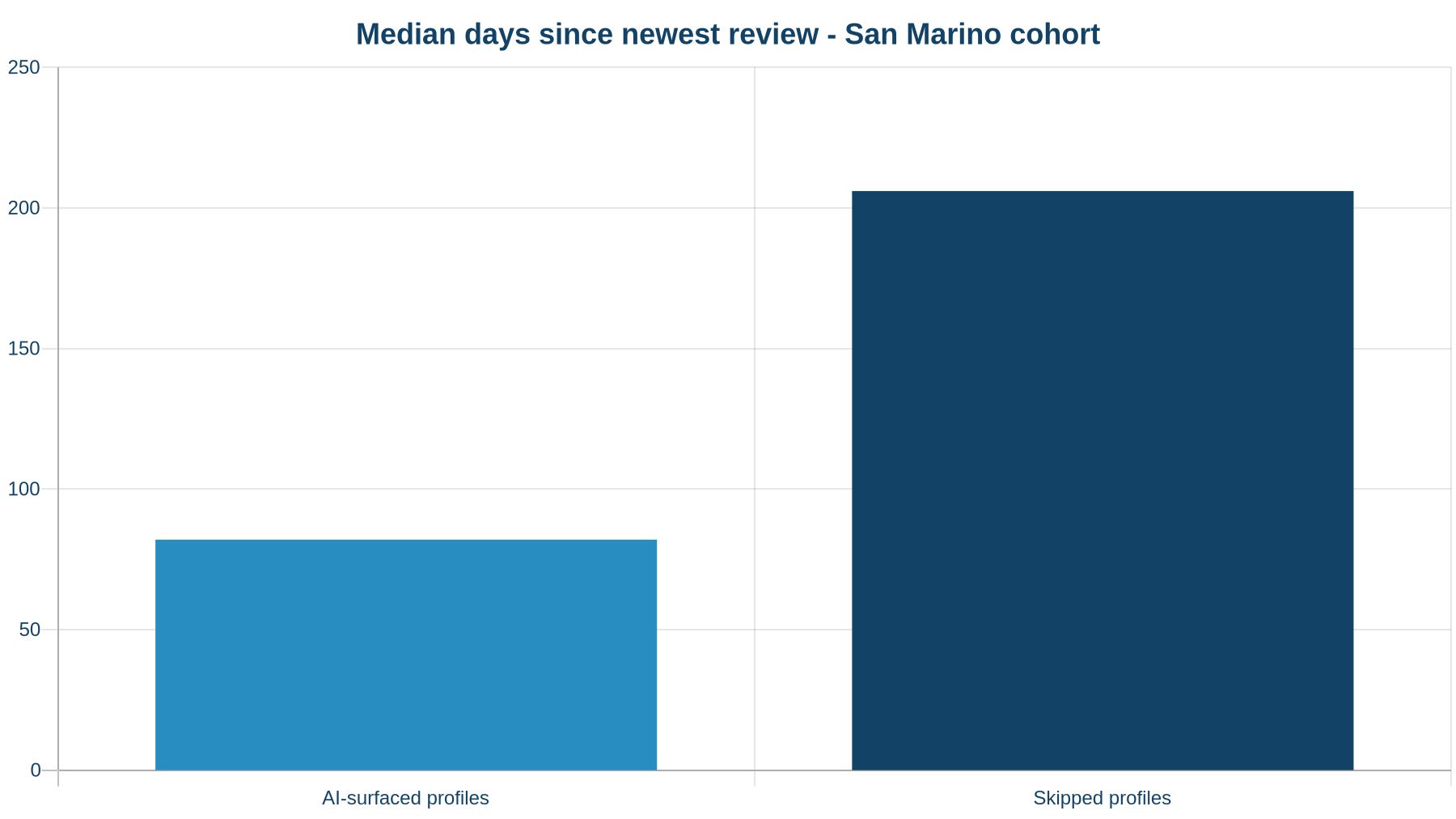
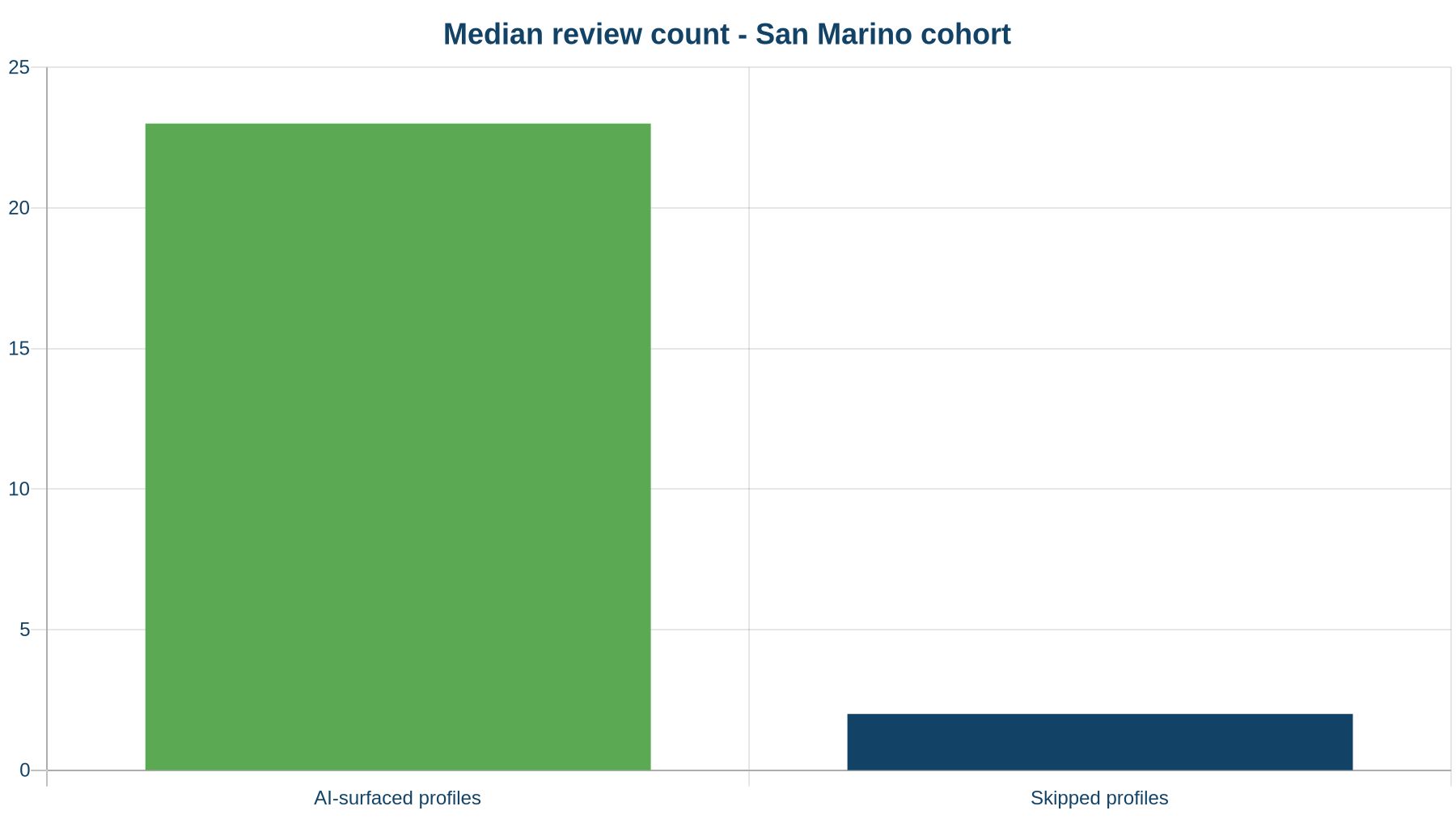
The two surfaced profiles had a median of 23 reviews, with the newest arriving 82 days ago. The 16 skipped profiles had a median of 2 reviews, with the newest arriving 206 days ago. A median of 2 reviews across 16 local contractors is the whole vulnerability this post is about: there is nothing to absorb a bad review, let alone a coordinated attack. Profile A — a Pasadena-based contractor that Google’s AI surfaced — had 23 reviews with the most recent 129 days old. Profile B — a San Marino-based contractor that was skipped entirely — had 2 reviews, the newest nearly 1,000 days old.
Being physically located in the city isn’t enough. Having reviews that arrive regularly is what keeps you visible — and what keeps a coordinated attack from wiping you out.
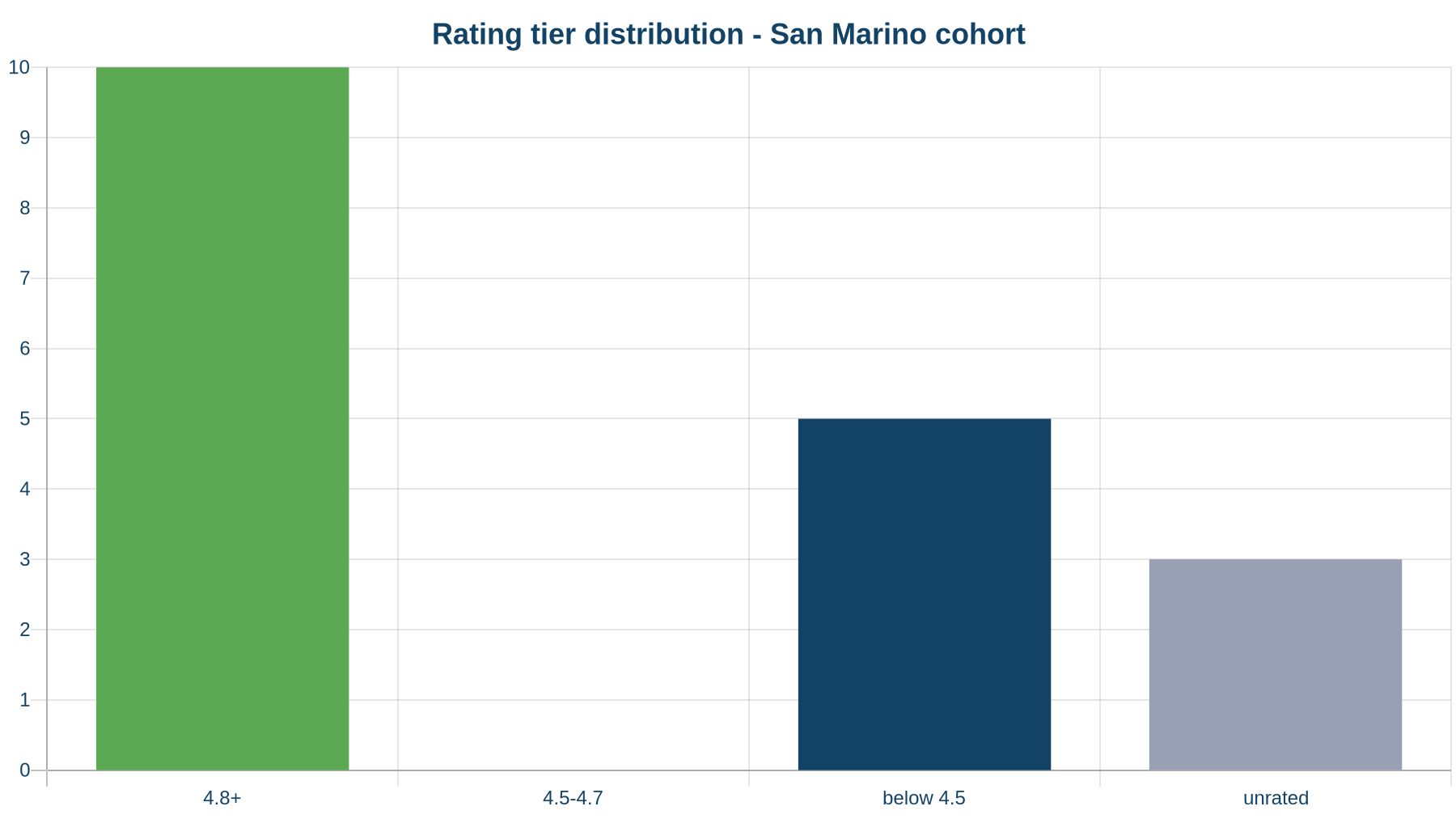
Of the 18 profiles, 10 sat at a 4.8-star rating or higher. But 3 had no rating at all, and 5 were below 4.5. A single extortion attack hitting any of those weaker profiles would be devastating.
What Legitimate Review Collection Looks Like
Send a review request after every completed job. Every one. Not just the jobs you’re confident about — all of them. Automate it so it happens within 24 hours of job completion, while the work is still fresh in the customer’s mind.
Our reputation and review management service handles the automated request sequence, the monitoring, and the professional responses — so you’re building a real review base without touching a single policy line.
If you want to see where your profile stands right now against the map-pack leaders in your city, run it through our free Map Pack Grader. It shows you the review gaps holding you back compared to whoever is ranking above you.
One Thing to Do Monday Morning
Pull up your current review request process — whatever tool or email you’re using — and check whether unhappy customers get a different path than happy ones. If they do, you’re gating. Fix it before someone reports you. The reviews you’d lose aren’t worth the negative ones you’re trying to avoid.
And if you haven’t set up a system to collect reviews consistently after every job, that’s the week’s other task. The businesses that survive extortion attacks are the ones with enough real reviews that a wave of fakes can’t move the needle.