

TL;DR
Do I really need to make separate videos for TikTok, Instagram Reels, and Google — or can one video work everywhere?
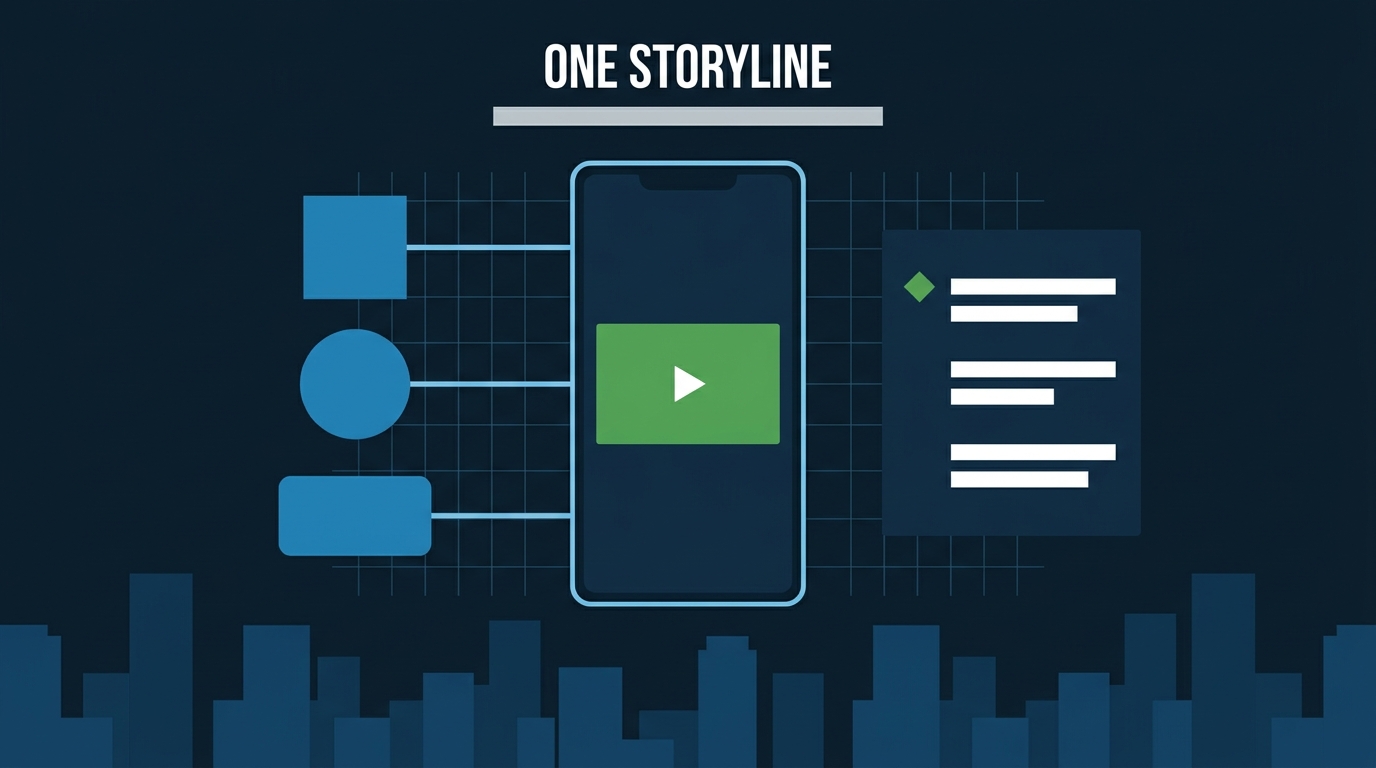
One core storyline can power all three platforms if you plan it right. Shoot or generate your footage with a vertical-first frame, write a single narrative around the job you do best, then adapt length and captions per platform. The content is the same; the packaging changes. It costs a fraction of three separate productions.
Your competitor two cities over — the restoration company in Whittier, the HVAC shop in Pasadena — is already putting video ads in front of your customers. Not because they hired a film crew. Because they figured out that one 45-second clip, planned correctly, can live on TikTok, Instagram Reels, YouTube Shorts, and Google’s AI-driven search results at the same time.
You don’t need four videos. You need one storyline and a system for stretching it.
Why Video Suddenly Matters for a Plumber or a Mover
This isn’t about going viral. It’s about where your customers are looking before they call anyone.
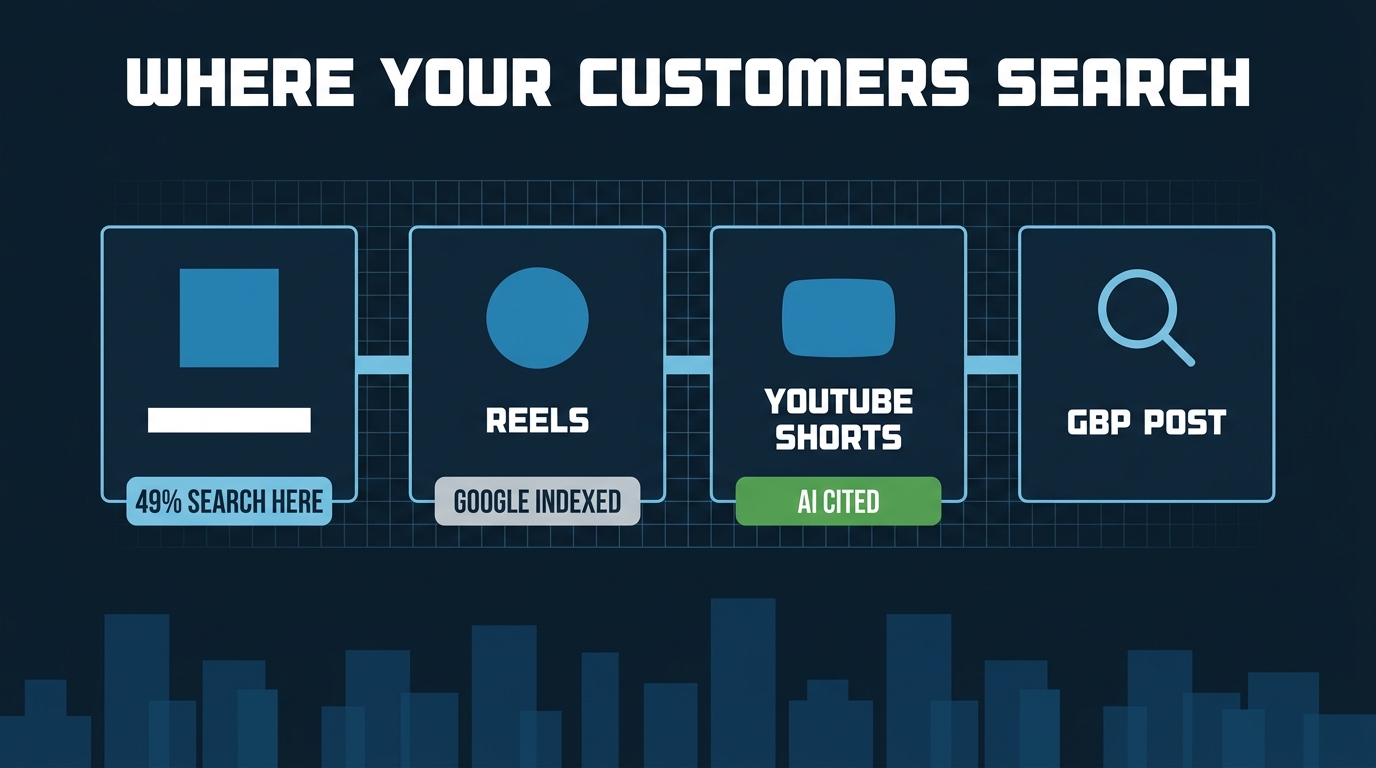
According to an Adobe Express survey reported by Search Engine Journal, 49% of U.S. consumers have used TikTok as a search engine. That’s not teenagers watching dances. That’s a homeowner in Montebello at 7pm searching “water damage restoration near me” and watching the first three results that show up — which are short videos, not web pages.
Google is paying attention to the same shift. Google’s VP of Search, Liz Reid, has said publicly that users are going to short-form video, forums, and user-generated content far more than before. Google Search Console now reports on TikTok, Instagram, and YouTube posts appearing in Search and Discover — meaning Google is treating social video as part of its search inventory.
YouTube specifically is what AI cites. ChatGPT and Google’s AI Overviews pull from YouTube far more readily than from TikTok. So a storyline that runs on both TikTok and YouTube covers the social-search side and the AI-answer side in one move.
The Part That Was Always the Problem
Most home-service businesses know they should be doing video. The reason they’re not is production cost and time — not willingness.
A traditional video ad involves a script, a shoot day, a videographer, editing, captions, and a format conversion for each platform. Get a quote for one of those and the number is the reason most owners never start. Do it for four refreshes a year across three platforms and you’ve got a part-time job that produces nothing else.
According to Search Engine Journal, 86% of advertisers are already using or planning to use generative AI to build video ad creative — and small and mid-sized businesses are adopting it faster than enterprises. The production wall is coming down. The businesses that figure this out first own the channel before it gets crowded.
A Three-Step Pipeline That Actually Works
Here’s how to build one storyline and get it onto every platform without hiring anyone.
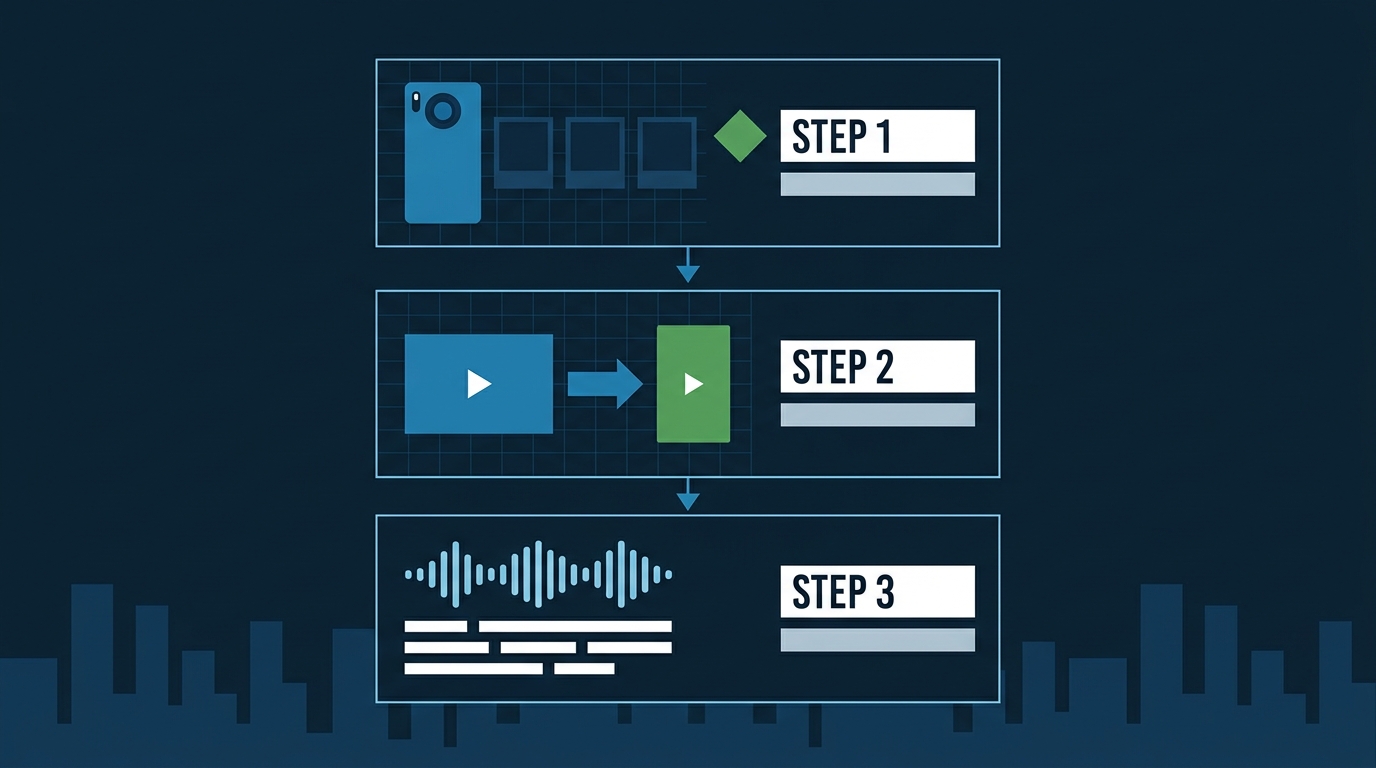
Step 1: Build your foundation from what you already have.
You don’t need a shoot day. You need your phone’s camera roll and your Google Business Profile photos. Photos of your crew on a job site, your truck in a driveway, a before-and-after of a water-damaged ceiling — that’s your raw material. Write one 60-word script around a single job type: the emergency call, the restoration, the AC replacement. One story, told plainly, from the customer’s problem to your solution. For a restoration company the script is three lines: what the homeowner saw (water coming through the kitchen ceiling at 6 a.m.), what your crew did first (capped the line, opened the drywall, set the dryers), and what the room looked like when you left. A plumber’s version is the same shape with a slab leak; an HVAC shop’s is a dead condenser in an August heat wave. The photos your techs already take for the job file are the footage, and the city and the street type (a 1950s ranch in Whittier, a Pasadena Craftsman) are what make the clip read as local rather than stock.
The script doesn’t change across platforms. The packaging does.
Step 2: Use an AI video generator that accepts reference images.
Tools like Runway, Kling, and Pika (all reviewed in Zapier’s 2026 roundup of the best AI video generators) can take your existing photos and animate them into short video clips — no camera required. You upload your job-site photos, feed in your script as a prompt, and get a vertical-format video back in minutes. The output isn’t Hollywood. It doesn’t need to be. It needs to look like a real local business that does real work, and it will.
Generate at 9:16 (vertical) first. That format works on TikTok, Reels, and YouTube Shorts without cropping. If you need a square cut for a Google Business Profile post, you trim the sides.
Step 3: Add voiceover and captions in the same pass.
AI voiceover tools can read your script in a natural voice — no recording booth. Add burned-in captions because most people watch with the sound off, especially on TikTok and Reels. This is the step most businesses skip, and it’s the one that doubles watch time.
Total time for a business that has its photos ready: two to three hours for the first video, less than one hour for each refresh.
What Goes Where — and Why It Matters
The same 45-second video gets trimmed and posted differently on each platform:
- TikTok: Post organically first. Let it run without paid spend for 48 hours and watch the completion rate. If it holds above 30%, put $5–$10 a day behind it as a paid ad. TikTok’s algorithm rewards videos that people finish.
- Instagram Reels: Same vertical cut, same captions. Reels gets indexed by Google. A Reels post for your Pasadena restoration business can show up in Google Search results — not just Instagram.
- YouTube Shorts: This is the AI-citation play. YouTube content is what ChatGPT and Google AI Overviews actually reference. A short, clearly titled video (“Water Damage Restoration in Whittier — 24-Hour Response”) gives AI answer engines something to point to when someone asks for a recommendation.
- Google Business Profile Post: Square-crop the clip or use a still frame with your logo. GBP posts with video get more engagement than photo-only posts, and an active profile signals to Google that you’re a real, operating business.
The creative work happens once. The distribution is copy-paste with minor formatting changes.
The Refresh Question
Search Engine Journal’s guidance puts the refresh cycle at quarterly minimum — sooner when your click-through or conversion rate drops, which is the first sign that your audience has seen the clip enough times that it stops working. For a home-service business running ads in a single service area like Glendale or Santa Clarita, quarterly is probably right. You’re not serving 10 million people. Your audience is finite, and creative fatigue hits faster in a tight geography.
Plan four storylines a year: one per season, tied to the seasonal job type. AC repair in summer. Heating tune-ups in fall. Water damage and flooding in winter. Landscaping and exterior work in spring. Each one follows the same pipeline. Each one gets posted everywhere.
What This Actually Costs
If you’re paying a production company for each of these, the yearly bill is four shoots plus three edits per shoot, and the quotes add up fast. With AI tools and existing photos, the production cost drops to the price of a software subscription: most of the tools Zapier reviewed run between $20 and $100 a month.
The time investment is real, but it’s manageable. Two to three hours per quarter to produce a new clip. One hour to post and format it across platforms.
If you want the posting handled — every video adapted and distributed to your Google Business Profile, Facebook, Instagram, and the rest — that’s exactly what our Social Content Amplification service does. You hand over the raw clip and the job details; we handle the formatting, captions, and posting schedule across every platform.
And before you build any of this out, check where you actually stand. Our free Does AI Recommend You? tool asks ChatGPT, Perplexity, and Gemini who the best home-service businesses in your city are — and shows you whether your name comes up or your competitor’s does. If you’re not in those answers, video on YouTube is one of the fastest ways to change that.
One Thing to Do Before Friday
Pull three photos from your last job — before, during, after. Write two sentences: what the customer called about and what you fixed. That’s your first video script. Everything else in this post is just the system for turning those two sentences into ads that run while you’re on the next call.