

TL;DR
My website ranks on Google but I'm not showing up in AI answers — how do I even know, and what do I do about it?
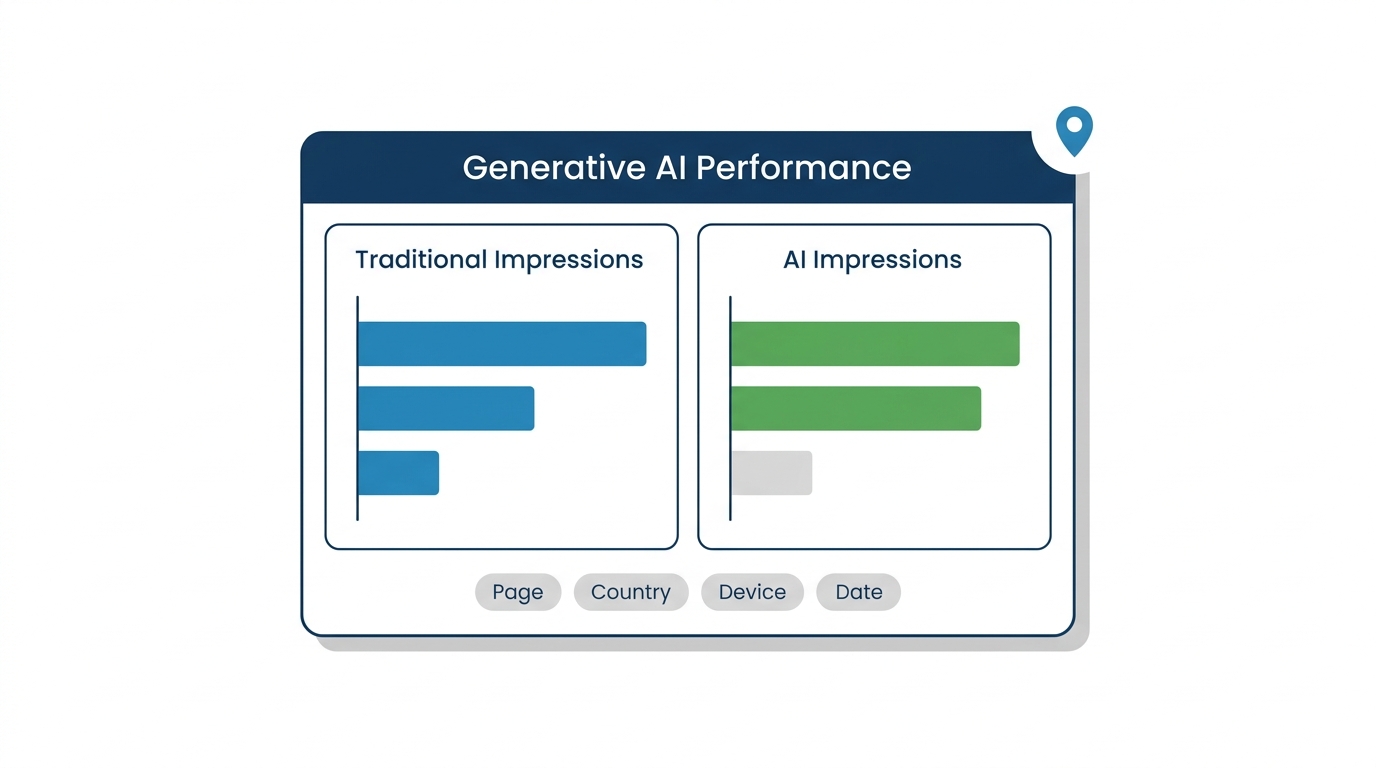
Google now shows AI impression data in Search Console, so you can see which pages appear in AI Overviews and which don't. If a page ranks well in regular search but has zero AI impressions, your content structure, reviews, or profile completeness are likely the gap. Fix those signals first — not the keywords.
Your plumbing page might sit at #3 in Google’s regular results and never show up once in an AI Overview. Until recently, you had no way to know. That changed on June 3, 2026, when Google announced dedicated Generative AI performance reports inside Search Console — separating AI visibility from traditional search data for the first time.
For a roofer in San Gabriel or an HVAC tech in Rosemead, this isn’t a nerdy analytics update. It’s the first tool that shows you whether Google’s AI is using your website to answer the question “who should I call?” — or ignoring it entirely.
What the Report Actually Shows (and What It Doesn’t)
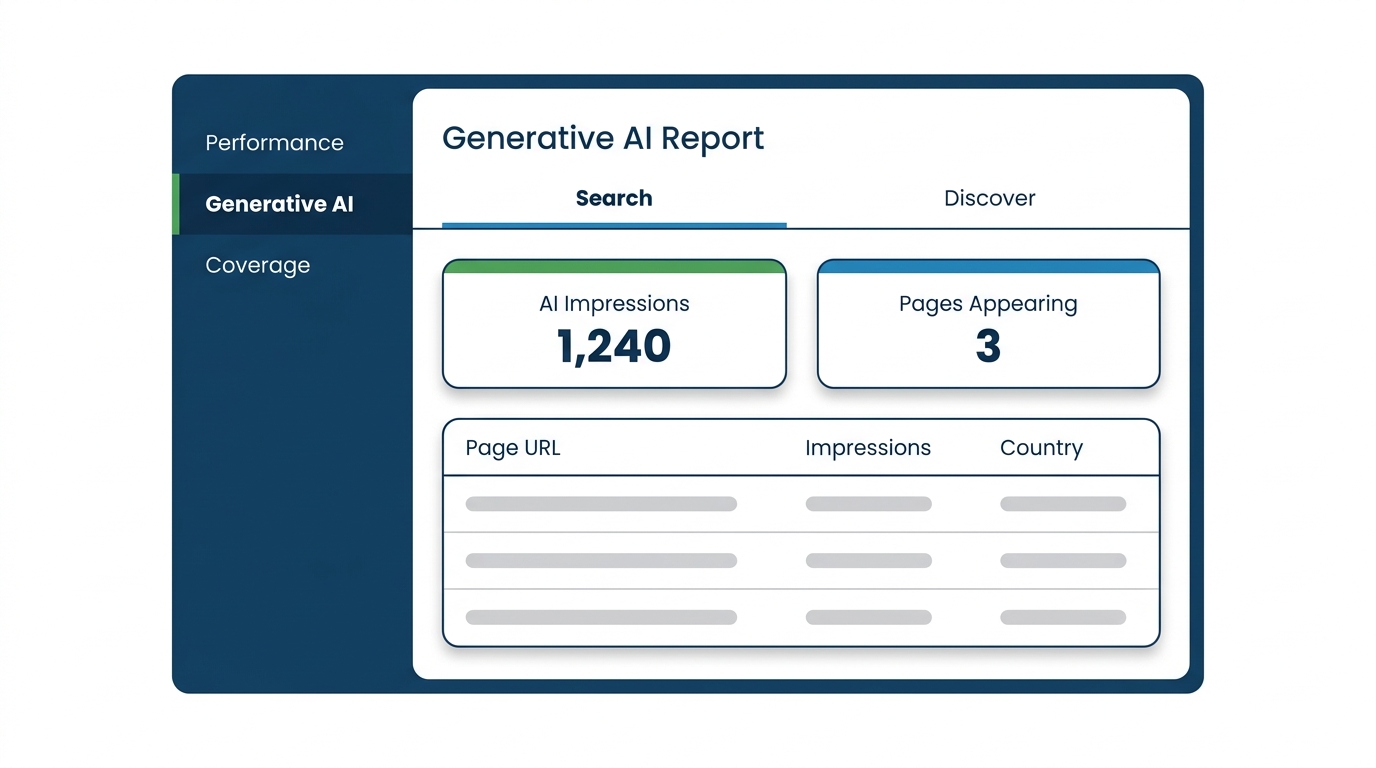
The new report lives inside Search Console and tracks impressions from AI Overviews and AI Mode — two of Google’s generative search features. An impression, in Google’s definition, is any instance where a link to your site appears inside one of those features. You can slice the data by page, country, device, and date.
Here’s the catch: right now it’s impressions only. No clicks. No click-through rate. No average position. No indication of which passage Google pulled from your page or why. As SEJ’s Carolyn Shelby put it, Google has given us a new diagnostic lens, not a new scoreboard.
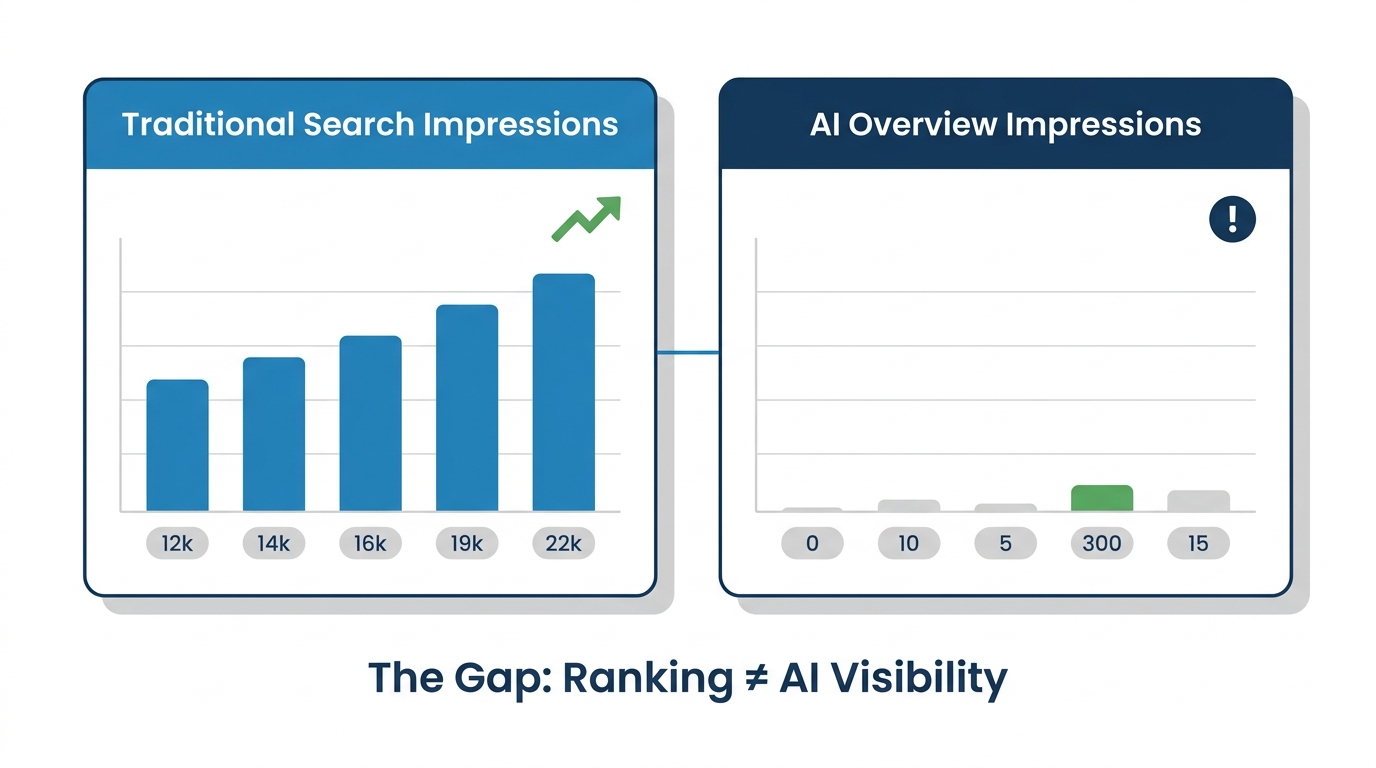
That framing matters. Don’t open the report and start making dramatic decisions based on a single number. What you’re looking for is the gap — pages that rank in traditional search but show zero AI impressions. That gap is a signal, not a verdict.
One more quirk worth knowing: the math won’t always add up the way you expect. If two pages from your site appear in the same AI response, that counts as one impression at the property level but potentially two impressions at the page level. Google’s aggregation method changes depending on whether you’re looking at the chart or the page table. The numbers aren’t broken — they’re just measuring different things at different zoom levels.
The Opt-Out Option — and Why You Probably Shouldn’t Touch It Yet
Alongside the new report, Google is rolling out a Search Console setting that lets you exclude your site from AI Overviews, AI Mode, and Discover’s generative features — without removing you from regular search results. The default is inclusion. The setting showed up for UK accounts first (regulators there required it), and began appearing on U.S. accounts in July 2026.
For most home-service businesses, opting out would be a mistake. You’d be pulling yourself from a channel that’s increasingly where people are getting answers — not just clicking blue links. And there’s a wrinkle: tracking data from NewzDash found Top Stories carousels rendering inside AI Overviews, which means opting out of AI features could mean opting out of Top Stories too. The tradeoffs stack up fast.
Use the new report to establish a baseline first. Then decide.
What the San Gabriel Roofing Market Actually Shows
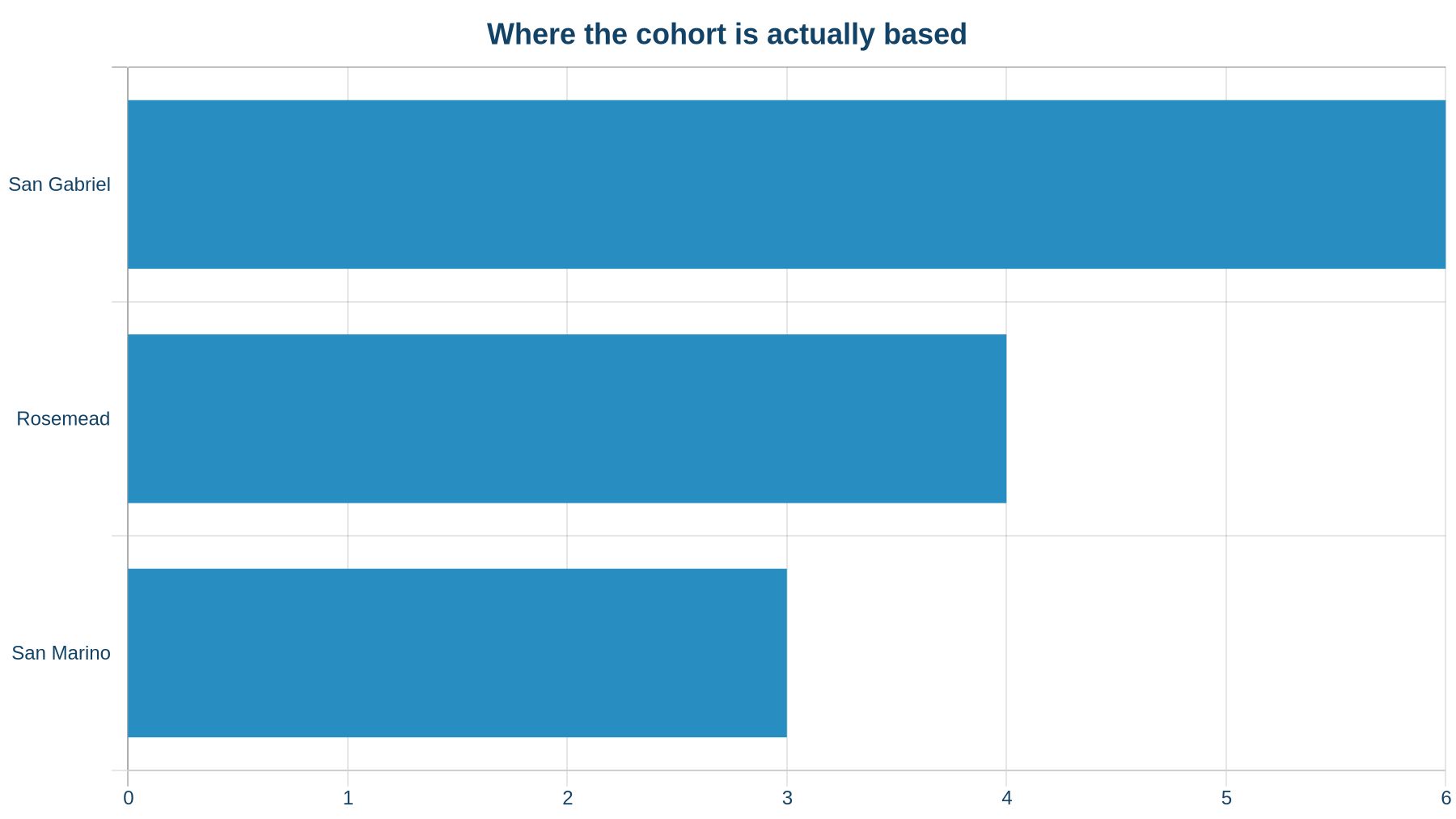
We ran our own audit of 20 roofing contractors within 5 km of San Gabriel. The competitive density here is real — 0.25 profiles per square kilometer, with only 6 of the 20 businesses actually based in San Gabriel itself. The rest are coming in from Rosemead (4 profiles), San Marino (3 profiles), and surrounding cities. If you’re a San Gabriel roofer, you’re not just competing with your neighbors — you’re competing with shops two cities over.
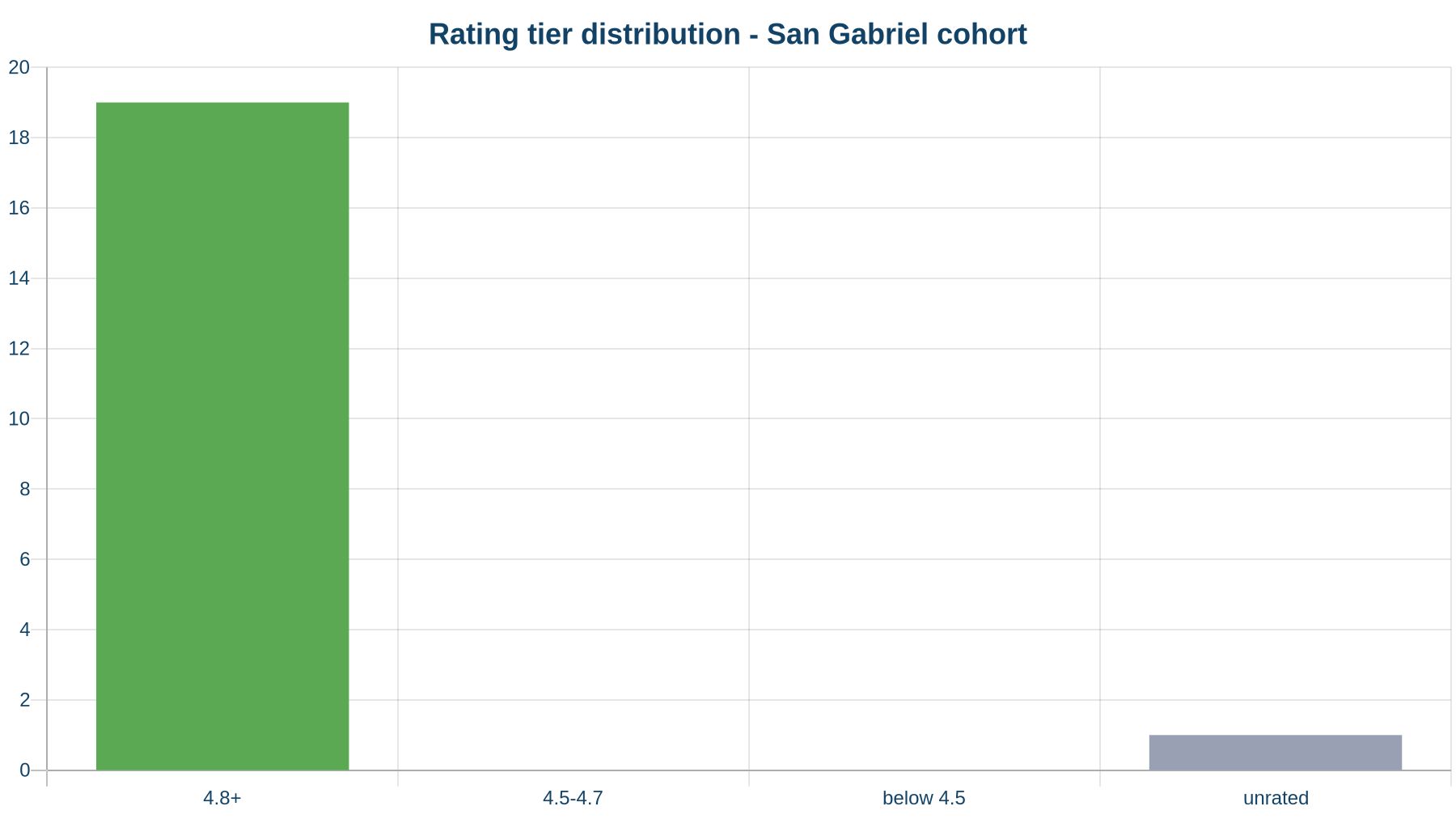
When we asked Google’s Maps-grounded AI for a roofing contractor in San Gabriel, 6 of the 20 profiles were surfaced. The rating picture was stark: 19 of the 20 profiles in the cohort held a 4.8-star rating or higher. One was unrated. None sat in the 4.5–4.7 range. This is a nearly all-or-nothing rating environment — you’re either at the top or you’re invisible.
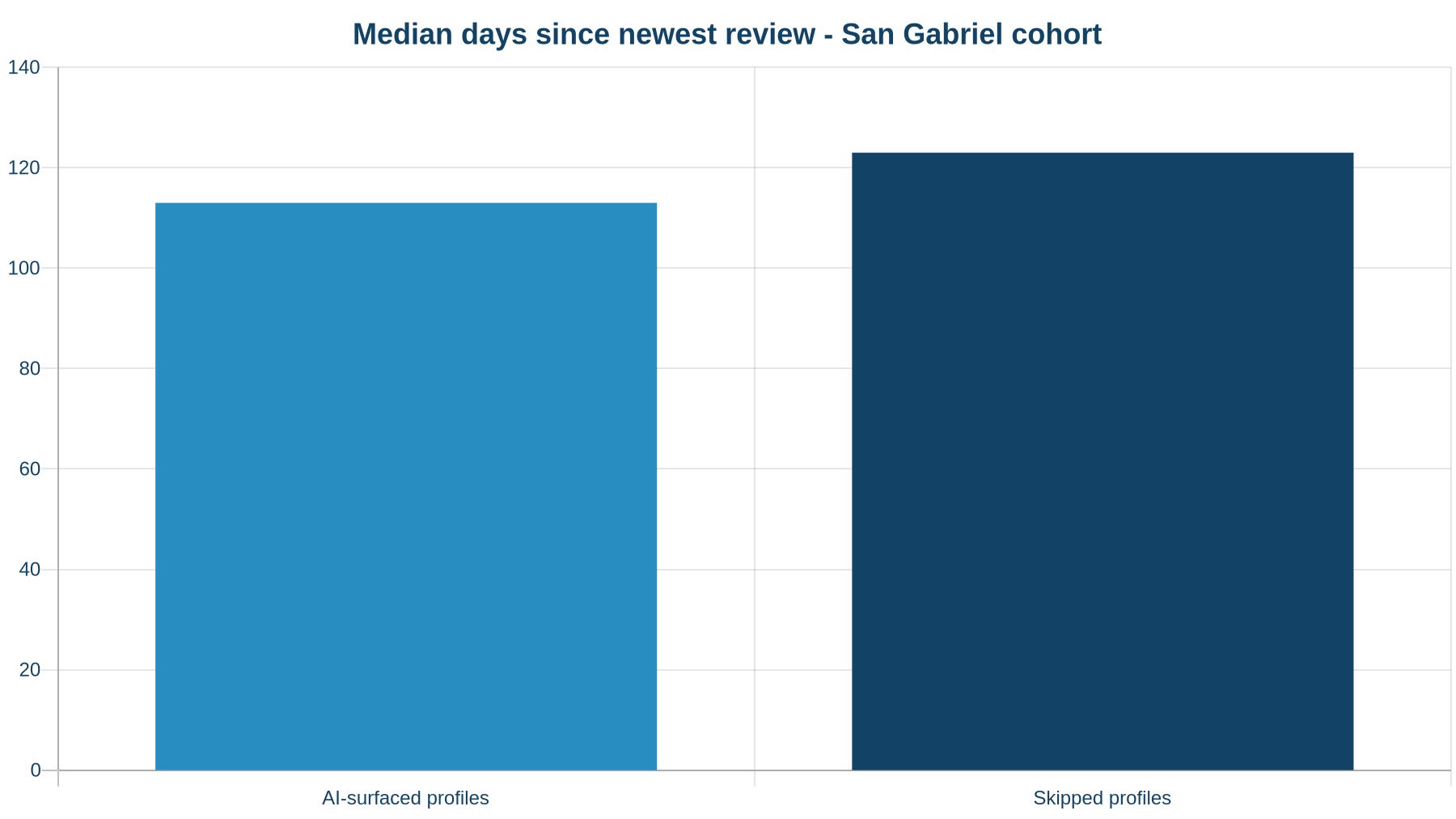
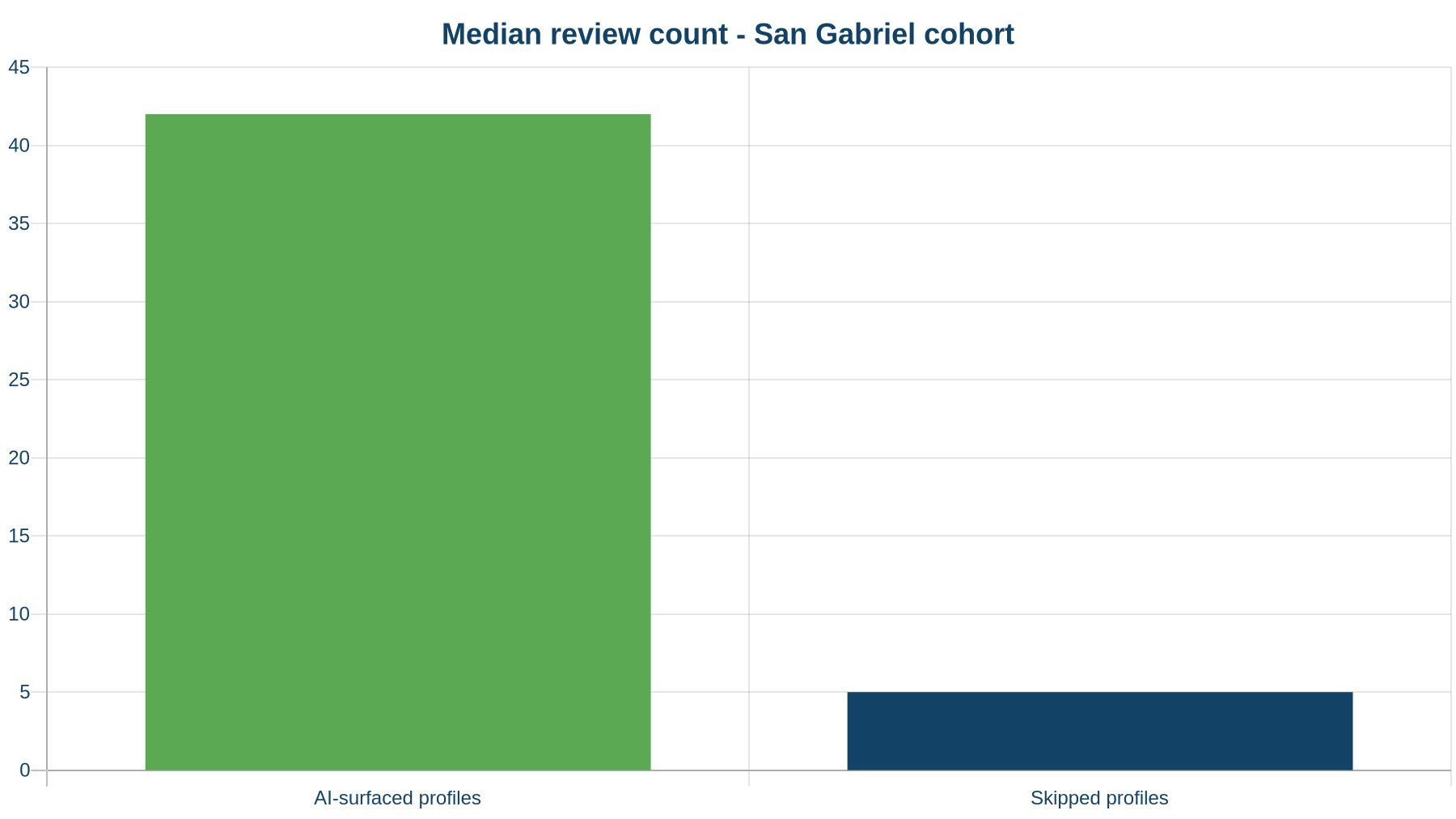
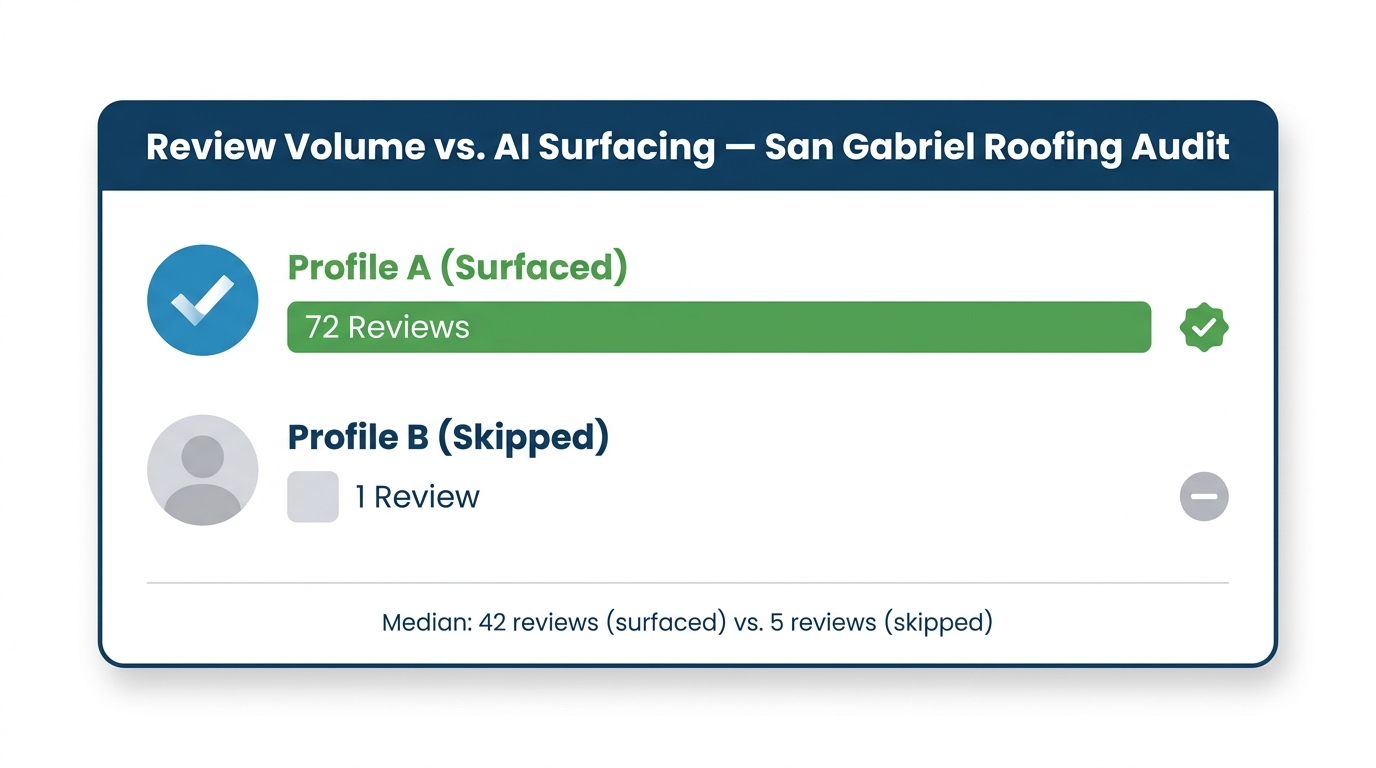
The more revealing signal was review volume. The 6 profiles the AI surfaced had a median of 42 reviews. The profiles it skipped had a median of 5. That’s not a small gap — it’s an order of magnitude. Review recency mattered too, but less dramatically: surfaced profiles had a median newest-review age of 113 days versus 123 days for skipped profiles.
Profile A — a surfaced business based in San Marino, not even in San Gabriel — had 72 reviews with the newest coming in 188 days ago. Profile B — based right in San Gabriel — had 1 review, newest at 140 days ago, and got skipped entirely. Proximity didn’t save Profile B. Volume did.
This is what the AI impressions gap looks like in practice. Profile B might rank somewhere in traditional search. But with one review, it has no chance of appearing in an AI Overview. The new Search Console report would show that gap clearly — zero AI impressions against whatever traditional impressions it’s collecting.
How to Use This Data If You’re a Home-Service Business
You don’t need to become a Search Console power user. Here’s the practical read:
Step 1: Find the gap. Open the new AI impressions report and compare it to your regular Search performance report. Look for pages that get traditional impressions but zero AI impressions. Your service pages — “roofing repair in San Gabriel,” “HVAC installation Rosemead” — are the ones that matter most.
Step 2: Ask why those pages aren’t feeding AI answers. The most common reasons for home-service businesses: thin content on the page, no structured FAQ section, and — most often — a Google Business Profile (GBP) that doesn’t back up what the website says. AI Overviews pull from multiple signals. If your GBP review count is at 5 and a competitor’s is at 42, Google’s AI is going to lean on the one it trusts more. Our free AI Search Readiness Score runs that check for you — schema, your Google profile, reviews, and AI-crawler access — and lists the fixes.
Step 3: Fix the profile before you fix the page. Our local SEO service starts with the GBP audit because that’s where the gap usually lives. A well-structured website page helps, but it won’t override a thin, under-reviewed profile. The AI is looking for corroboration across sources — your website, your GBP, your reviews. When they all say the same thing with consistent detail, you become a reliable source. When they don’t match, you get skipped.
Step 4: Don’t touch the opt-out toggle. Not yet. Let the report run for 60–90 days. Build a baseline. Then you’ll have actual data to make a decision, instead of guessing.
The Bigger Shift Happening Right Now
Traditional rankings are still real. People still click blue links. But Google is increasingly answering questions before anyone clicks anything — and the businesses that feed those answers are the ones with structured, consistent, high-volume signals across their profile, their website, and their reviews.
The new AI impressions report doesn’t change that game. It just finally lets you see the scoreboard.
If your service pages are ranking but not showing up in AI answers, you now have a tool to prove it. The next step is figuring out why — and for most roofing, HVAC, and plumbing businesses in the San Gabriel Valley, the answer is almost always the same: not enough reviews, not consistent enough profile data, not enough corroboration between the website and the GBP.
Monday morning: log into Search Console, find the Generative AI report, and pull up your top service page. If the AI impressions column is empty while your traditional impressions are healthy, you’ve found your gap. That’s where to start.