

TL;DR
Should I consolidate or segment my Google Ads campaigns now that AI is changing how people search?
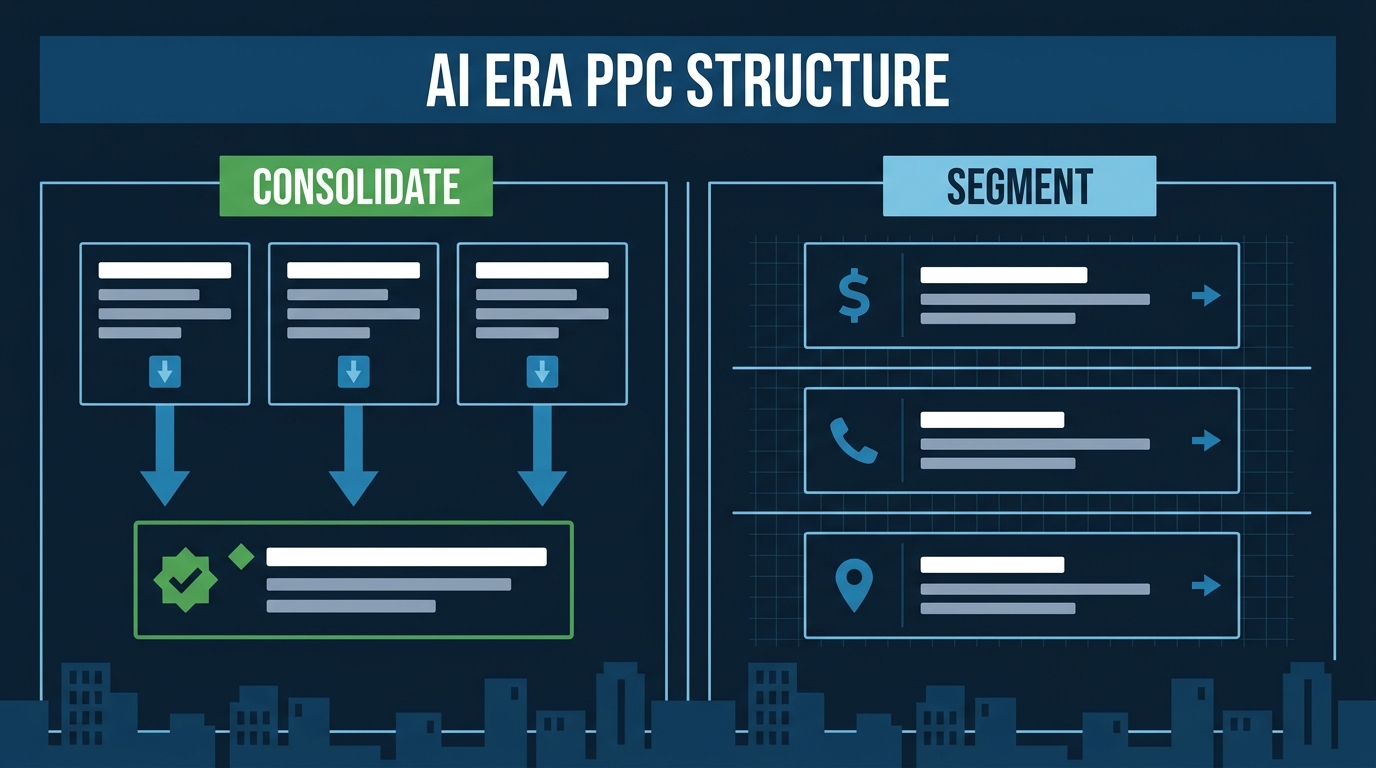
Consolidate when the only difference between campaigns is keyword variation — AI bidding handles that now. Segment only when you have genuinely separate budget needs, different conversion economics, or distinct geographic markets. Fix your conversion tracking first; restructuring on bad data just optimizes the wrong thing faster.
You built your Google Ads account for a searcher who typed three words and clicked the first result. That account is now running into a different kind of buyer every day — and the mismatch is costing you money.
A growing share of your potential customers is now asking ChatGPT or Google AI Mode a full question, reading a composed answer, and arriving at your ad already halfway decided. Or not arriving at all.
This isn’t about rebuilding everything. It’s about understanding which structural decisions still make sense and which ones are now working against you.
The Actual Problem With Old Campaign Structures
The legacy approach made sense: group tight keyword themes, control match types, write static ads for each bucket. Keyword choice was one of the strongest signals of intent you had, so you guarded it carefully.
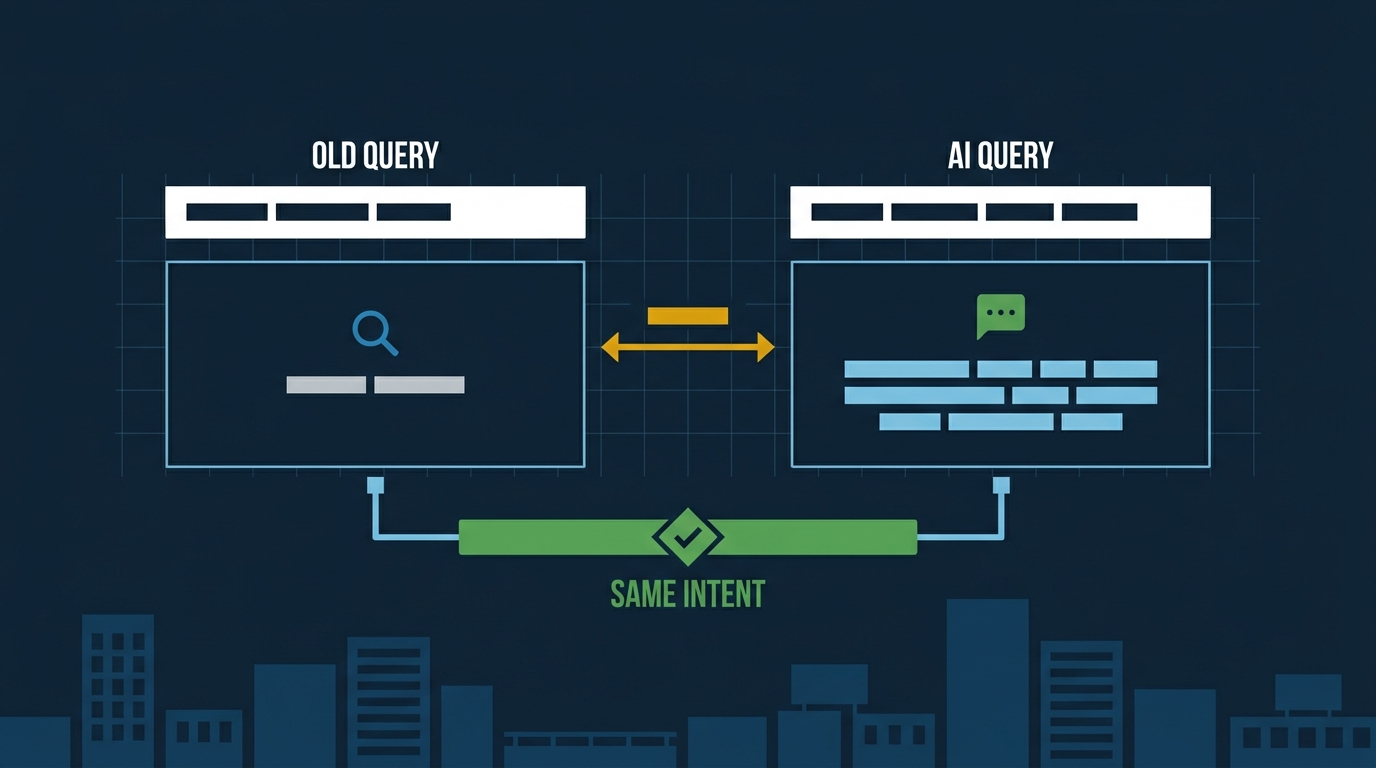
That logic breaks down when AI systems are better at recognizing similar intent across a much broader range of queries than any keyword list you can maintain by hand. A homeowner in Pasadena who types “best HVAC company near me” and one who types “who should I call for AC not cooling upstairs in summer” have the same intent. Google’s AI already knows that. Your campaign structure might be treating them as completely different audiences — and bidding accordingly.
The second problem is conversion signal starvation. AI bidding systems — Smart Bidding, Target CPA, Target ROAS — need a steady stream of conversion data to make good decisions. When you’ve fragmented an account into fifteen campaigns chasing the same audience, each campaign gets thin data. Thin data means the machine guesses. Guessing means wasted spend.
The third problem is one most home-service operators haven’t caught yet: buyers are arriving more informed and with less patience for friction. They’ve already had a conversation with an AI assistant. They know roughly what the job costs, what questions to ask, and which companies have bad reviews. Your ad lands in front of someone who already has opinions. A static, generic headline doesn’t move them.
Consolidate First — But Not Blindly
The default advice right now is “consolidate everything.” That’s mostly right, but the reasoning matters more than the rule.
Consolidate when the only thing separating two campaigns is keyword variation. If you’re running “AC repair Glendale” and “air conditioning repair Glendale” as separate ad groups with separate bids, you’re doing the machine’s job for it — badly. Merge them, let broad match and AI intent-matching handle the variation, and give the bidding algorithm a bigger pool of conversion data to learn from.
Consolidate when your campaigns are splitting budget that should be unified. A roofing company in Burbank running separate campaigns for “roof repair,” “roof replacement,” and “emergency roof leak” is probably just fighting itself on auction price while starving all three of the conversion volume needed to optimize.
Jason Shafton, who worked on scaling the Google Ads platform itself, puts it plainly: the accounts that compounded were the ones that handed the system unambiguous evidence of relevance and let the machine do the rest. Every account had line items that existed because they existed the quarter before. The best operators hunted those habits down.
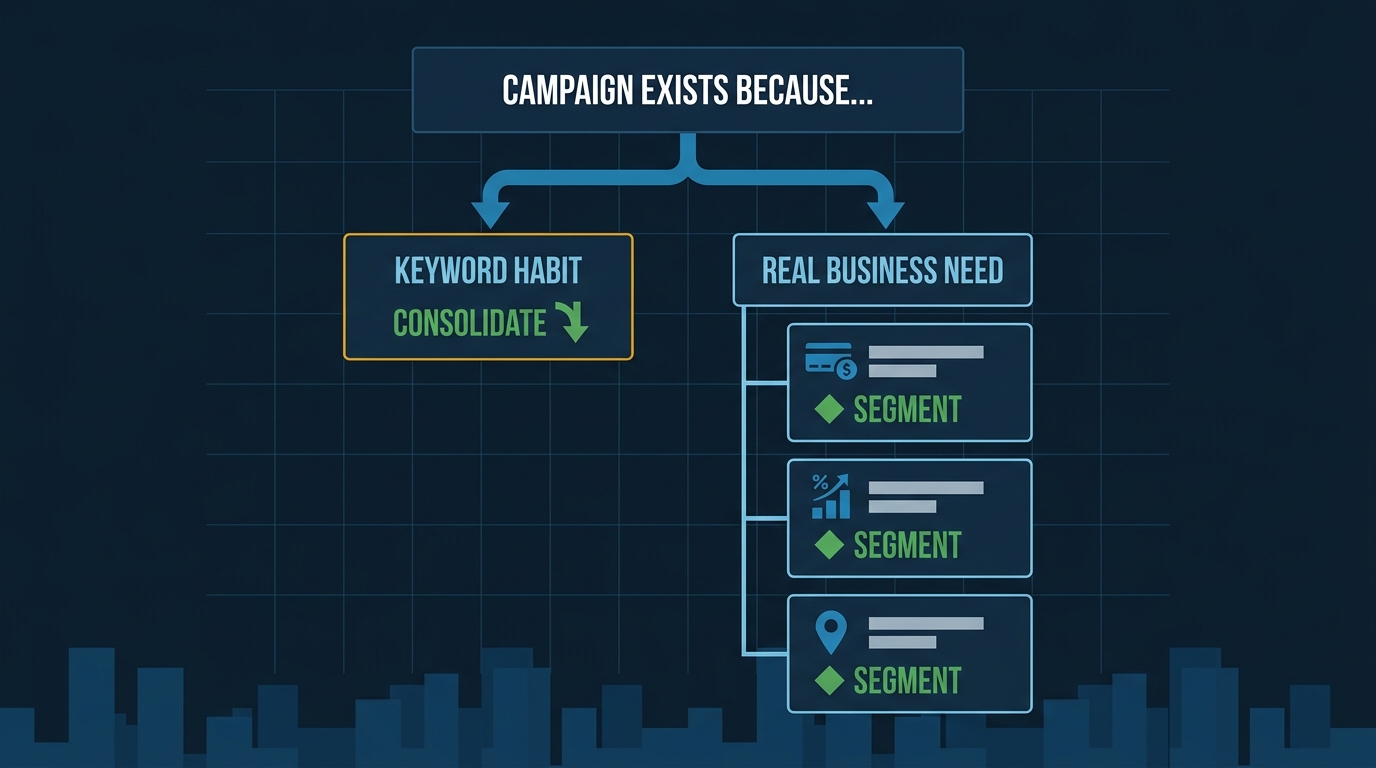
That’s the audit question to ask about every campaign in your account: does this exist because of a real business need, or because it was set up in 2021 and never revisited? A practical signal: if you have more than one campaign per service line and none of them hit 30 conversions in the last 30 days, that’s your consolidation trigger. The machine cannot learn from a trickle.
When Segmentation Still Earns Its Place
Segmentation isn’t dead. It’s just been used as a crutch for things AI can now handle automatically.
Segmentation still makes sense in three specific situations.
Separate budget protection. If you do both HVAC service and HVAC equipment installation, and installation jobs are worth several times the margin of a service call, you need a dedicated campaign for installation — not because the keywords are that different, but because you cannot let service calls eat the budget that should be chasing system replacements. The budget wall is the reason for the segment, not the keyword difference.
Separate conversion targets. Emergency repair calls and scheduled maintenance agreements convert differently, close at different rates, and have different lifetime values. Lumping them under one Target CPA teaches the machine to optimize for an average that doesn’t reflect either product well. Segment when the conversion economics genuinely diverge.
Geographic reality. An HVAC company that covers both the San Gabriel Valley and the Santa Clarita Valley is operating in two distinct competitive markets. Pasadena has different auction prices, different competitor density, and different seasonal demand than Santa Clarita. If your budget is unitary, the higher-competition market will eat it. Segment by geography when the markets are meaningfully different — not just to have city-specific ads, but because the bid strategy needs to reflect different economics.
As Navah Hopkins notes in her breakdown of AI-era PPC structure, segmentation still makes sense when it protects a real business need — a dedicated budget for a strategically important service, or a separate performance target when conversion economics diverge. Everything else — keyword variation, match type paranoia, ad copy testing that could happen at the asset level — consolidate.
But even the right structure fails if the machine is learning from the wrong signals — and for most home-service accounts, it is.
The Conversion Signal Problem Is the Real Urgency
The platform rewards signals it can measure, not the effort you put in. You can have a beautifully structured account and still lose to a sloppier competitor who’s feeding Google better conversion data.
For a home-service business, “better conversion data” means:
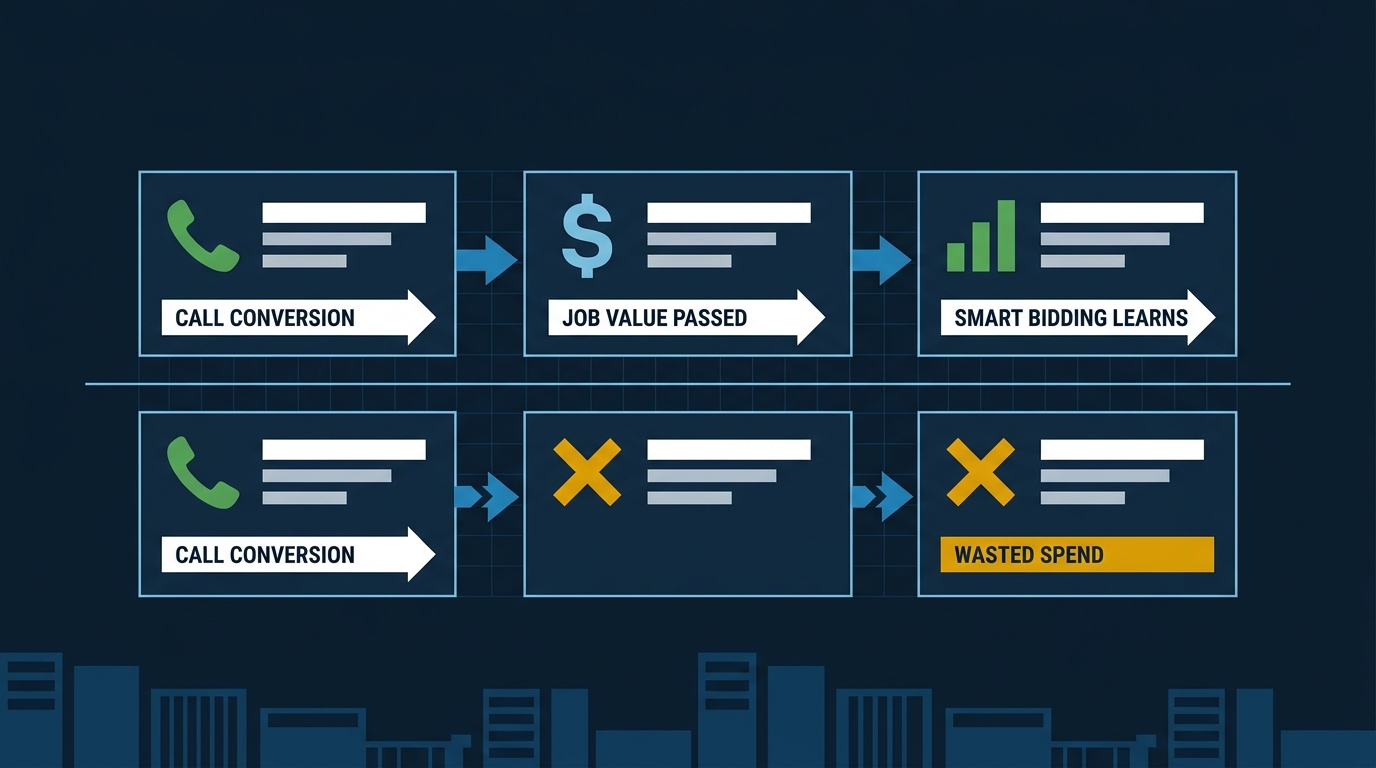
- Tracking phone calls as conversions, not just form fills. Most booked jobs for HVAC, plumbing, and electrical start with a phone call. If you’re only tracking form submissions, you’re teaching the algorithm to optimize for the wrong action.
- Passing conversion value, not just conversion counts. A furnace replacement and an $89 tune-up are not the same conversion. If you’re counting them equally, Smart Bidding will happily fill your calendar with tune-ups.
- Closing the loop on which leads actually became jobs. The algorithm doesn’t know your close rate. If, for example, you close a much higher percentage of HVAC installation calls than general inquiry calls, that difference matters for how much you should bid — but only if you tell the system.
If you’re running Google Ads and you’re not sure whether your conversion tracking is capturing all of this, that’s the first thing to fix before you touch campaign structure. In Google Ads, go to Tools → Conversions and check whether you have an active call conversion action with a count-per-call setting — not just a website call extension. If you don’t see one, that’s the gap.
Structure decisions built on bad conversion data just optimize the wrong thing faster. Our Google Ads management service includes conversion tracking setup alongside campaign structure — because restructuring without fixing the signal problem is just rearranging the account while the leak continues.
The AI Research Layer Changes What Your Ads Are Competing Against
One more shift worth understanding: a portion of your potential customers are now doing their research inside an AI assistant before they ever see a search results page. Research cited by Jason Shafton found that the sources AI assistants cite are largely not the pages winning on page one — meaning the pre-click competitive landscape your ads operate in is being shaped by a layer of research you can’t see in your search terms report.
This matters for PPC because some of the “awareness” work that used to happen on your ads is now happening before your ads. The buyer who arrives after an AI research session isn’t cold. They’ve already compared options. Your ad headline needs to close, not introduce.
Practically: write ad copy for someone who already knows what they need and is evaluating who to trust, not someone who’s just starting to think about the problem. Social proof, specific service guarantees, response time, and coverage area outperform generic “call us today” copy for this audience.
Run your presence through our free Does AI Recommend You? tool to see whether ChatGPT, Perplexity, and Gemini are naming you when someone in your city asks for recommendations — because that pre-click layer is now part of the competitive landscape your ads are operating in.
What to Do Monday Morning
Pull up your Google Ads account and count your campaigns. For each one, ask: does this campaign exist because of a real budget or conversion-target difference, or because of keyword habits from five years ago?
Anything in the second category is a consolidation candidate. Merge it, widen the match types, and let the bidding algorithm work with a real data pool. If none of your service-line campaigns are hitting 30 conversions a month, consolidation isn’t optional — it’s the only way the machine gets enough signal to work with.
Then check your conversion tracking. Go to Tools → Conversions in Google Ads and confirm you have an active call conversion action with count-per-call enabled. If phone calls aren’t tracked that way, fix it before anything else.
The campaign structure question in the AI era isn’t really about AI — it’s about giving the machine the right inputs and getting out of its way on the things it genuinely does better than a human-managed keyword list.