

TL;DR
Will AI Overviews hurt my local search rankings as a home-service business?
AI Overviews don't replace your ranking—they add a second gate above it. To get cited, your business needs accurate, consistent information across every platform the AI checks, a strong review count, and complete profile data. Businesses with thin or mismatched profiles get skipped, regardless of their map-pack position.
In July, 5 out of 100 brand-name searches Google tracked triggered an AI Overview. By September: 63. If you run an HVAC, plumbing, or restoration company in LA County, that’s not a trend to watch—it’s a gate that’s already closing.
Ahrefs tracked Google’s U.S. results for 100 global brand names every week from July through September 2026. A separate Ahrefs analysis of 92.5 million branded-keyword crawls found AI Overviews appearing on 73.3% of branded searches in September, up from 61.3% in July. That’s a 12-percentage-point jump in three months, compared to a 4.8-point rise for non-branded keywords over the same period.
Brand-name searches are one thing. But the same shift is happening on the queries that matter to you: “water damage restoration Temple City,” “emergency plumber Arcadia,” “HVAC repair San Gabriel.” AI Overviews are showing up, summarizing options, and—critically—deciding which businesses to mention and which to skip.
If you’re skipped, you don’t exist for that search.
The New Gatekeeping Nobody Warned You About
Here’s what the AI Overview actually does: it reads your Google Business Profile, your website, your Yelp listing, your reviews across platforms, and any structured data your site publishes. Then it decides whether your business is trustworthy enough to recommend.
Sachin Puri, CEO of Newfold Digital, described this dynamic on the Search Engine Journal podcast: a customer might ask an AI assistant to find an electrician available tomorrow afternoon who charges less than $300 and has strong reviews—and then book the appointment. The customer never visits your website. But the AI still has to answer the same questions a human would. Is this business licensed? Where do they operate? What do customers say about them? Are they available?
If your profile is incomplete, your hours are missing, or your reviews are thin and stale, the AI doesn’t give you the benefit of the doubt. It just picks someone else.
Puri put it plainly: “The page views or visits may disappear, but the need for authoritative digital presence continues.” Authority, in this context, comes from information that is accurate and consistent across sources, and from the reputation customers build through their reviews.
That’s not a new concept. But the stakes just got higher.
What We Found When We Looked at Temple City
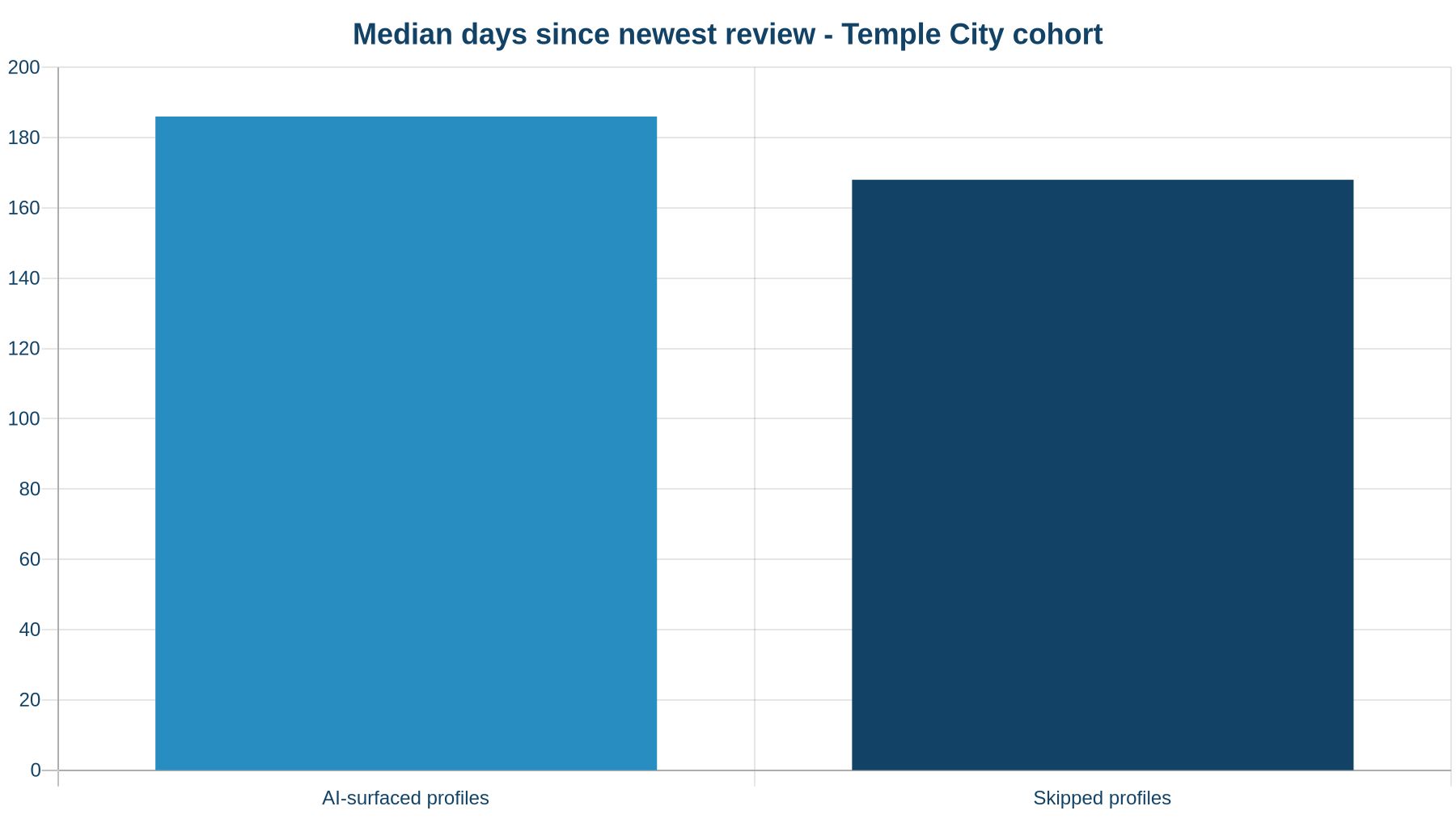
We asked Google’s Maps-grounded AI for the best-rated damage restoration company in Temple City. Out of 15 profiles in our audit cohort, four were surfaced in the AI response.
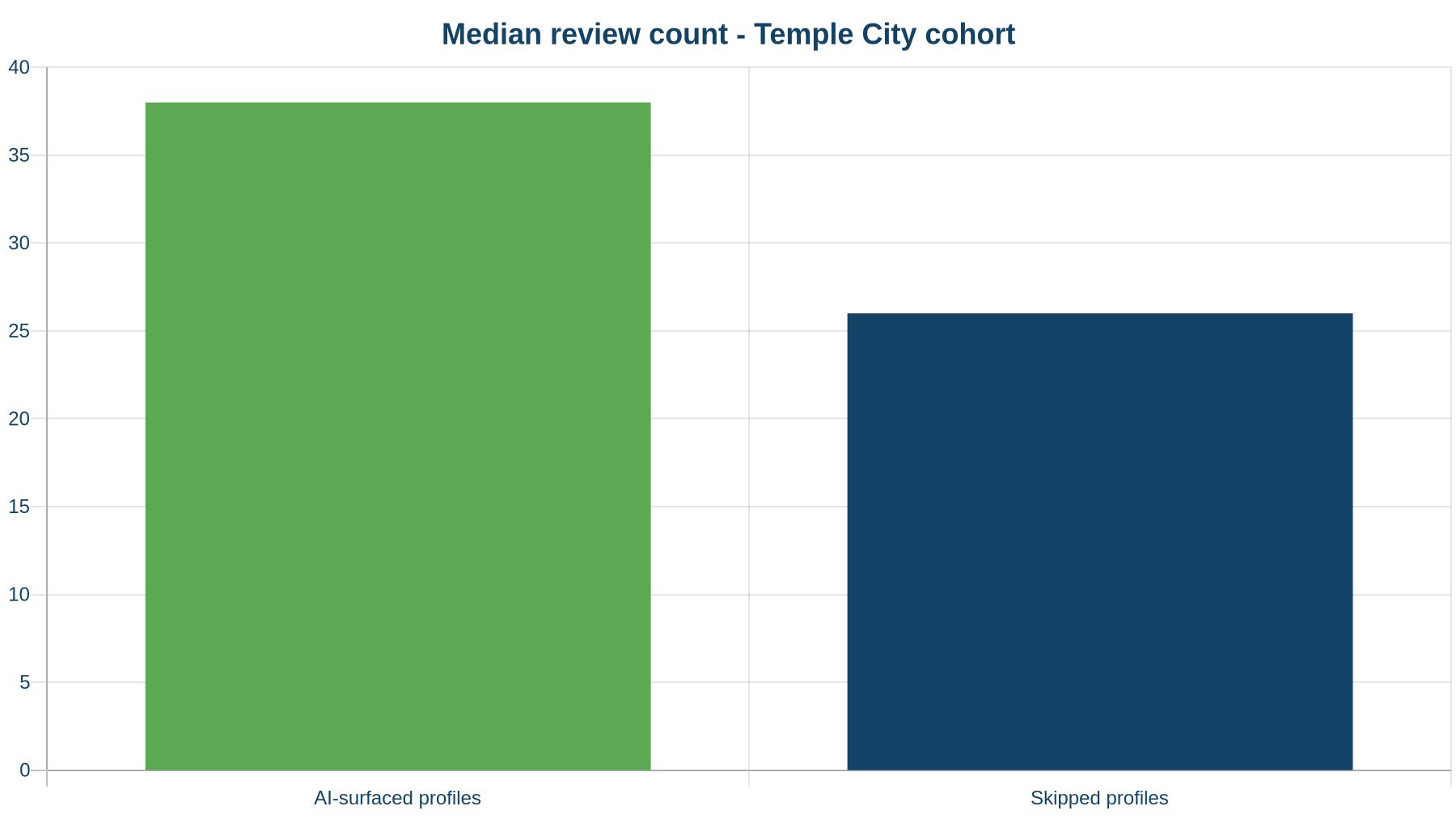
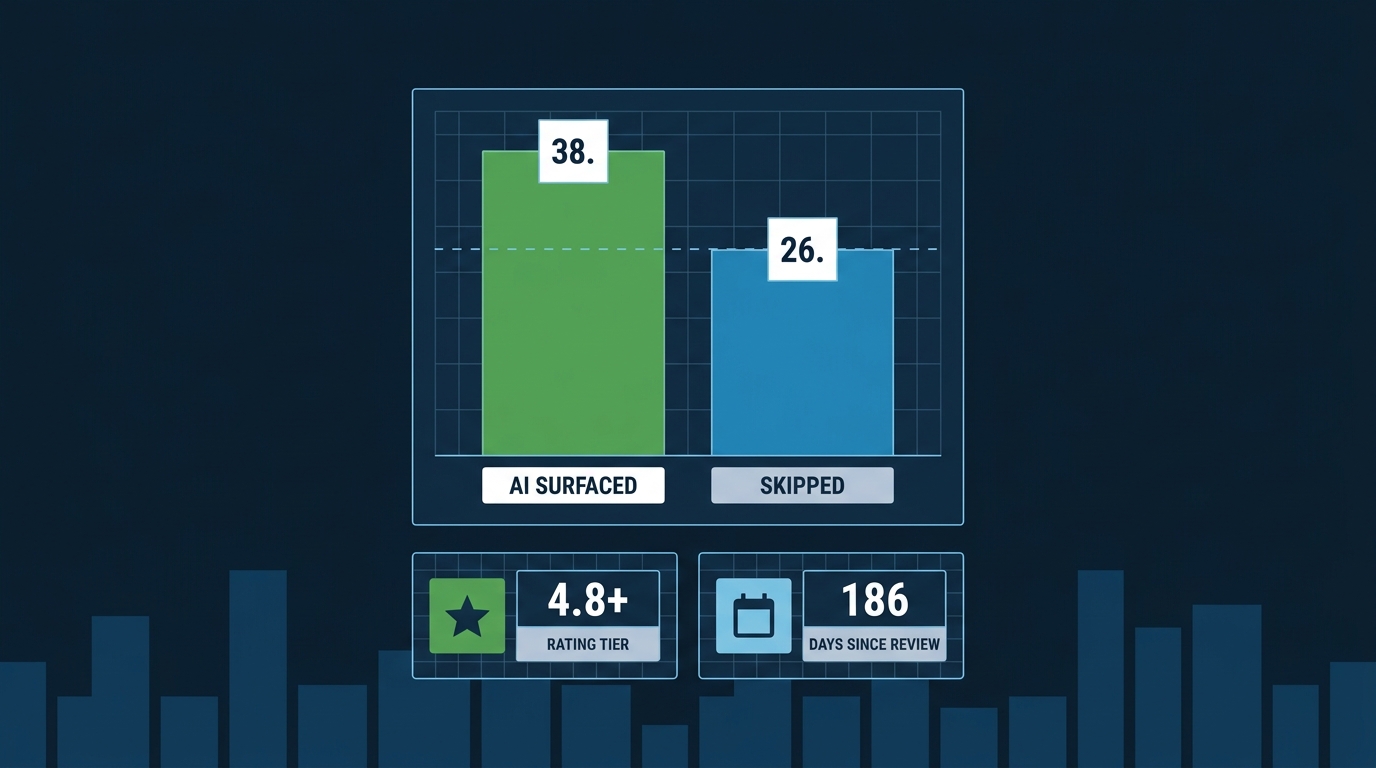
The numbers tell a clear story. The four surfaced profiles had a median of 38 reviews. The 11 skipped profiles had a median of 26 reviews. That’s a 46% gap in review count between the businesses the AI cited and the ones it ignored.
Review recency told a different story than you might expect. Surfaced profiles had a median newest-review age of 186 days. Skipped profiles: 168 days. The AI didn’t simply reward whoever had the most recent review—it weighted volume and trust signals more heavily.
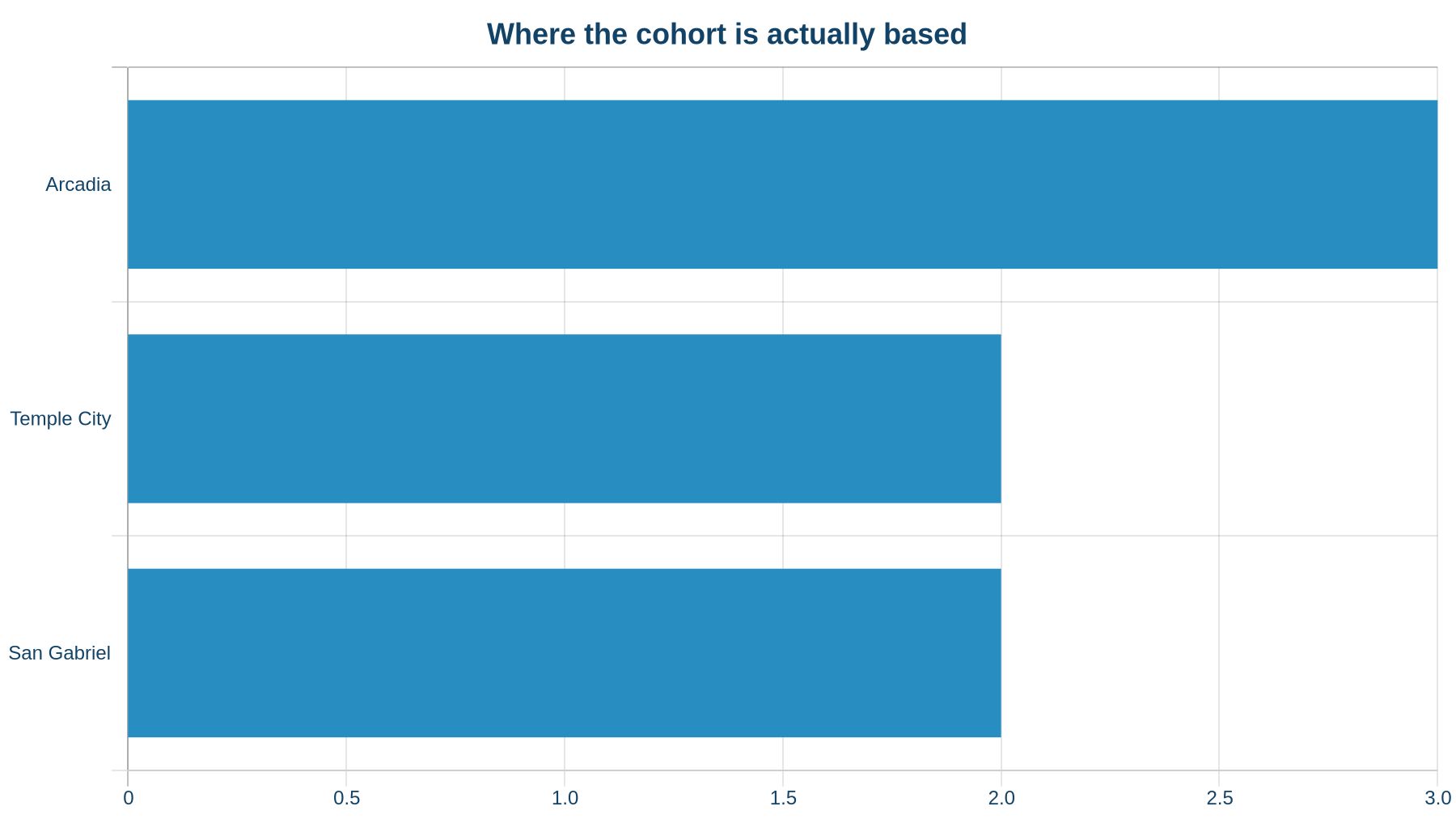
The geography is worth noting too. With only 0.19 profiles per square kilometre within 5 km of Temple City, this isn’t a saturated market—which makes the AI’s selectivity even more striking. Thin competition and you can still get skipped. Only 2 of the 15 profiles in the cohort are actually based in Temple City. The top host cities are Arcadia (3 profiles), Temple City (2), and San Gabriel (2). The businesses winning Temple City searches are mostly based next door. Proximity helps, but it’s not the deciding factor when your profile is thin.
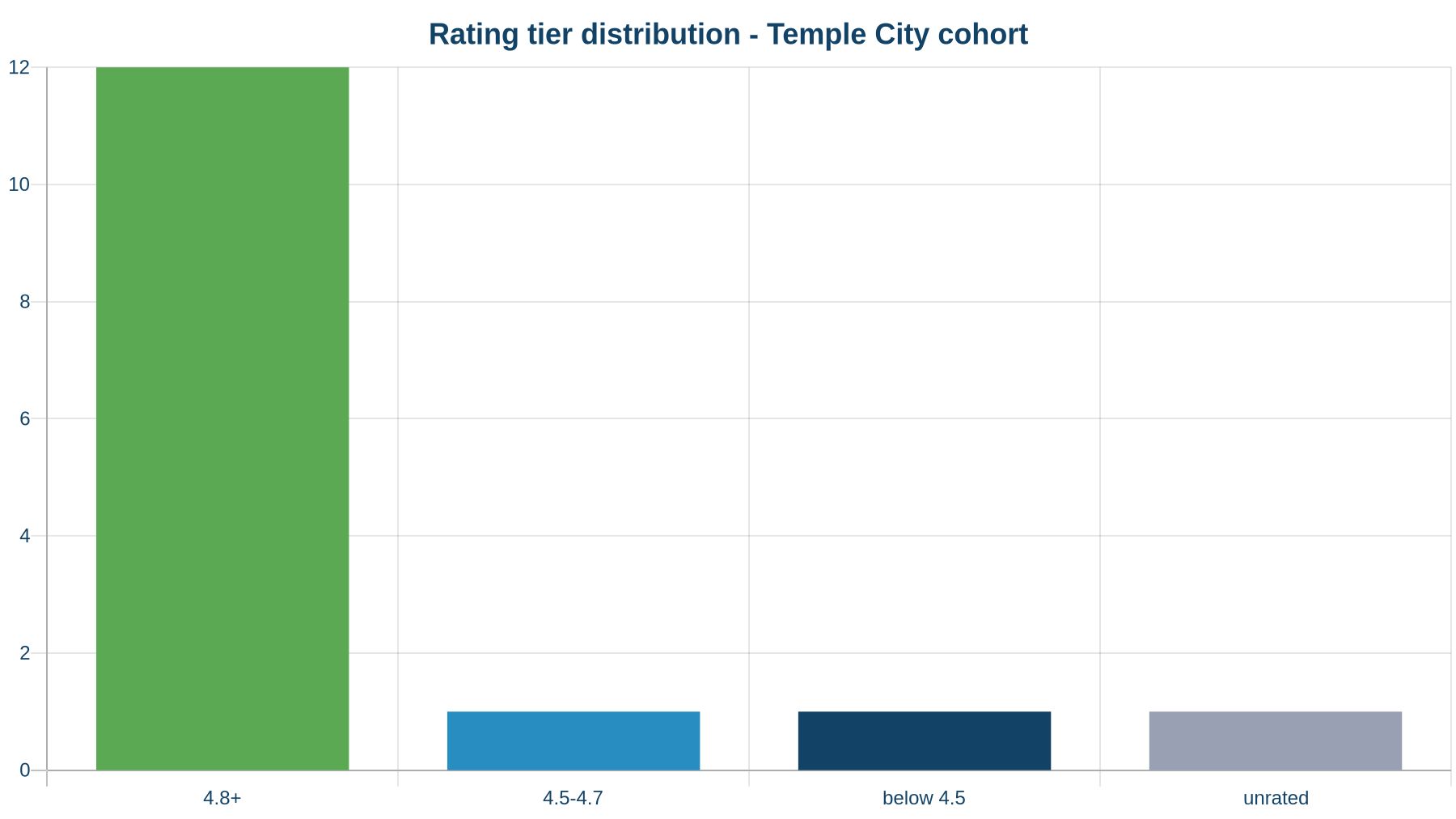
Rating distribution across the cohort: 12 of 15 profiles sit at 4.8 stars or above. One sits in the 4.5–4.7 range. One is below 4.5. One is unrated. So if you’re not at 4.8+, you’re already in the minority—and the AI notices.
Then there’s Profile A. It had only 17 reviews, with its newest review 225 days old. Its hours were set. It’s based in San Gabriel. The AI surfaced it. Profile B had 112 reviews, newest review 168 days ago, hours set, based in Monrovia. The AI skipped it.
Profile B had six times the reviews and still got skipped. That’s the part that should make you stop and think. Our audit didn’t surface a single smoking-gun gap—which is exactly the point. The AI is aggregating dozens of small signals, and any one of them can tip the decision. Review count alone is not a guarantee.
What This Means for Your Business Specifically
Stop thinking about this as an “SEO problem.” It’s a trust-data problem.
The businesses that get cited in AI Overviews and AI assistant responses are the ones whose digital presence tells the same story everywhere the AI looks. The name, address, phone number, and service area on your Google Business Profile match your website. Your hours are accurate. Your categories are specific. You have schema markup on your site that tells AI crawlers exactly what you do and where you do it. And you have a steady, ongoing stream of real customer reviews—not a burst from two years ago.
Bluehost’s 90-day analysis found 83.4 million verified AI crawler requests per day across its hosted sites. About 9% of those were for search indexing, and roughly 1% were live assistant fetches—the kind that happen when someone asks ChatGPT or Google’s AI to find them a contractor right now. That 1% is small. But it’s the 1% that books jobs without ever clicking your website.
The businesses that win those moments are the ones who’ve already done the work.
Four Things You Can Do This Week
1. Audit your Google Business Profile for completeness. Every field matters now. Hours, services, service areas, photos, Q&A, business description. If any of it is blank or outdated, you’re giving the AI a reason to skip you. Run your profile through our free Map Pack Grader—it scores your GBP against the map-pack winners in your city and shows you exactly what’s missing.
2. Check whether AI is already recommending you. You might assume you’re visible. You might not be. Our free Does AI Recommend You? tool asks ChatGPT, Perplexity, and Gemini who the best contractors are in your city, and shows you whether they name your business or your competitors.
3. Get your review velocity back. The Temple City data shows that surfaced profiles had nearly 50% more reviews than skipped ones. If your last review came in four months ago, you have a problem. If you’re not ready to automate yet, set a calendar reminder for 24 hours after every job closes and send a personal text with a direct link to your Google review page—the link format is g.page/[your-business-name]/review. When you’re ready to stop doing it manually, our reputation and review management service handles this automatically: review requests go out after each job, responses go up fast, and you get alerted when something negative lands.
4. Make your website readable by machines, not just people. If your site doesn’t have schema markup—structured data that tells Google and AI crawlers what your business is, what it does, and where it operates—you’re invisible to a growing share of AI-driven discovery. Check your AI readiness with our free AI Search Readiness Score, which flags schema gaps, GBP issues, and crawler access problems in one report.
The Ranking You Can’t See
You can be at position one in the map pack and still get skipped by the AI Overview sitting above it. Two different ranking systems. Two different sets of signals.
The businesses that figure this out in 2026 are going to own their cities. The ones that don’t are going to keep buying leads from Angi and wondering why the phone is quieter than it used to be.
Monday morning: run the AI recommendation check. Find out if Google’s AI is already naming your competitors when someone in Temple City, Arcadia, or San Gabriel asks for a contractor. That’s the number that matters now.