

TL;DR
Do I need to fact-check AI-written content before putting it on my website?
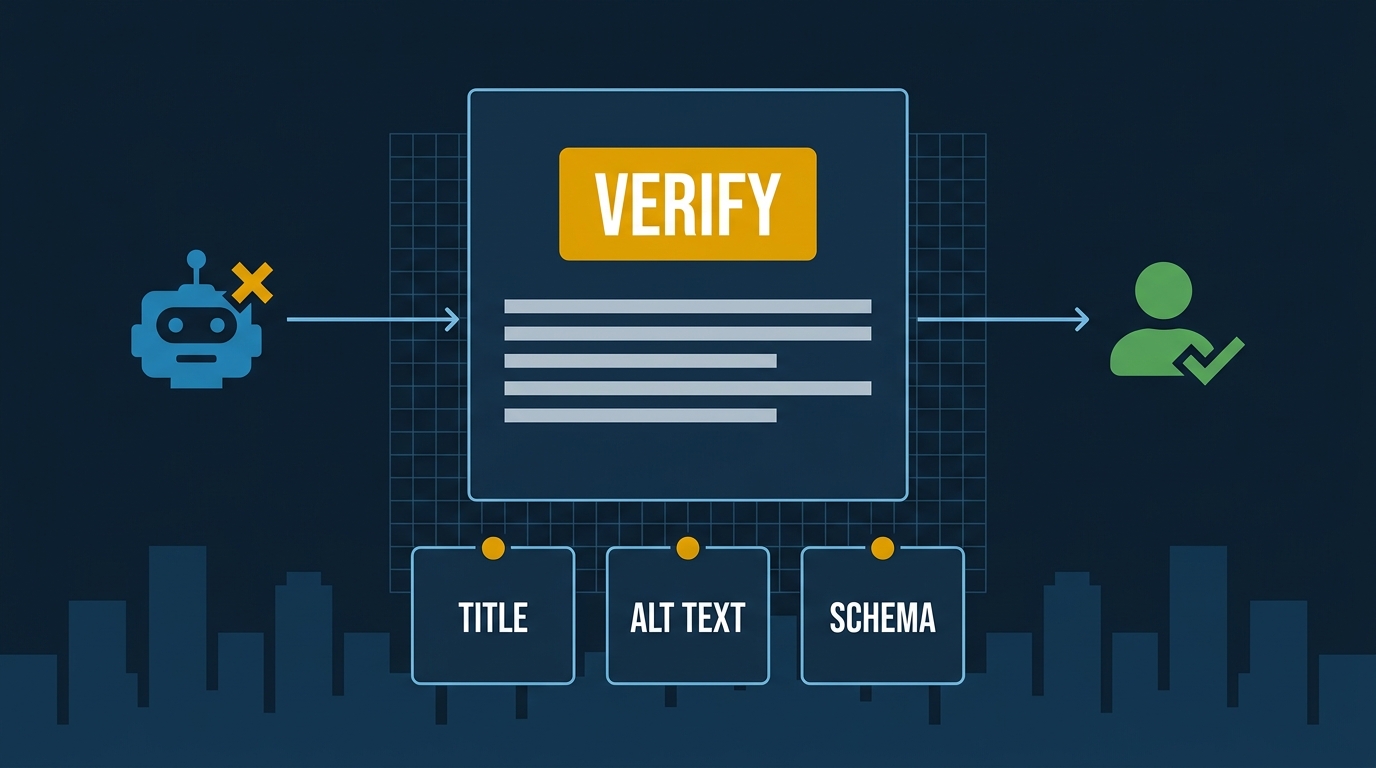
Yes. Google updated its official guidance in October 2025 to require manual fact-checking of all AI-generated content before publishing — including titles, image alt text, and meta descriptions, not just the body copy. Skipping that step puts your rankings at risk. Build a short review checklist and run every AI draft through it.
If you’ve been using ChatGPT or any other AI tool to write service pages, blog posts, or even just title tags — you’re not alone, and you’re not wrong for trying it. But as of October 1, 2025, Google made one thing very clear: publish AI content without a manual review first, and you’re taking a real risk with your rankings.
This isn’t speculation. Google updated its official AI content guidance page on October 1 and added three new sentences that weren’t there in the December 2025 version:
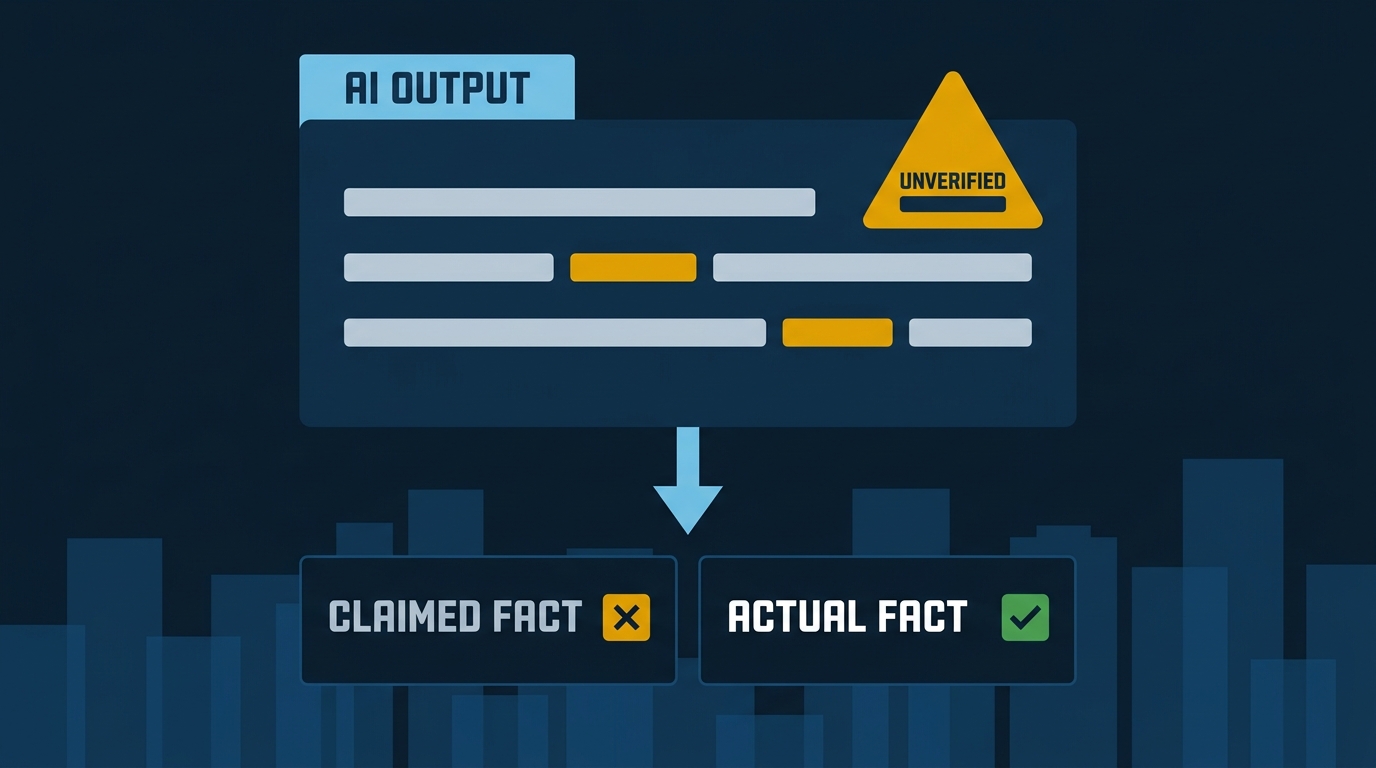
“Keep in mind that generative models don’t retrieve facts, but predict a likely sequence of words based on their training data. Because of this, generative AI outputs may contain inaccuracies (also known as hallucinations). It is critical to manually fact-check and review all AI-generated content for accuracy and trustworthiness before publishing.”
That last sentence is the one that matters. “Critical” is not language Google uses casually.
What “All AI-Generated Content” Actually Means
Here’s where a lot of contractors will get tripped up: the fact-check requirement doesn’t stop at your blog copy.
Google’s updated guidance explicitly extends the manual review to metadata — specifically title elements, meta description elements, structured data, and image alt text. If you’re using AI to generate any of those, every one of them needs a human eyeball before it goes live.
Think about what that means for a typical HVAC or plumbing website. You’ve got service pages for a dozen cities. Each one has a title tag, a meta description, maybe schema markup listing your service areas or hours, and photos with alt text. If an AI tool wrote or suggested any of that — and got something wrong — Google now has explicit guidance telling its systems to treat that as an accuracy problem.
A hallucinated business hour. A service area that includes a city you don’t actually serve. A credential you don’t hold. These aren’t hypothetical. AI tools make these mistakes constantly because, as Google’s own guidance now says, they’re not retrieving facts — they’re predicting plausible text.
The Fake Author Problem Is Real Too
On the same day, Google also updated its people-first content guidance to add a new warning about fabricated author profiles. The page now explicitly calls out AI-generated headshots, made-up names, and false credentials as deception — and says deception is a signal of a low-quality page to both users and Google’s automated quality systems.
This matters for home-service businesses because some agencies have been building out “author” profiles on client websites using stock photos or AI-generated faces to make content look more credible. If your site has that going on, it’s worth a look before Google’s systems flag it.
The fix is simple: if content on your site has a byline, it should belong to a real person with a real photo and accurate credentials. Your master electrician’s name and license number is more trustworthy than any invented persona.
The Verification Workflow That Keeps You Compliant
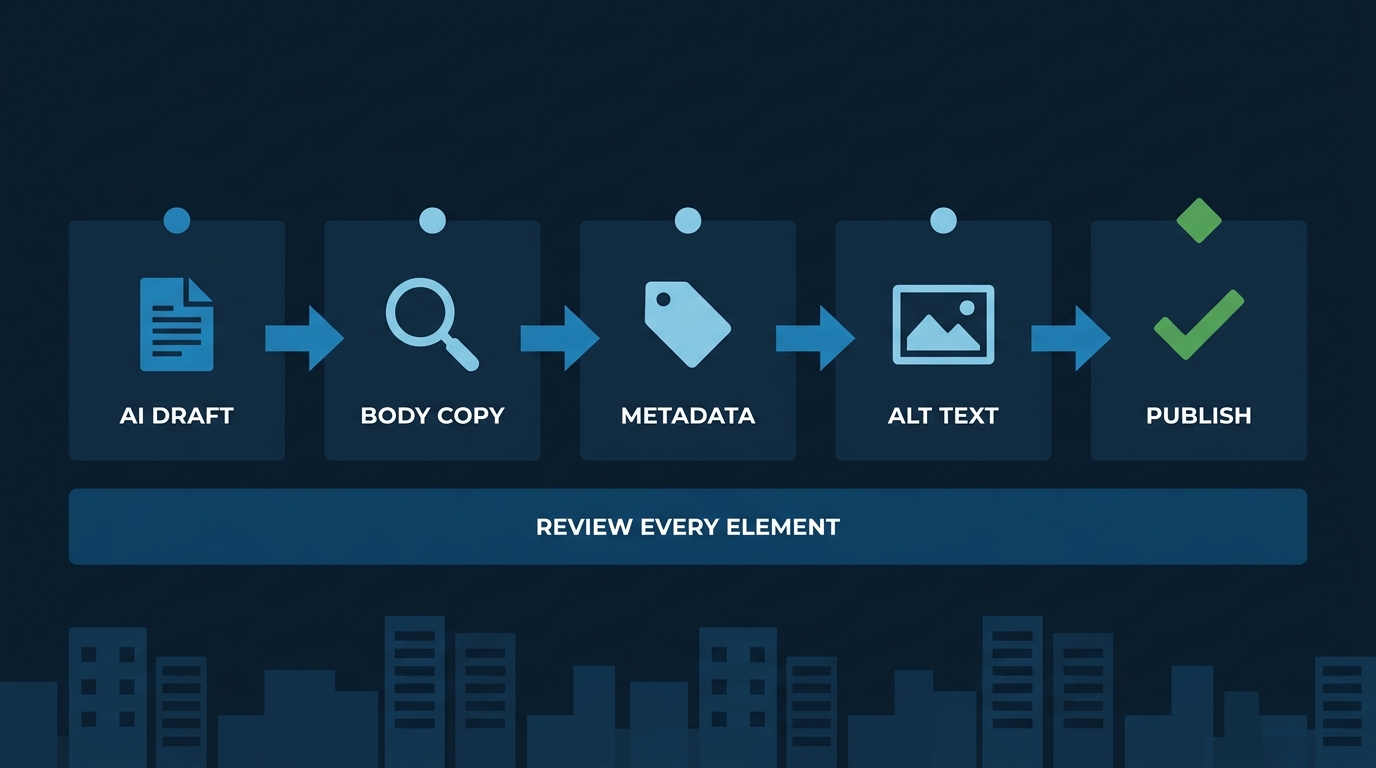
You don’t need to stop using AI. You need to stop treating its output as finished work.
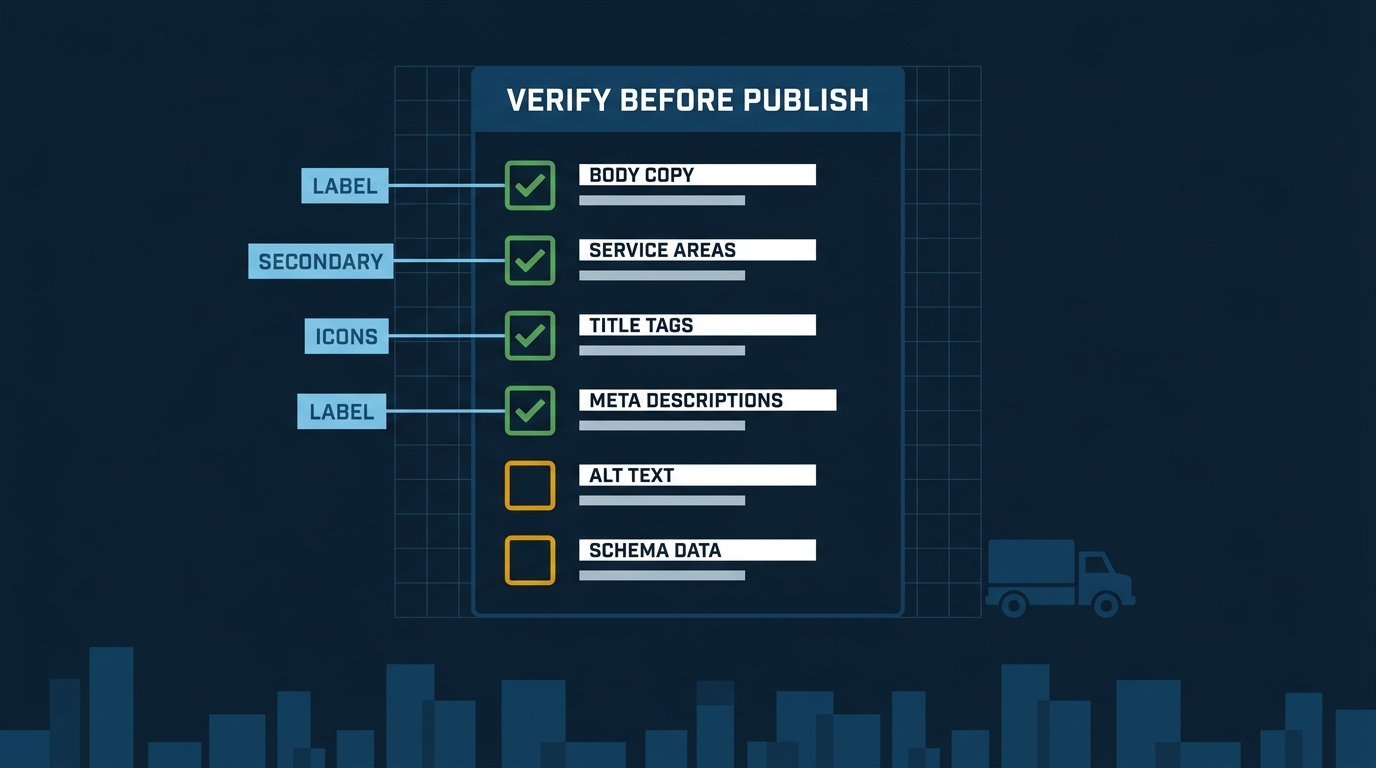
Here’s the review checklist that covers what Google’s updated guidance now requires:
1. Body copy — check every factual claim Read the draft as if you’re a customer. Any claim about how something works, how long a job takes, what a permit costs, what code requires — verify it. AI tools confidently state wrong things. Your license is on the line if your website gives a homeowner bad technical information, not just your ranking.
2. Service area accuracy AI tools will happily list cities you don’t serve, or describe your service area incorrectly. If a page says you serve Pasadena, Arcadia, and Monrovia — confirm you actually do, and that your Google Business Profile says the same thing. Mismatches between your website and your GBP create trust signals that hurt both rankings and conversions.
3. Title tags and meta descriptions These are metadata, and they’re now explicitly covered by Google’s manual review requirement. Read each one. Does it accurately describe the page? Does it match what’s actually on the page? AI-written titles sometimes describe the content the AI intended to write rather than what it actually produced.
4. Image alt text If AI generated your alt text, confirm it describes the actual image. A photo of your crew on a job in Whittier shouldn’t have alt text describing a generic “plumber fixing a pipe.” That’s both inaccurate and a missed opportunity.
5. Structured data (schema markup) If you have schema on your service pages — business hours, service types, geographic coverage — verify every field against what’s true today. Schema errors are invisible to visitors but very visible to Google.
6. Author bylines If any page has a byline, confirm it’s a real person at your company, with an accurate photo and accurate credentials. Remove or correct anything that was fabricated or is now outdated.
This isn’t a two-hour project. For most home-service websites, a thorough review of existing AI-assisted content takes a focused afternoon. Set it up as a checklist in whatever you use to manage jobs — Jobber, ServiceTitan, a Google Sheet — and run new AI drafts through it before anything goes live.
Why This Matters More for Trades Than for Other Businesses
A law firm that publishes a hallucinated legal claim has a problem. A roofer that publishes a hallucinated claim about what a permit costs in Los Angeles County, or what a Class A fire rating means, has a problem and a liability.
Your customers are making decisions about their homes based on what your website says. That’s a higher bar than a blog post about marketing trends. Google’s guidance is catching up to that reality.
The other piece: home-service businesses in competitive LA County markets — Pasadena, Glendale, Whittier, Santa Clarita — are often separated by very small margins in the map pack. A page that Google’s systems flag for accuracy problems, or that carries signals of low-quality content, doesn’t have room to absorb that hit.
If you want to know where your website and Google Business Profile actually stand right now, run a free audit at cityboostseo.com/free-local-seo-audit/ — it checks your map-pack position, profile completeness, and review standing against your actual local competitors. The report comes back in five to ten minutes, no sales call required.
If you’d rather have someone handle the content review and ongoing site compliance for you, our website design and development service includes content built to Google’s current standards — with human review baked in, not bolted on as an afterthought.
The One Thing to Do Before Friday
Pull up your most important service page — the one targeting your highest-value job type in your primary city. Read it like a skeptical customer who just found you on Google. Find one claim that AI might have generated without a source. Verify it or fix it.
That’s it. One page, one claim, this week. Then build the habit forward.
The businesses that keep ranking through Google’s quality updates are the ones that treat their website as a real business asset — not a content machine running on autopilot.