

TL;DR
What happens to my business if ChatGPT or Gemini recommends a competitor instead of me?
You lose the call before you ever knew it was coming. AI tools now answer 'best plumber near me' directly, without sending anyone to Google. If your reviews are thin or stale, or your profile is incomplete, these systems skip you. Fix your review velocity and profile completeness first—those are the signals AI reads.
Someone in Monterey Park opens ChatGPT at 10pm. Their deadbolt just failed. They type: best-rated locksmith in Monterey Park. ChatGPT answers immediately—with names, ratings, and a short description of each one. Your business isn’t in the answer. You never knew the question was asked.
That’s not a hypothetical. That’s the audit we just ran.
And the uncomfortable part isn’t that AI search exists. It’s that most contractors in LA County have no idea what these systems are saying about them—or whether they’re being mentioned at all.
The Old Game Changed Without Warning
For years, the path was simple: rank on Google, get clicks, get calls. As Search Engine Journal’s Duane Forrester noted in a recent analysis, Google’s ad revenue is still growing—but the share of that growth tied to sending someone to an independent website keeps shrinking. The ranking and the earning have decoupled. The surface that ranks you and the surface that books your jobs are no longer the same surface.
For a locksmith or HVAC company in LA County, that means a customer can get a recommendation from ChatGPT, Perplexity, or Google’s AI Overview without ever clicking a single search result. No click, no impression, no way for you to know the referral happened—or didn’t.
This is the visibility crisis. It’s not about your website traffic. It’s about conversations you’re not part of.
What the Monterey Park Locksmith Audit Actually Showed
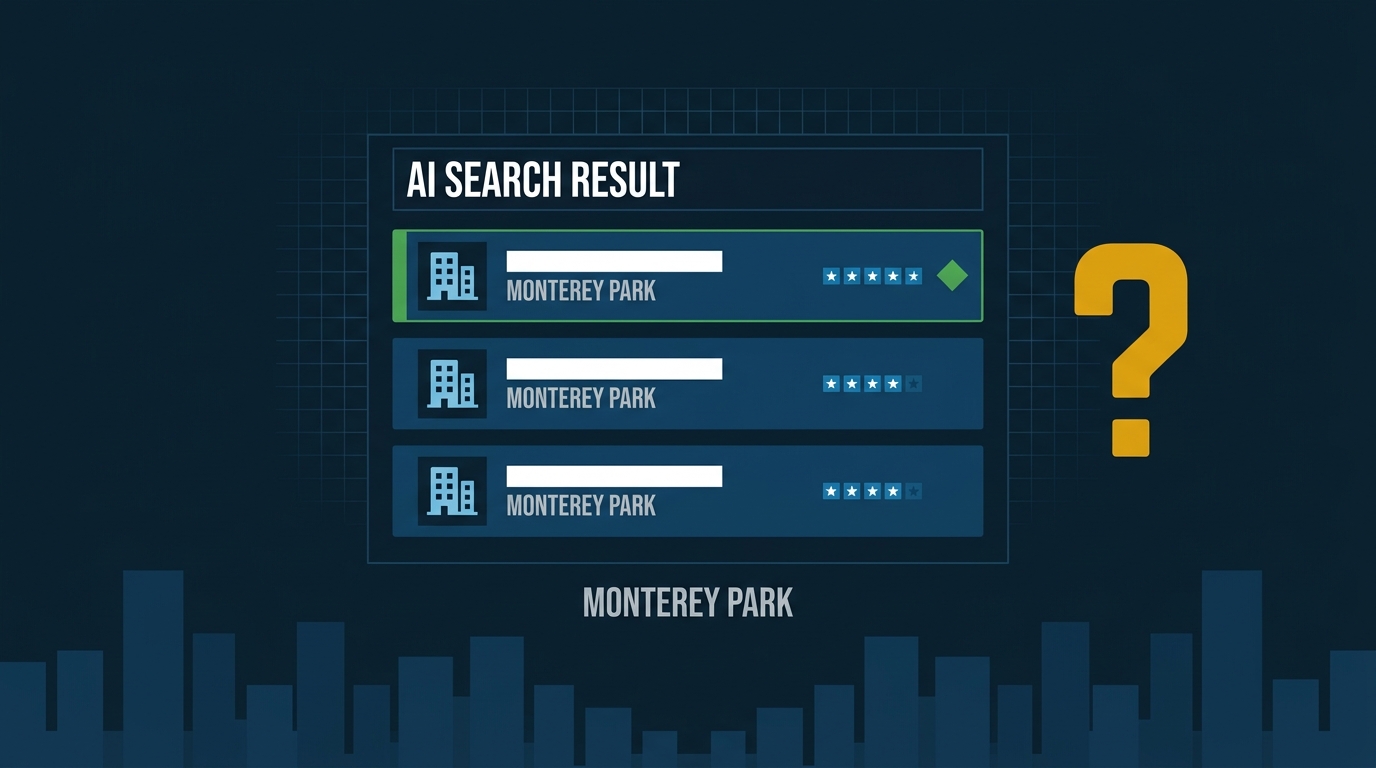
We asked Google’s Maps-grounded AI for the best-rated locksmith in Monterey Park. We then audited the 17 Google Business Profiles competing for that search. Only 5 of those 17 profiles were surfaced in AI results.
Here’s what separated the ones that appeared from the ones that didn’t.
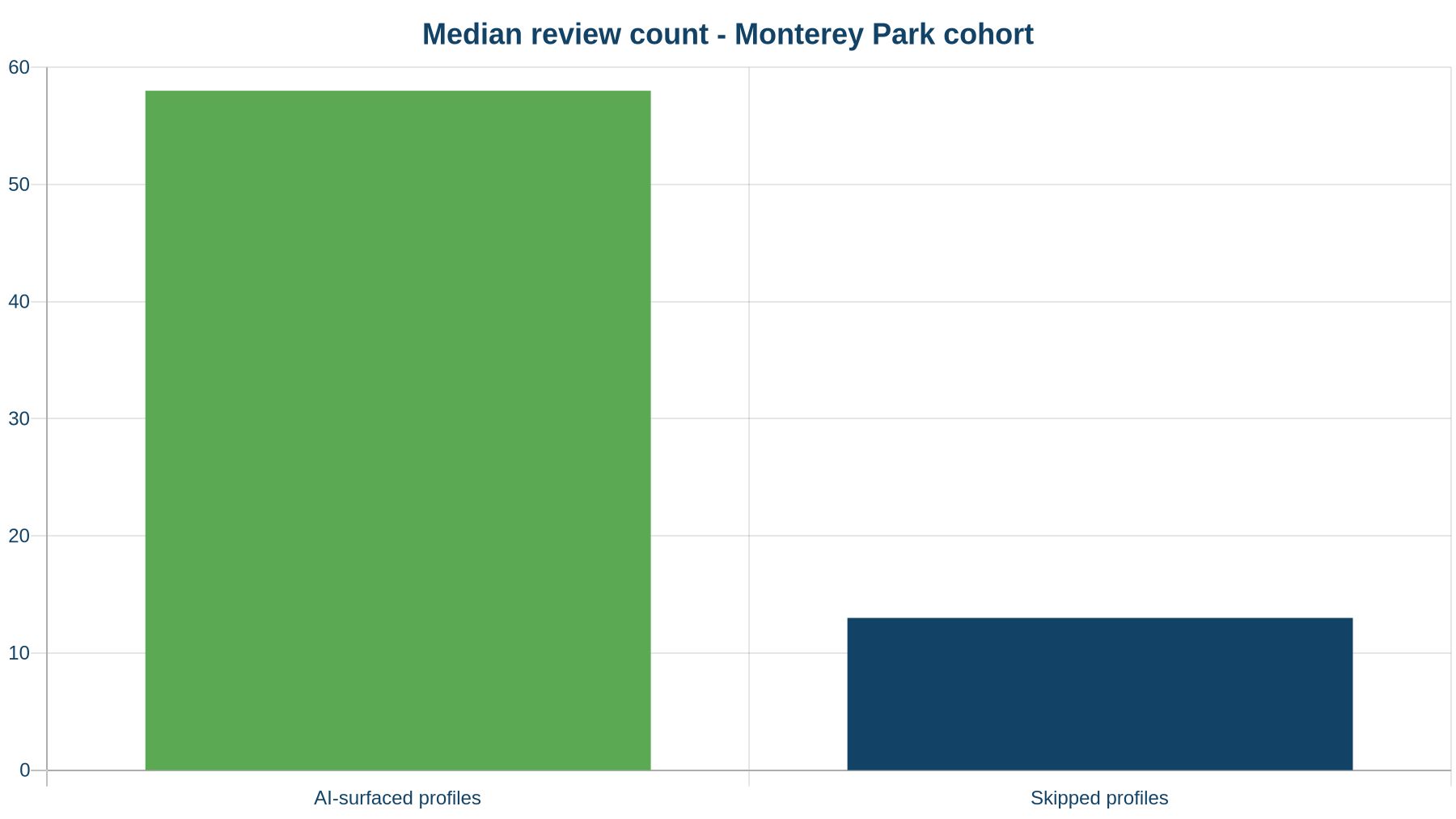
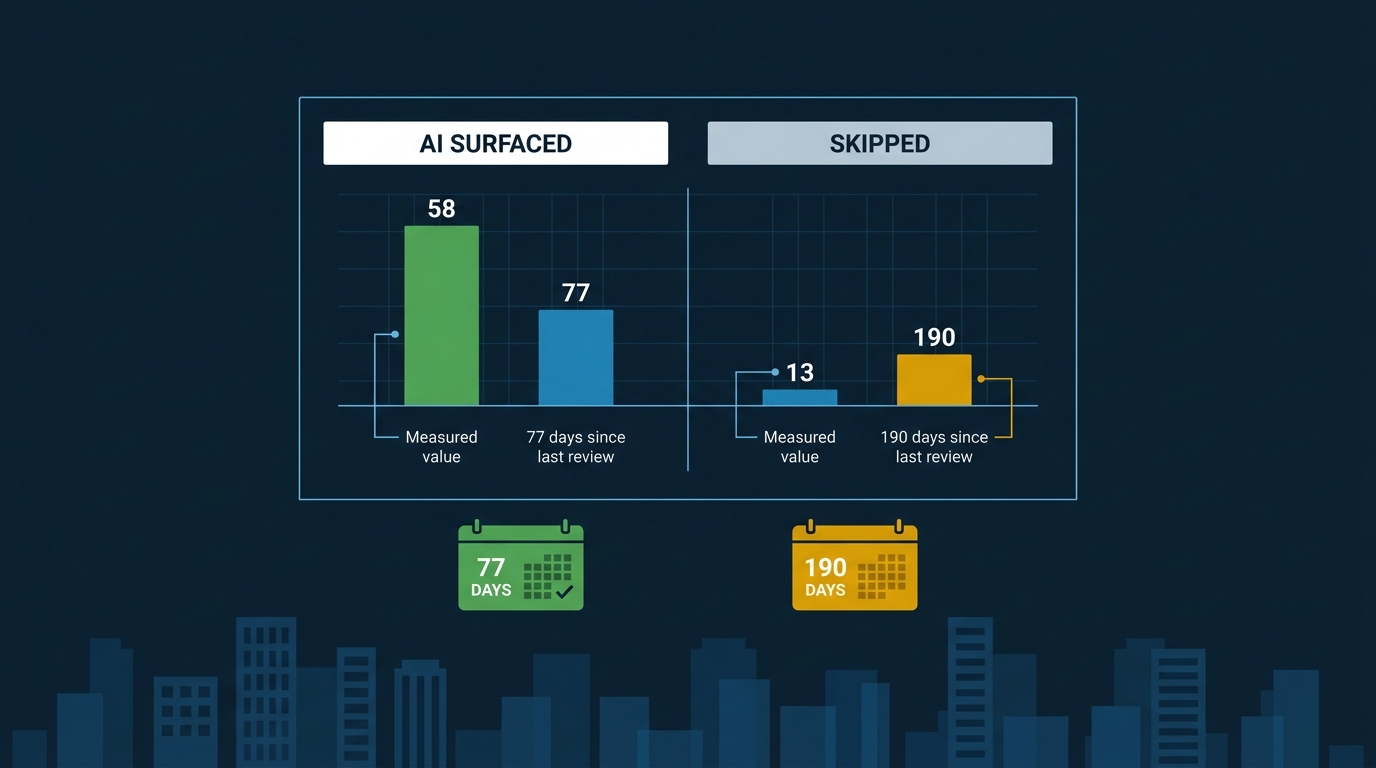
The surfaced profiles had a median of 58 reviews. The skipped profiles had a median of 13. That’s a 4.5x gap—and it’s not subtle. The AI isn’t splitting hairs between 45 reviews and 50. It’s making a much blunter cut: credible volume versus thin.
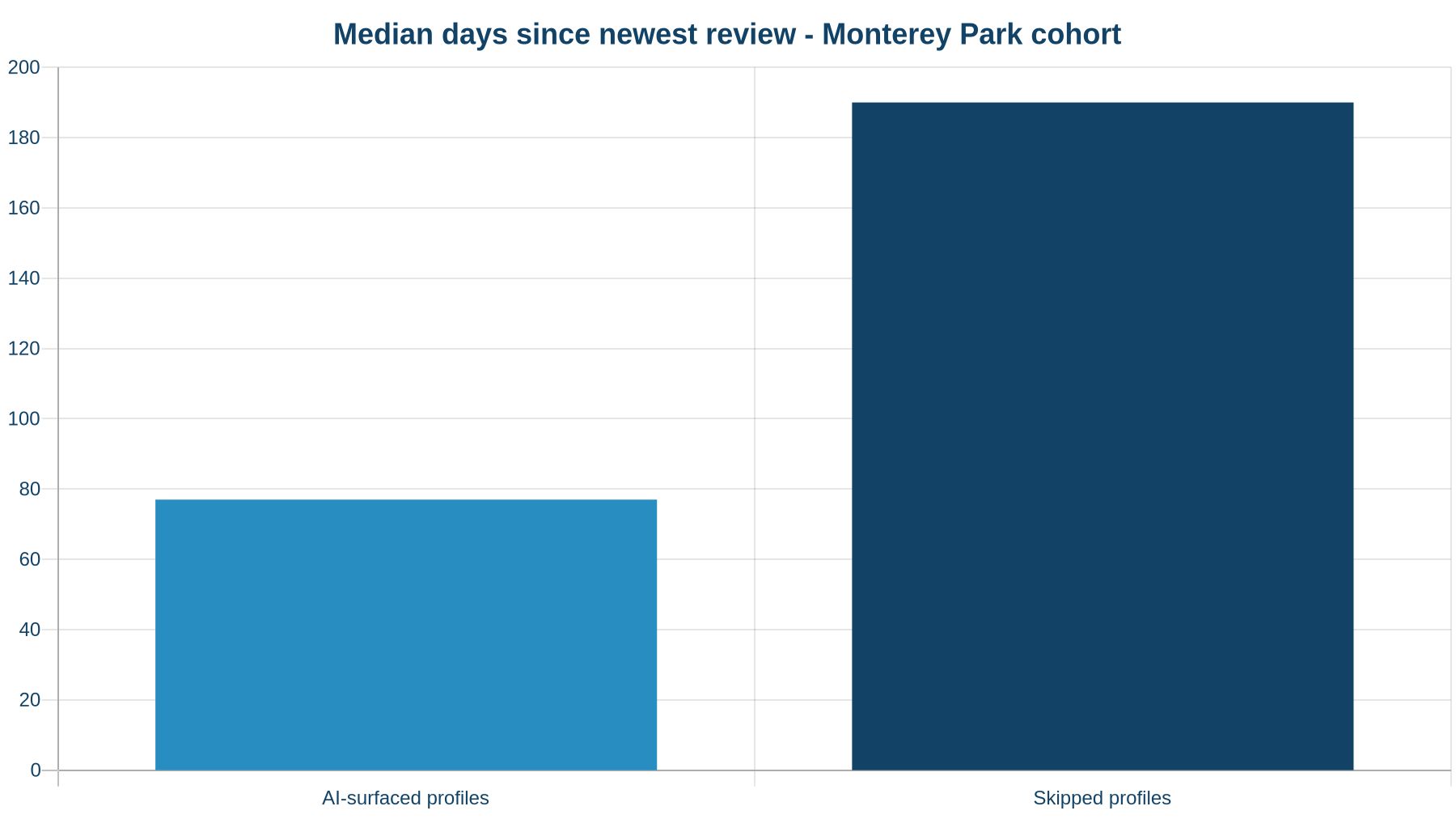
Review freshness was just as stark. The surfaced profiles had a median newest-review age of 77 days. The skipped profiles: 190 days. Over six months since their last review. To an AI system trained to assess trustworthiness, a 190-day-old review might as well be a closed business.
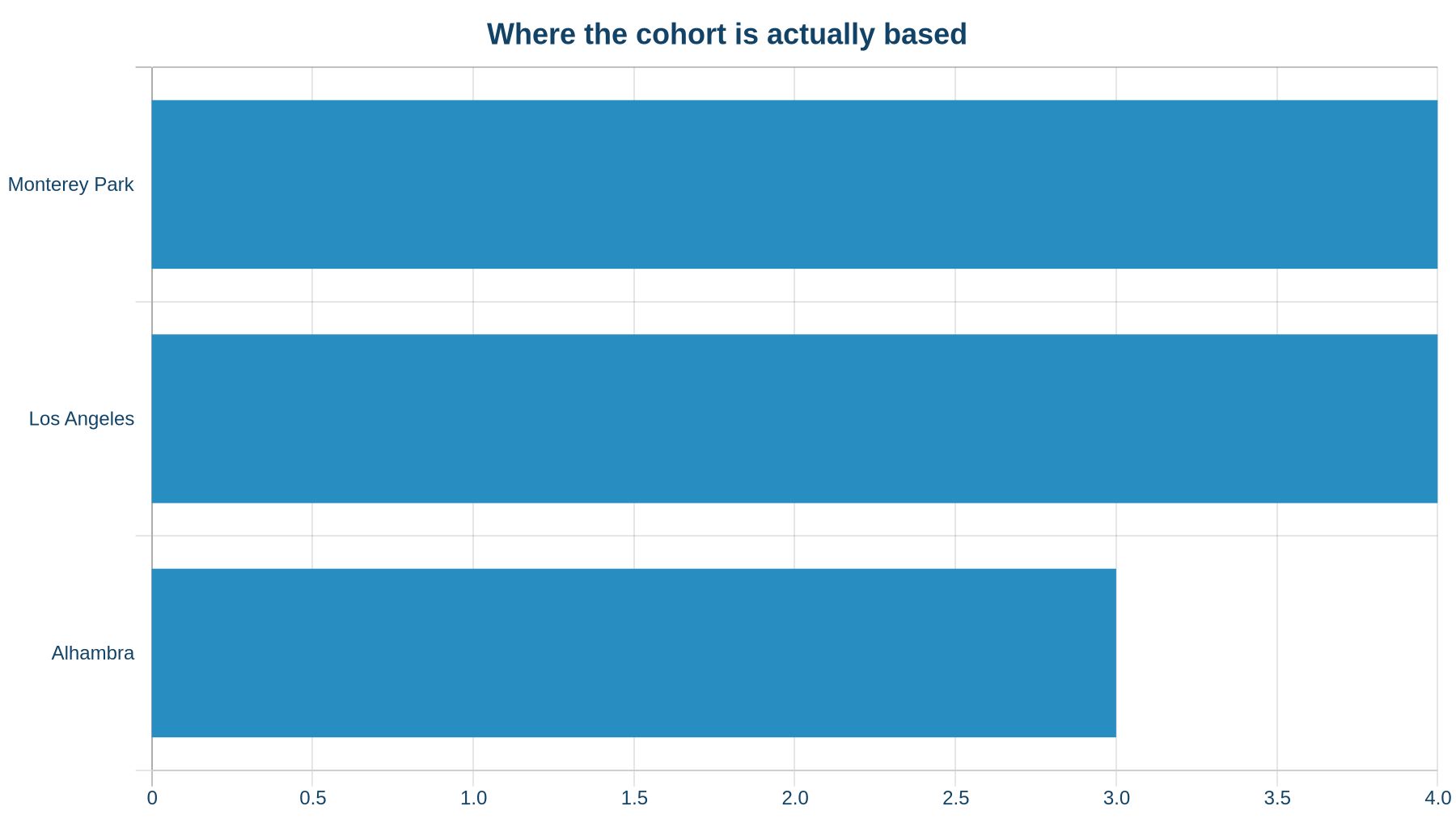
One more detail worth sitting with: only 4 of the 17 profiles in this cohort were physically based in Monterey Park. The rest came from Los Angeles (4 profiles), Alhambra (3), and Montebello and others beyond. The AI didn’t care about city limits. It cared about signal strength.
Profile A—surfaced—had 58 reviews, a newest review 77 days old, complete hours, and was based in Los Angeles. Profile B—skipped—had 13 reviews, a newest review 234 days old, complete hours, and was based in Montebello. Both had hours set. The hours didn’t save Profile B. The review gap did.
The Hallucination Problem Nobody Talks About
Being skipped is bad. Being mentioned incorrectly is worse.
AI systems can hallucinate—they can describe your business with the wrong hours, wrong service area, wrong specialty, or fabricate a detail that a customer takes as fact. Zapier’s 2026 roundup of AI visibility tools flags this as one of the core reasons businesses need active monitoring: you can’t correct what you can’t see.
A competitor could have 40 glowing reviews and your business could have a hallucinated one-star summary attached to it in a ChatGPT answer—and you’d have no idea unless you were checking. Most contractors aren’t checking.
The fix isn’t complicated, but it does require consistency.
What AI Systems Are Actually Reading
AI tools like ChatGPT, Gemini, and Perplexity aren’t doing original research when they answer “best electrician in Torrance.” They’re synthesizing structured signals from across the web: your Google Business Profile data, your review count and recency, your website’s schema markup, your presence in directories, and what other credible sources say about you.
That means the same fundamentals that help you rank in the Google map pack also feed AI recommendations—but the AI applies them more bluntly. There’s no nuanced PageRank calculation happening. The system is pattern-matching on: does this business look active, trusted, and complete?
Active = recent reviews. Trusted = volume of reviews with a strong rating. Complete = hours, services, photos, accurate NAP (name, address, phone) everywhere it appears.
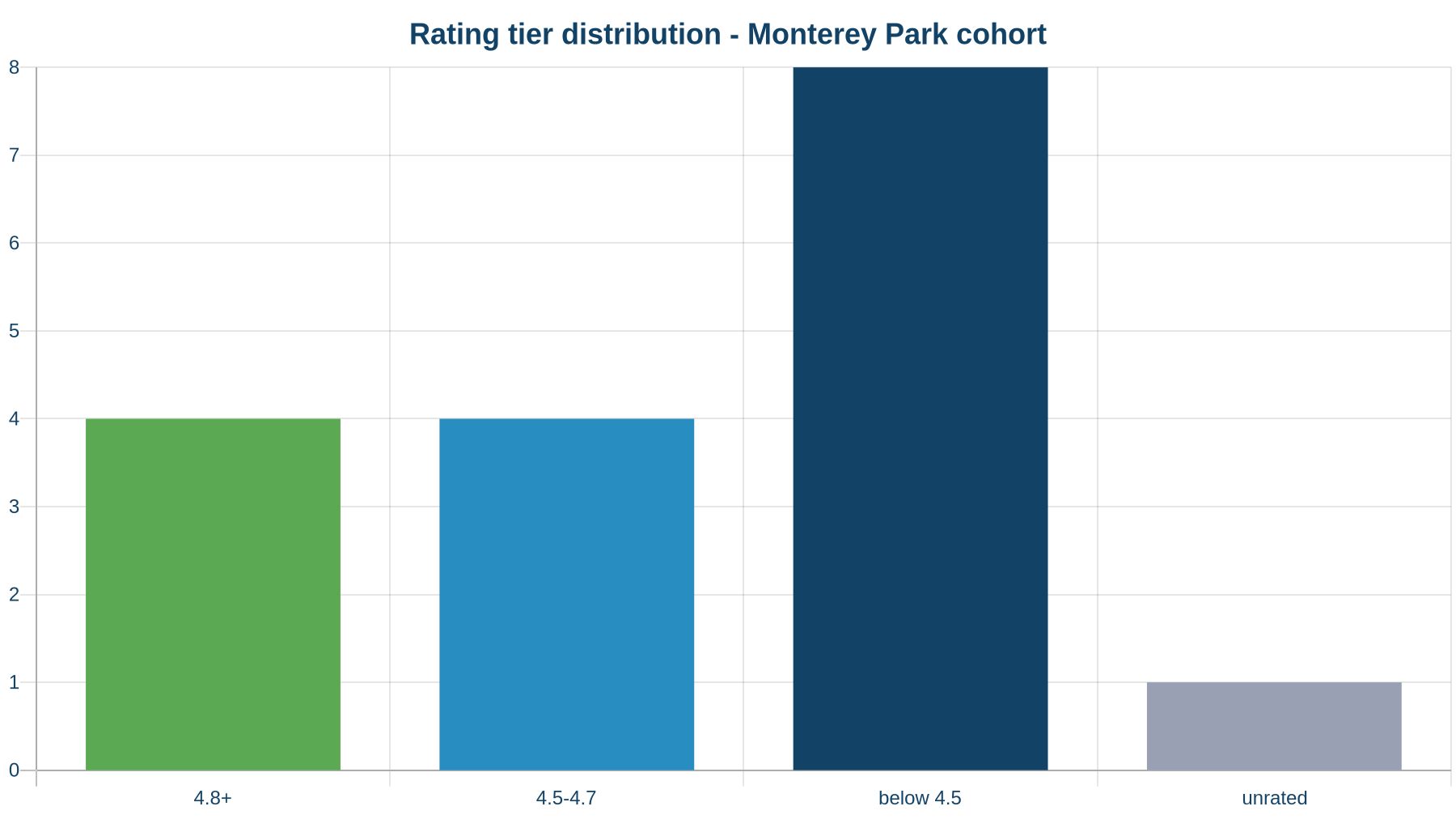
In our Monterey Park cohort, 8 of the 17 profiles had ratings below 4.5. Four had ratings of 4.8 or higher. All four of those high-rated profiles had a fighting chance at AI surfacing. Most of the sub-4.5 profiles didn’t.
What You Can Do This Week
Step one: find out where you stand. Run your profile through our free Does AI Recommend You? tool—it asks ChatGPT, Perplexity, and Gemini who they’d recommend for your trade in your city, and shows you whether your business comes up or your competitor does. Takes two minutes.
If you want the full picture of what’s holding your Google Business Profile back, the AI Search Readiness Score checks your schema, profile completeness, review signals, and AI-crawler access, then tells you what to fix.
Step two: get your review velocity up. The Monterey Park data is clear—77 days between reviews is survivable. 190 days is invisible. If you’re not systematically asking every closed job for a review, you’re letting your AI visibility decay in real time. Our reputation and review management service automates the ask after every job, monitors what comes in, and flags anything that needs a response. That’s the fastest legitimate way to close the gap.
Step three: audit what AI says about you monthly. This isn’t a one-time fix. AI systems update their training and retrieval patterns. A hallucinated detail or a competitor’s new review surge can shift who gets recommended. Set a calendar reminder. Check the tools. Treat your AI presence like you treat your trucks—something that needs regular maintenance, not a thing you set up once and forget.
The businesses that will win in AI search by 2027 aren’t the ones buying an “AI SEO” package from a vendor who learned the term last month. They’re the ones with consistent, structured, real-world signals: fresh reviews, complete profiles, accurate information everywhere. That’s a game you can play starting Monday.