

TL;DR
Why does AI recommend my competitor instead of me?
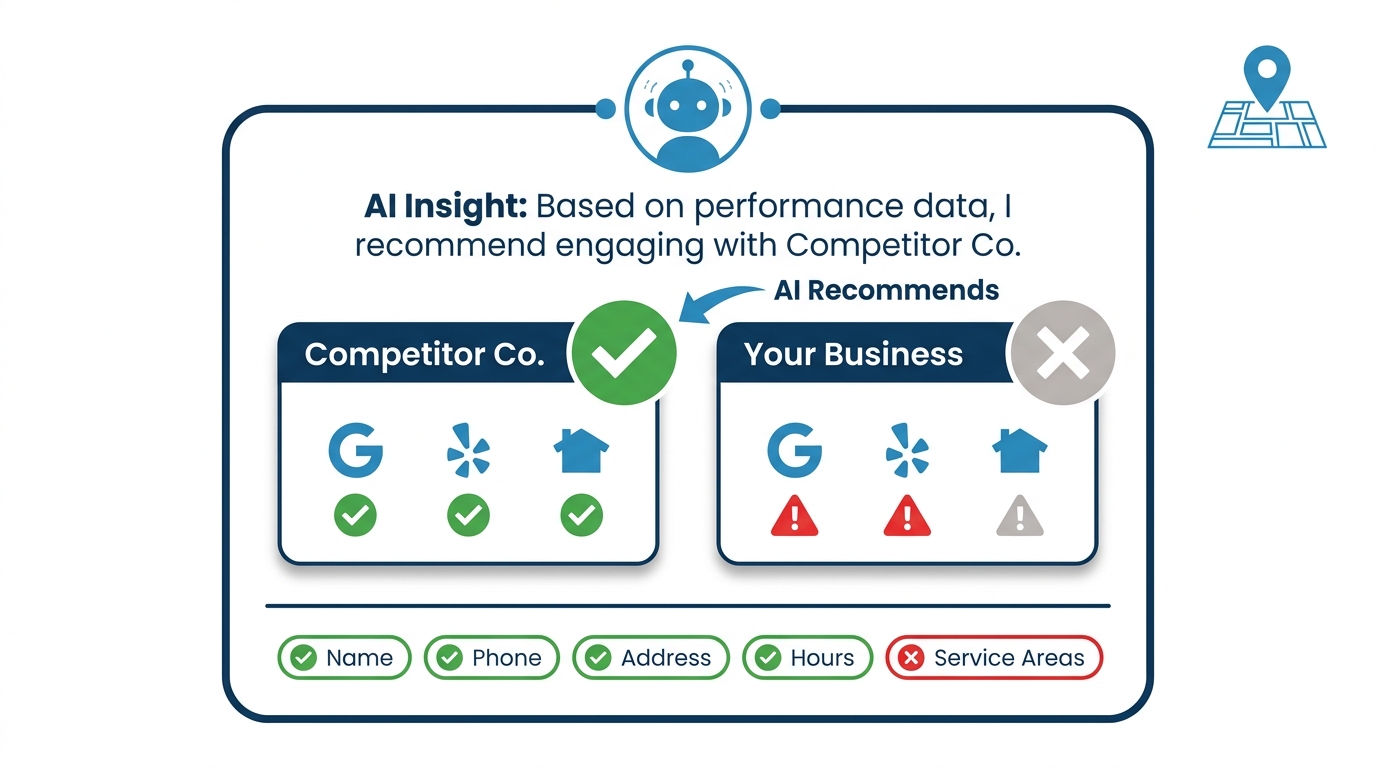
Usually contradiction, not quality. AI assistants hand back the business they can summarize cleanly — a competitor whose name, number, hours, and service areas match on every platform beats a better shop whose listings disagree. Make every field identical everywhere, then keep reviews coming: the job goes to the profile the AI can trust.
A homeowner in Glendale asks ChatGPT for a plumber. They don’t open a browser. They don’t scroll a map pack. They read the two or three names the AI hands back and call the first one.
That job was worth $400. The plumber who got it has 11 Google reviews and a Yelp page that hasn’t been updated in three years — but every field on every platform matches. Same name, same number, same hours, same service cities. The AI had a clean story to summarize. Yours had contradictions. You lost the call before the homeowner even knew you existed.
Here’s the uncomfortable truth: the HVAC company showing up in AI answers for “AC repair near me” in Pasadena probably isn’t running a better operation than you. They have cleaner data. That’s it. The mechanic behind why that matters is worth understanding — because fixing it is faster than you think.
AI Doesn’t Compare Anymore — It Decides
SEO veteran Kris Jones put it plainly on the Search Engine Journal podcast: “Traditional search basically worked to provide you with options to answer your question. You’re required to do the synthesis. Whereas with AI, AI changed the game by doing the synthesis.”
The user arrives at the end of their research, not the beginning. The AI has already read dozens of sources, compared you to your competitors, and issued a recommendation. If you’re in the answer, the customer shows up already sold. If you’re not, they never encounter you at all.
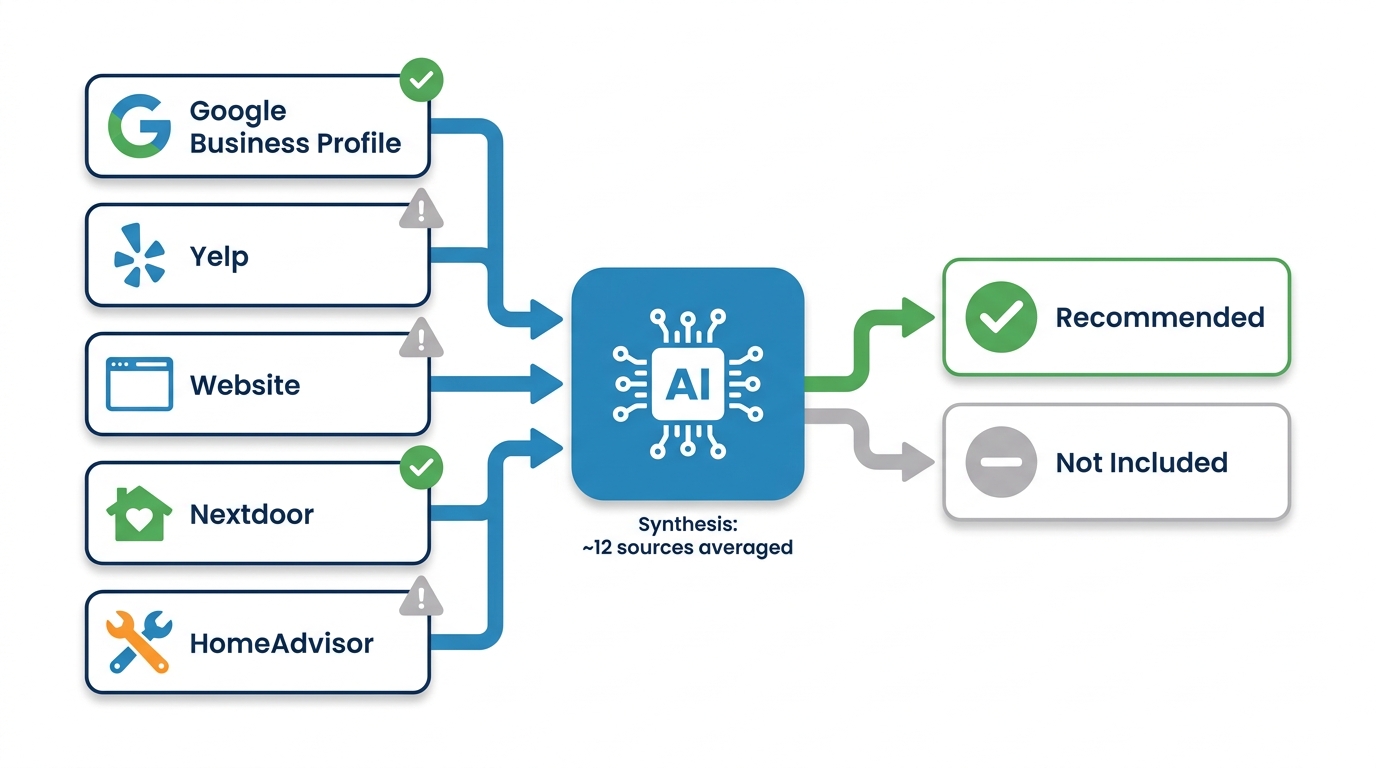
Jones described what these systems pull from as “brand signals — specifically what other people are publishing about you.” Your own website is one data point. Your Google Business Profile (GBP) is another. Your Yelp listing, your Nextdoor mentions, your reviews on HomeAdvisor — all of it gets read, compared, and either confirmed or contradicted. The AI is acting as a concierge, not a card catalog. It reads the top sources for you and comes back with a name.
The Problem Is Contradiction, Not Obscurity
Most home-service businesses in the San Gabriel Valley aren’t invisible online. They have a GBP, a website, maybe a Yelp page. The problem is that those sources don’t agree with each other.
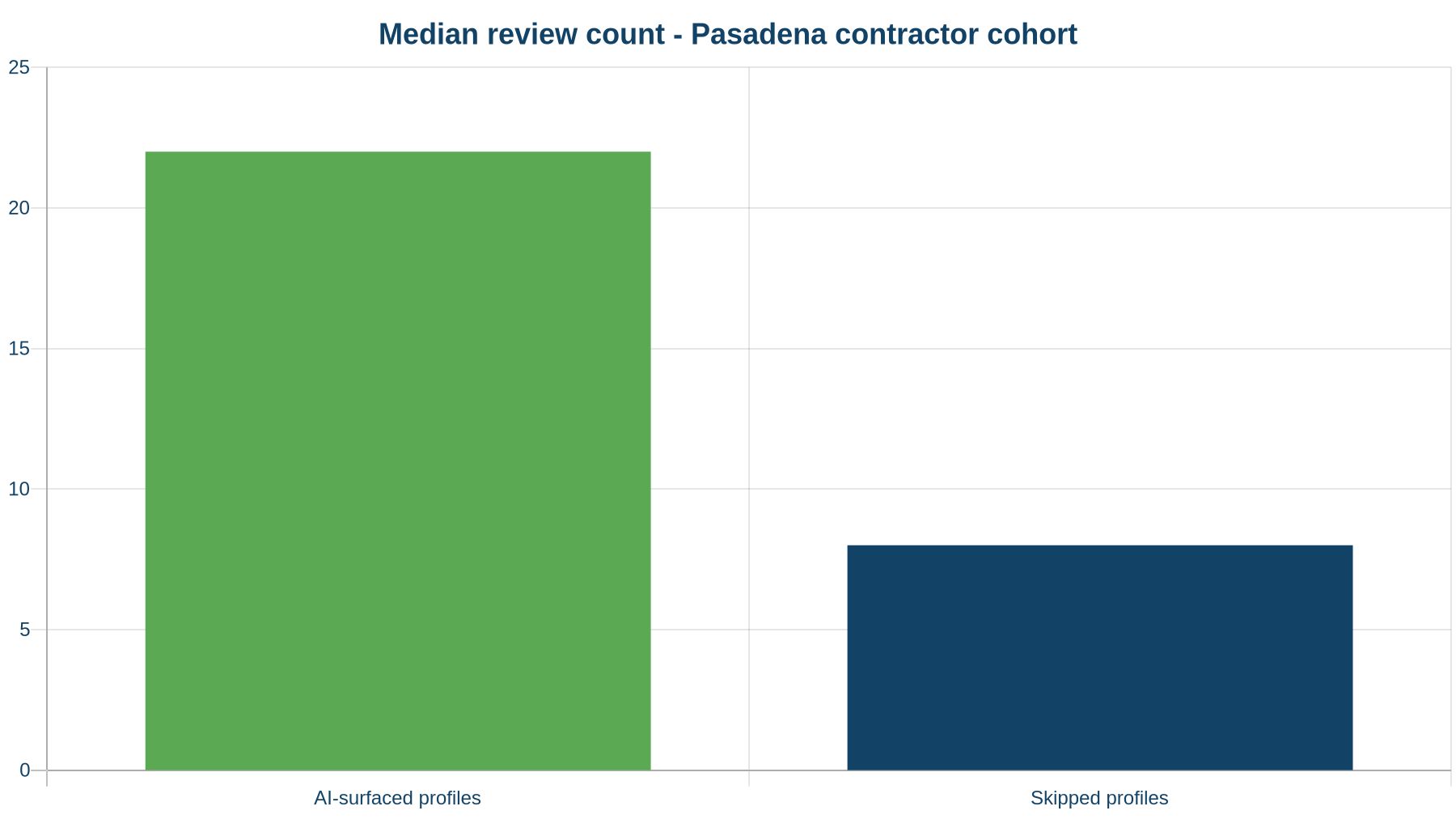
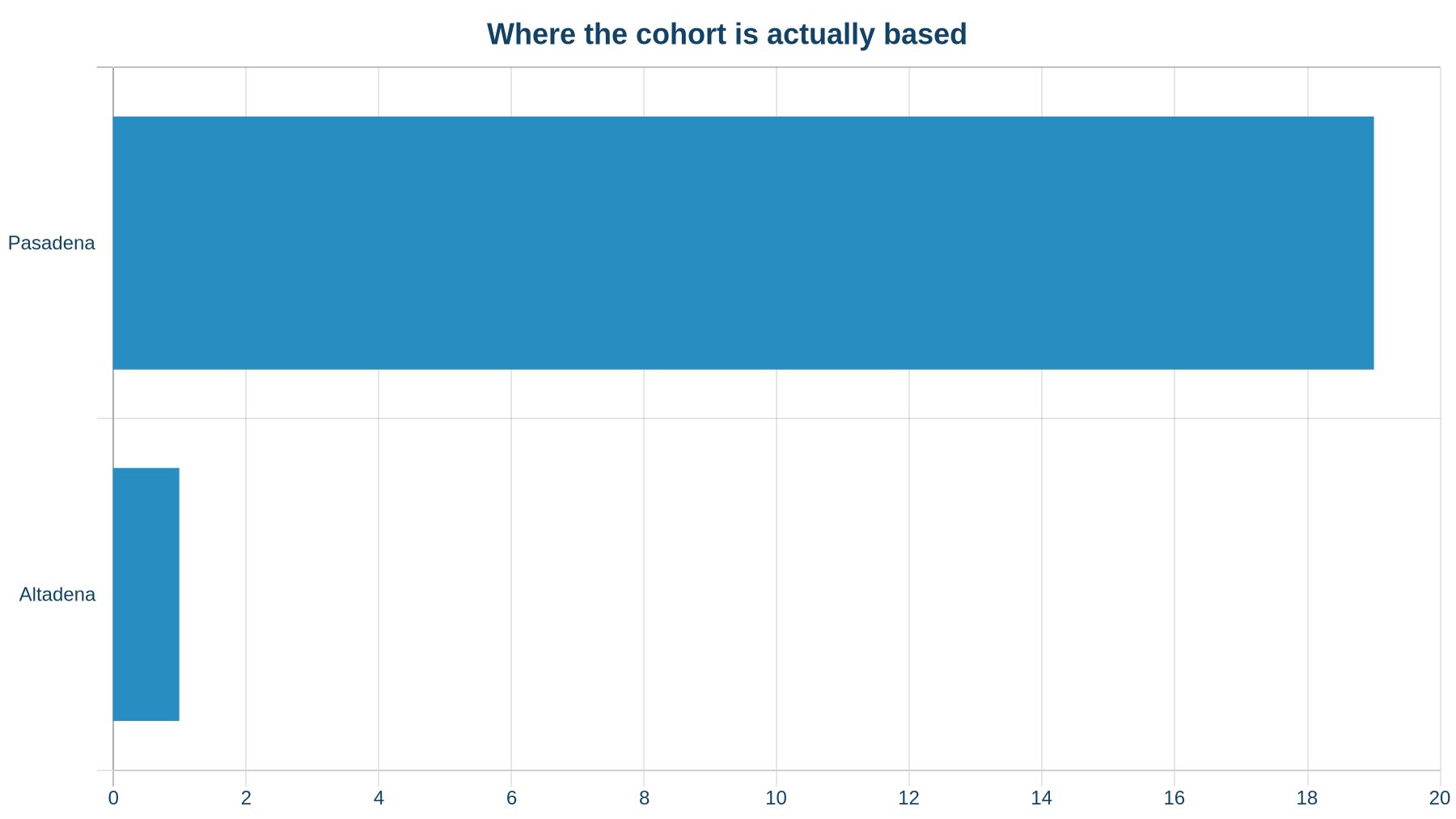
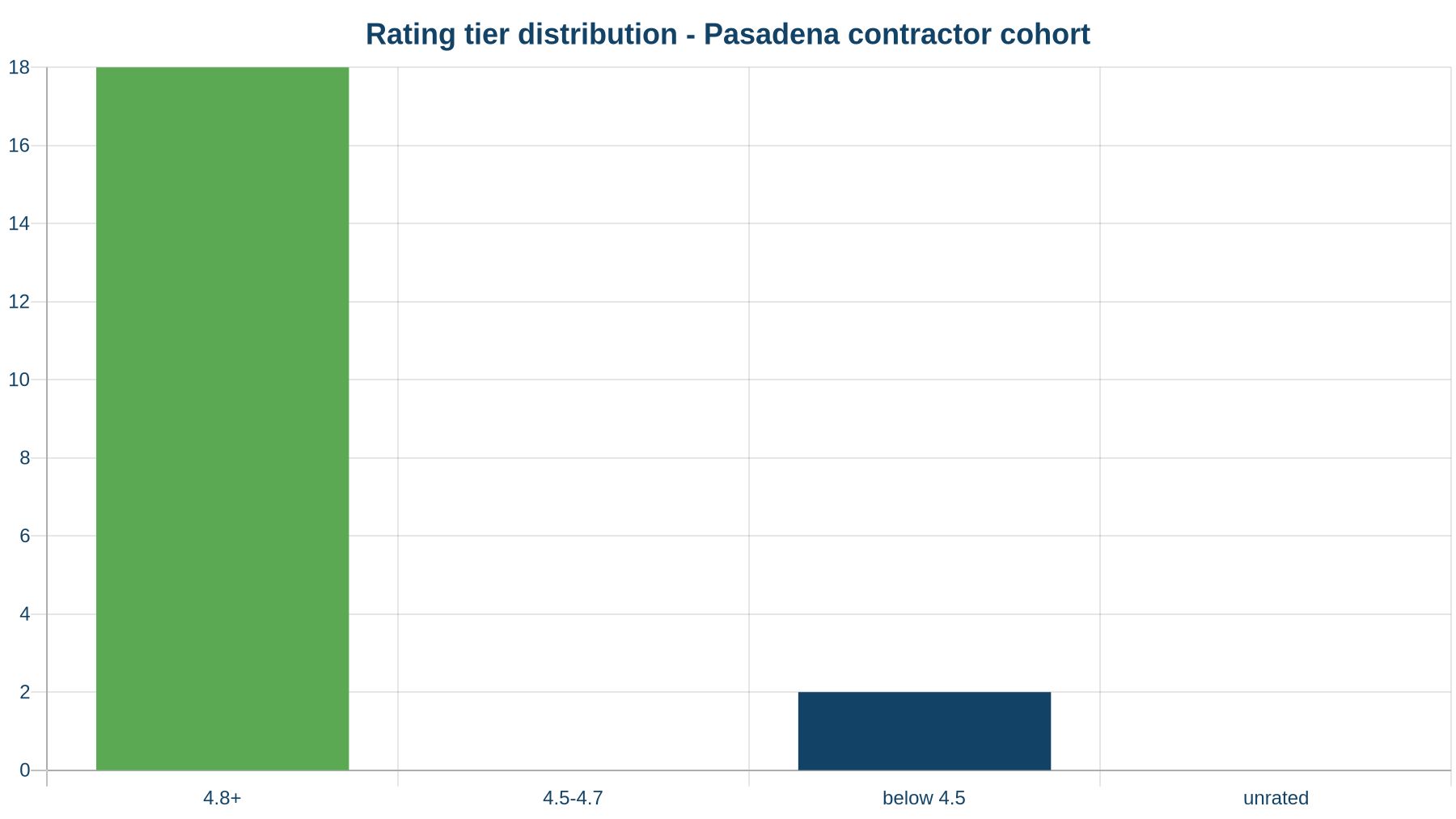
We audited 20 general contractor profiles within 5 km of Pasadena to see who Google’s Maps-grounded AI actually surfaces. When we asked it for a general contractor in Pasadena, 5 of the 20 made the cut. Here’s the part that should get your attention: 19 of those 20 businesses are based in Pasadena itself. Almost everyone competing for that search is local, so proximity isn’t the filter — signal quality is. The clearest line between the surfaced and the skipped was reviews: a median of 22 reviews for the profiles the AI recommended, against 8 for the ones it passed over.
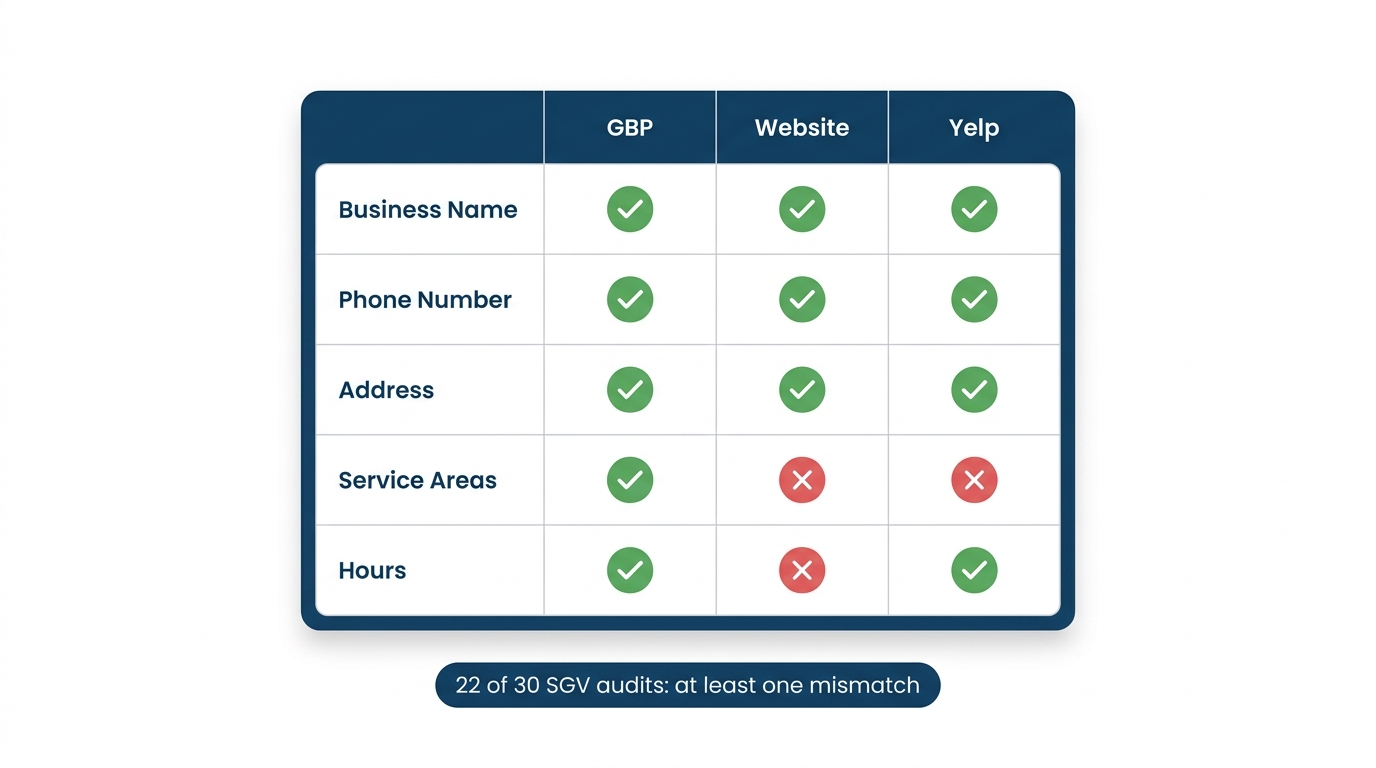
Your website says you serve Pasadena and Arcadia. Your GBP lists Pasadena, Monrovia, and Temple City. Your Yelp page still has the old phone number from before you got the second truck. To a human, that’s just a messy business that hasn’t kept up with its listings. To an AI, it’s a conflict it can’t resolve.
Research cited by Search Engine Journal is direct about this: “When they conflict, it gives the assistant conflicts to sort out, which can affect how your business shows up.” The same report found that AI models cite an average of roughly 12 domains per response — with ChatGPT pulling from nearly 19 sources and Grok from 27. Every one of those sources is either confirming your story or muddying it.
What “Coherent Data” Actually Means in Practice
This isn’t about stuffing your listings with keywords. It’s about making sure the same facts appear the same way everywhere. Five fields, checked across every platform you appear on:
Name. Pick one version and use it everywhere. “Garcia Plumbing,” not “Garcia Plumbing & Drain” on Google and “Garcia’s Plumbing Services” on Yelp.
Phone number. One number, consistent everywhere. If you changed it, update every listing. Yes, all of them.
Address. If you’re a service-area business and don’t show a street address publicly, that’s fine — but the decision needs to be consistent. Don’t hide it on GBP and publish it on your website.
Service areas. List only the cities where you want to show up in AI answers and can realistically take a job call — then make sure every platform reflects the same list. A GBP that claims fifteen cities while your website mentions three is exactly the kind of conflict the research above describes: the AI has two stories about where you work, and no way to tell which one is true.
Hours. If you take emergency calls at 11pm, say so consistently. An AI that reads “open 24/7” on your website and “Mon–Fri 8am–5pm” on your GBP has no clean answer to give.
The audit itself is fast. The fixes can take longer — some directories make updates slowly, and a few require identity verification before they’ll change a phone number. Plan for a week of follow-up, not an afternoon of clicking.
Reviews Are a Signal, Not Just Social Proof
A lot of contractors in the SGV treat reviews as a nice-to-have. Post a good job, maybe ask the customer to leave something on Google. That’s not enough anymore.
AI systems read review content, not just star ratings. A review that says “Miguel fixed our burst pipe in Alhambra at 2am, showed up in under an hour” does something a 5-star rating alone doesn’t: it confirms your service area, your response time, your trade, and your reliability — all in one sentence. That’s structured, real-world signal the AI can use to place you confidently in a local answer.
As Search Engine Journal’s analysis of AI local signals puts it: “If these key details are incorrect or don’t align, no AI tool can correct the original data for you.” No AI tool will fix it for you. You have to fix it yourself, at the source.
Three things that move the needle on reviews right now:
- Ask every completed job — not once a month in a newsletter, but at the door while you’re still on the property.
- Respond to every review, including the bad ones. A response shows the AI (and the next customer) that a real, active business is behind this listing.
- Get reviews on more than one platform. Google matters most, but Yelp and Nextdoor mentions in your service cities add confirming signals across the 12-plus sources an AI is likely reading.
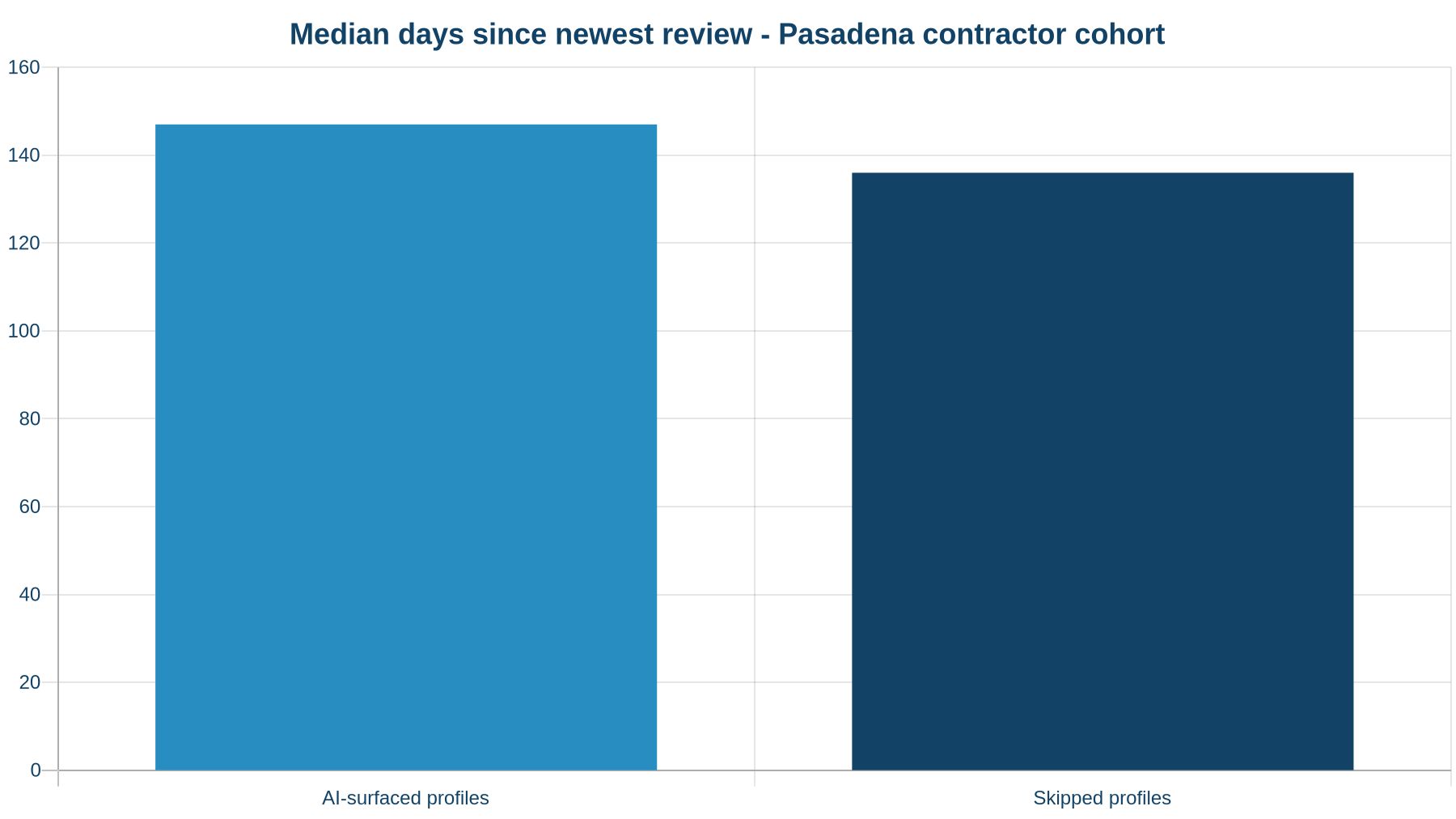
Our Pasadena audit backs this up from the outcome side. The review-count gap was the clearest line between surfaced and skipped profiles — a median of 22 versus 8 — and recency alone didn’t explain it: the surfaced profiles’ newest reviews were actually slightly older (147 days versus 136). Volume did the work. Nearly every profile in the cohort held a 4.8-star rating or better, so stars weren’t the differentiator either — the businesses that got recommended were the ones with a deep bench of reviews behind the rating. That’s what happens when you do the work in Monterey Park and ask the customer to say so, in writing.
What to Do Monday Morning
Run the five-field check above — name, phone, address, service areas, hours — across your GBP, your website, Yelp, and Nextdoor. Mark every mismatch. Fix in order of platform authority (Google first, then Yelp, then the rest). Verify each update actually went live before you move on.
To see what the AI is saying about you right now, run our free Does AI Recommend You? check — it asks ChatGPT, Perplexity, and Gemini for the best in your trade in your city and shows whether they name you or a competitor. If you want the fixes done faster, our local SEO service includes exactly this kind of data audit — we check every platform your business appears on against a single source of truth and return a prioritized fix list within 48 hours.
The businesses winning AI recommendations in the SGV right now aren’t the ones who bought an “AI SEO package.” They’re the ones whose name, phone, address, hours, service areas, and reviews tell the same story on every platform the AI reads. That’s a solvable problem. Start with Monday’s check.