TL;DR
Why is Google's AI Overview showing my competitors instead of my business?
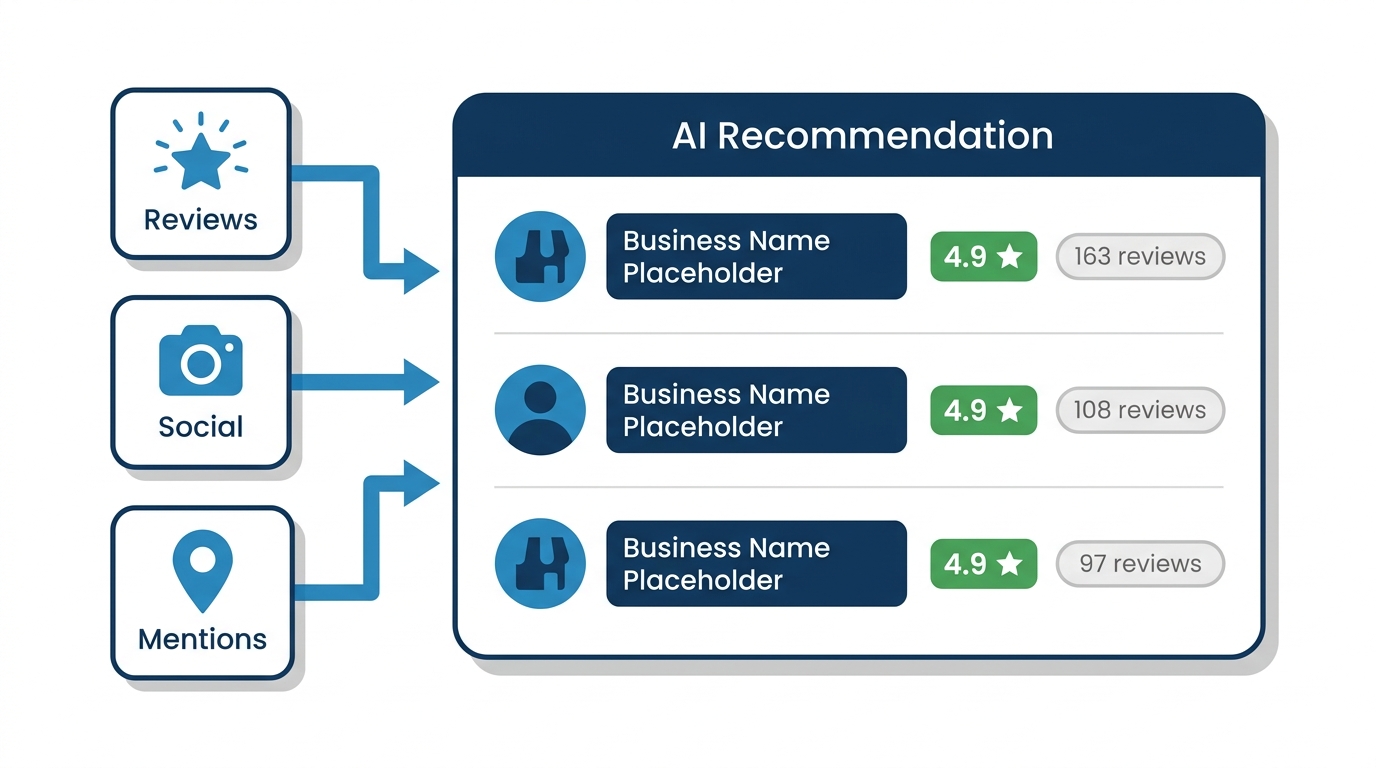
AI Overviews favor profiles with high review counts and recent reviews — not just map pack rankings. If your review volume is low or your last review is more than a few weeks old, the AI treats your profile as stale and cites a competitor or a directory listing instead of you.
Someone in San Marino searches “best-rated locksmith in San Marino” on their phone. Google’s AI Overview fires before they ever see a map pack. It names a service area and cites a source. That source is not your website. It might not even be a business in San Marino — our audit found zero of the 15 competing locksmith profiles in that cohort were actually based in the city itself.
You didn’t do anything wrong. Your profile is live, your hours are set, you have reviews. But the AI picked someone else’s signals and someone else’s content to answer that question. The phone doesn’t ring.
This is the visibility problem the trades need to understand clearly — and fast.
The Myth: If You Rank on the Map, You’re Fine
Map pack rankings and AI Overview citations are not the same thing. They pull from overlapping but distinct signals, and a business can sit comfortably in the top three map results and still be invisible when Google’s AI composes its answer.
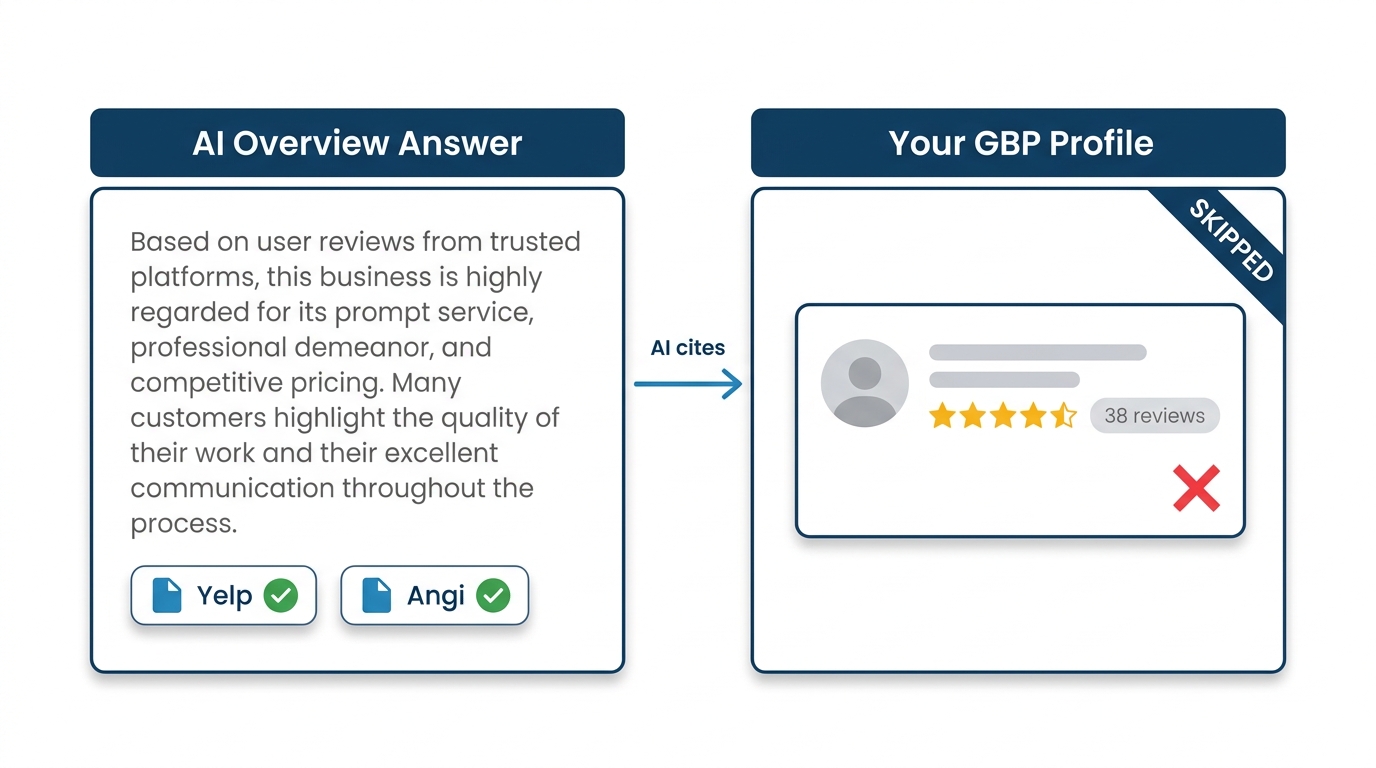
Shero Commerce’s analysis of AI citation behavior across Google AI Mode, ChatGPT, and Perplexity found that only 2.8% of the 1,851 sources cited were brand-owned pages. The biggest citation category — 59% of all sources — went to third-party editorial and review sites. When AI tools did recommend a specific brand by name, the brand’s own page was cited in only 31% of those cases.
For a plumber or locksmith, that third-party layer is Yelp, Angi, HomeAdvisor, and local directory pages. The AI recommends “a locksmith near San Marino” and cites a directory listing that may or may not be accurate, up-to-date, or even yours.
You built the business. Someone else’s aggregator page gets the citation.
There’s a legal fight that makes this dynamic even clearer. In the Penske Media vs. Google antitrust hearing, Judge Amit Mehta — the same judge who found Google to be an illegal monopoly in Search — told Google’s attorneys that the AI Overviews situation “seems really unfair.” He noted that Google ingests content from across the internet to power AI answers while other AI companies pay publishers for that same content. His observation: Google built a product improvement “on the backs of the publishers.”
For home-service businesses, the translation is direct: Google’s AI is summarizing content about your category — how to choose a locksmith, what fair pricing looks like — and that content was written by Angi, Yelp, and home-improvement publishers. Their sites get cited. Your profile gets skipped unless your own signals are strong enough to force the AI to acknowledge you directly.
What Google’s AI Is Actually Looking At in San Marino
When we asked Google’s Maps-grounded AI for a locksmith in San Marino, only 2 of the 15 profiles in our audited cohort were surfaced in the AI response. Here’s what separated them.
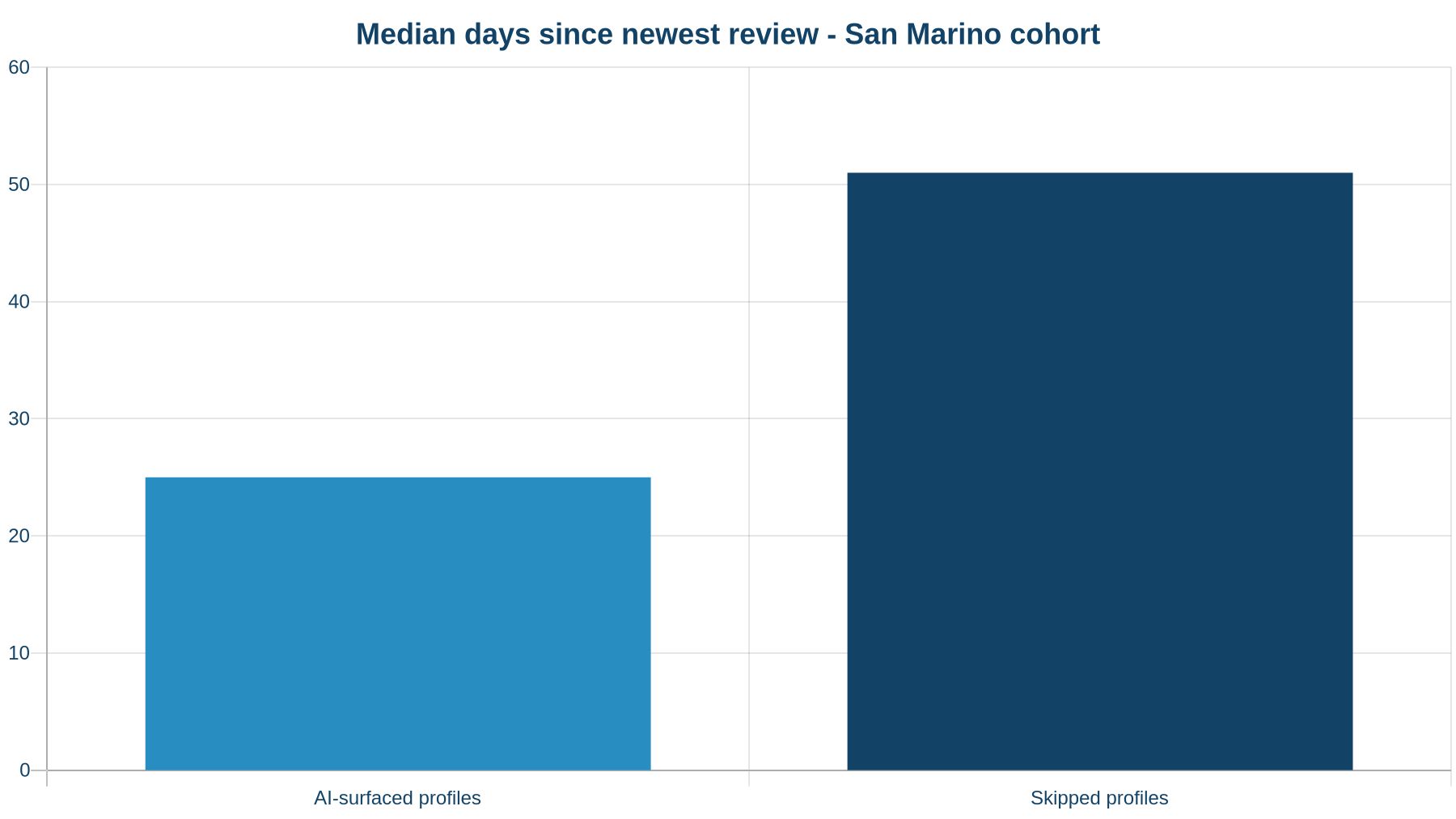
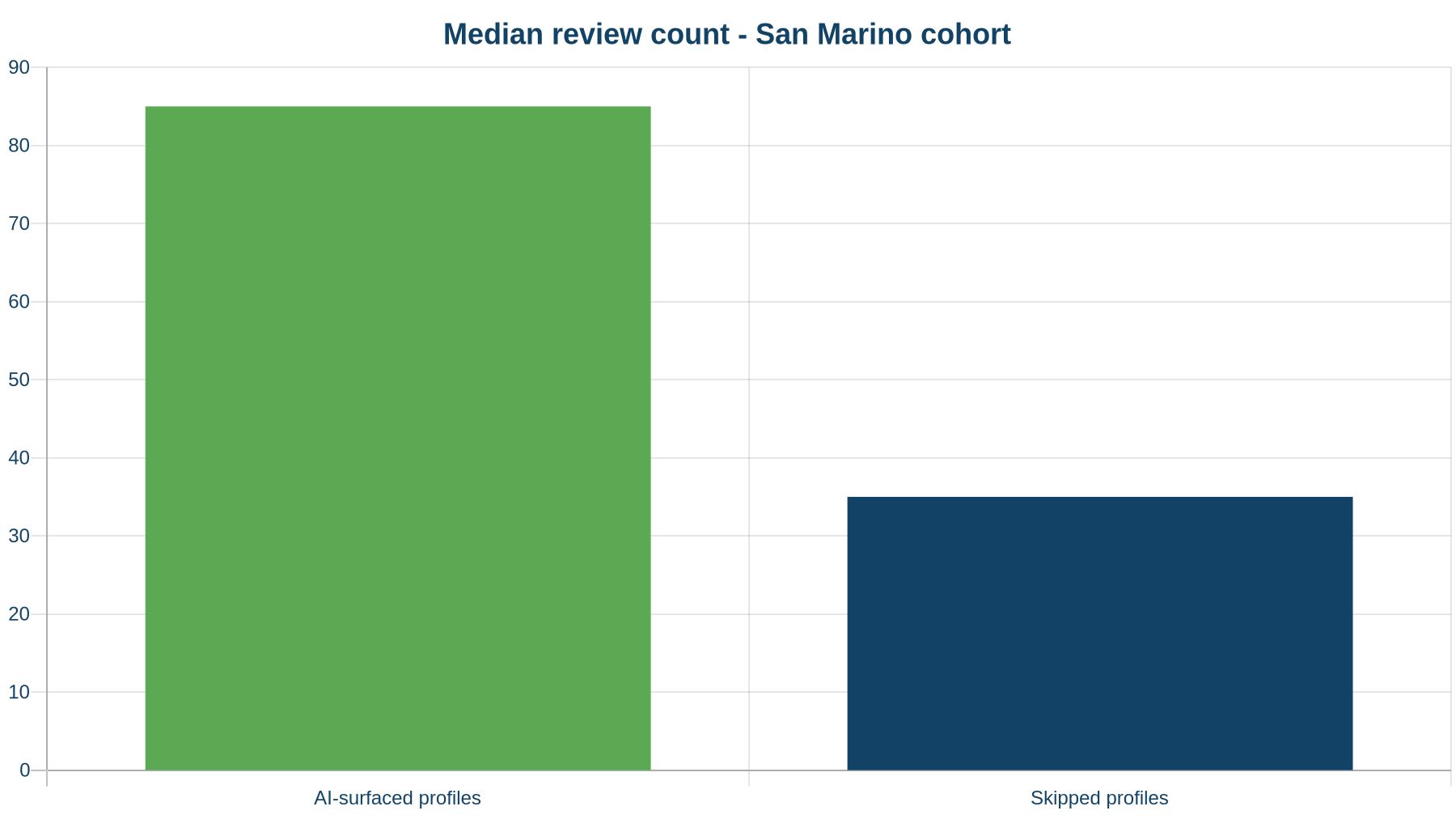
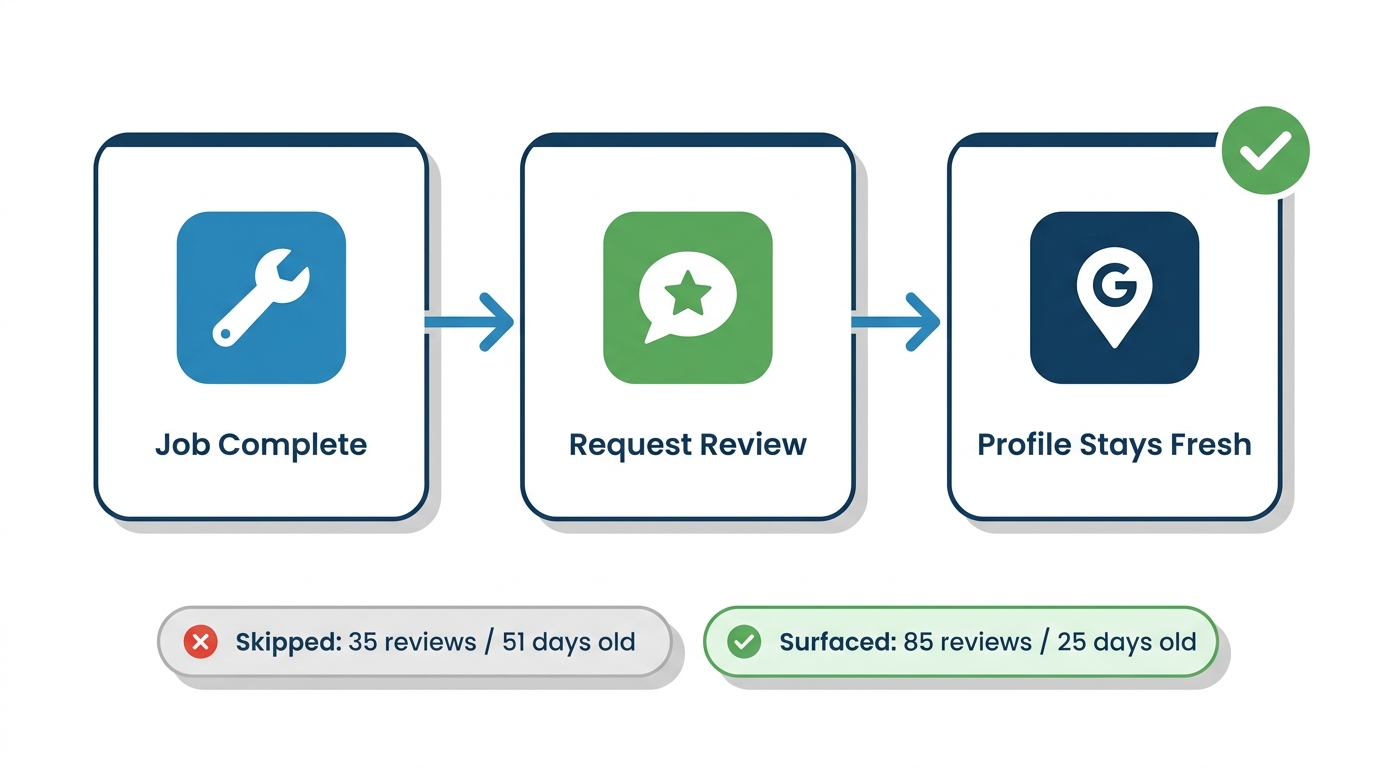
The two surfaced profiles had a median newest-review age of 25 days. The skipped profiles had a median newest-review age of 51 days — more than three weeks older. The surfaced profiles had a median review count of 85. The skipped profiles had a median of 35.
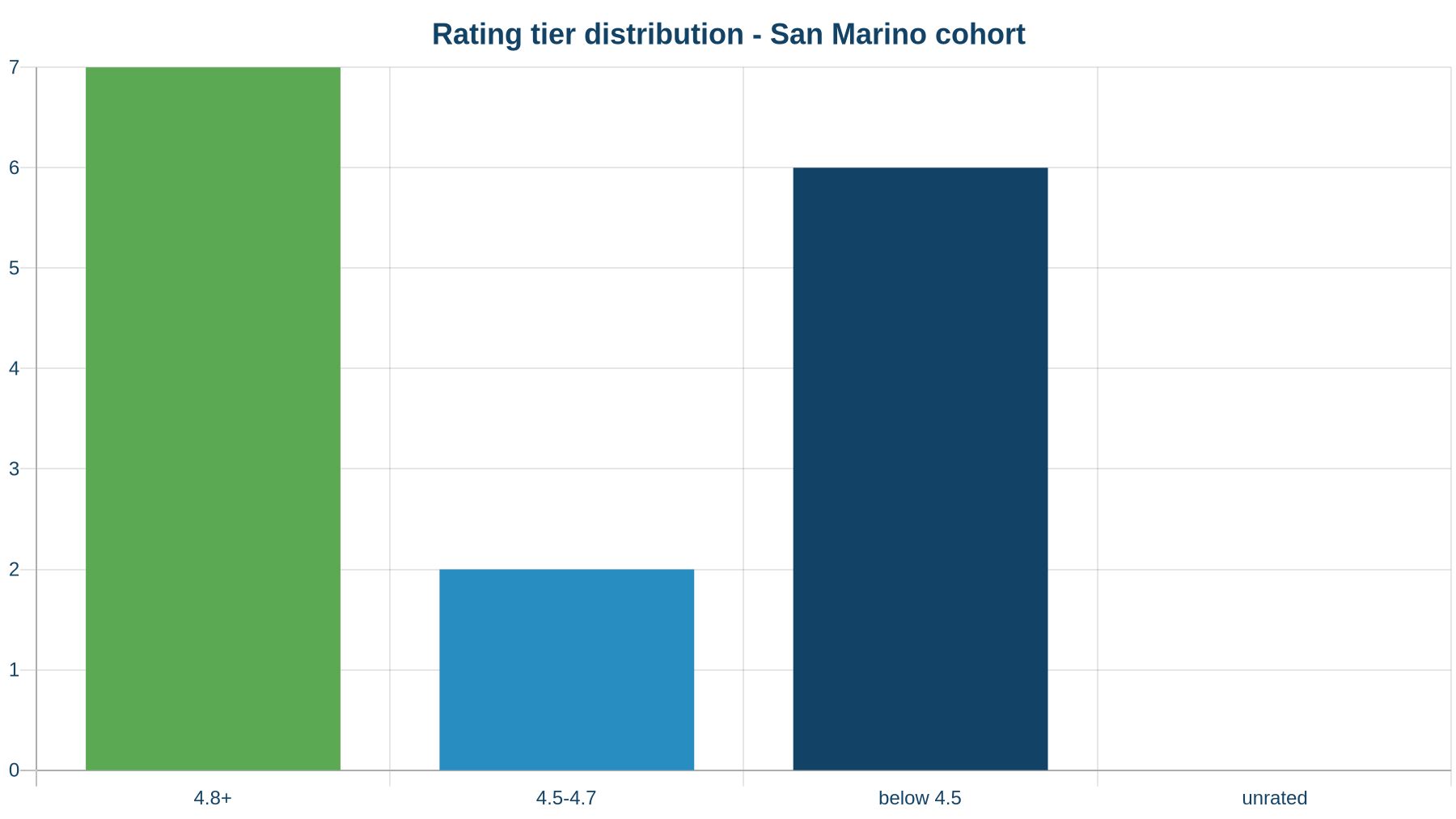
Rating tier told us almost nothing. Seven of the 15 profiles in the cohort sat at 4.8 stars or above, yet most were still skipped. Stars aren’t the signal. Recency and volume are.
Profile A — one of the two surfaced — had 161 reviews with its newest review 50 days old, hours set, and a base in Pasadena. Profile B — skipped — had 35 reviews, a newest review also 51 days old, hours set, and was also Pasadena-based. Same city. Same hours. Same star range. The difference was review volume and the consistent signal of people actively choosing and rating that business.
The AI is reading recency and volume as a proxy for trust and relevance. A profile that hasn’t gotten a new review in seven weeks looks stale to an algorithm deciding what to cite in a real-time answer.
Why San Marino Makes This Especially Painful
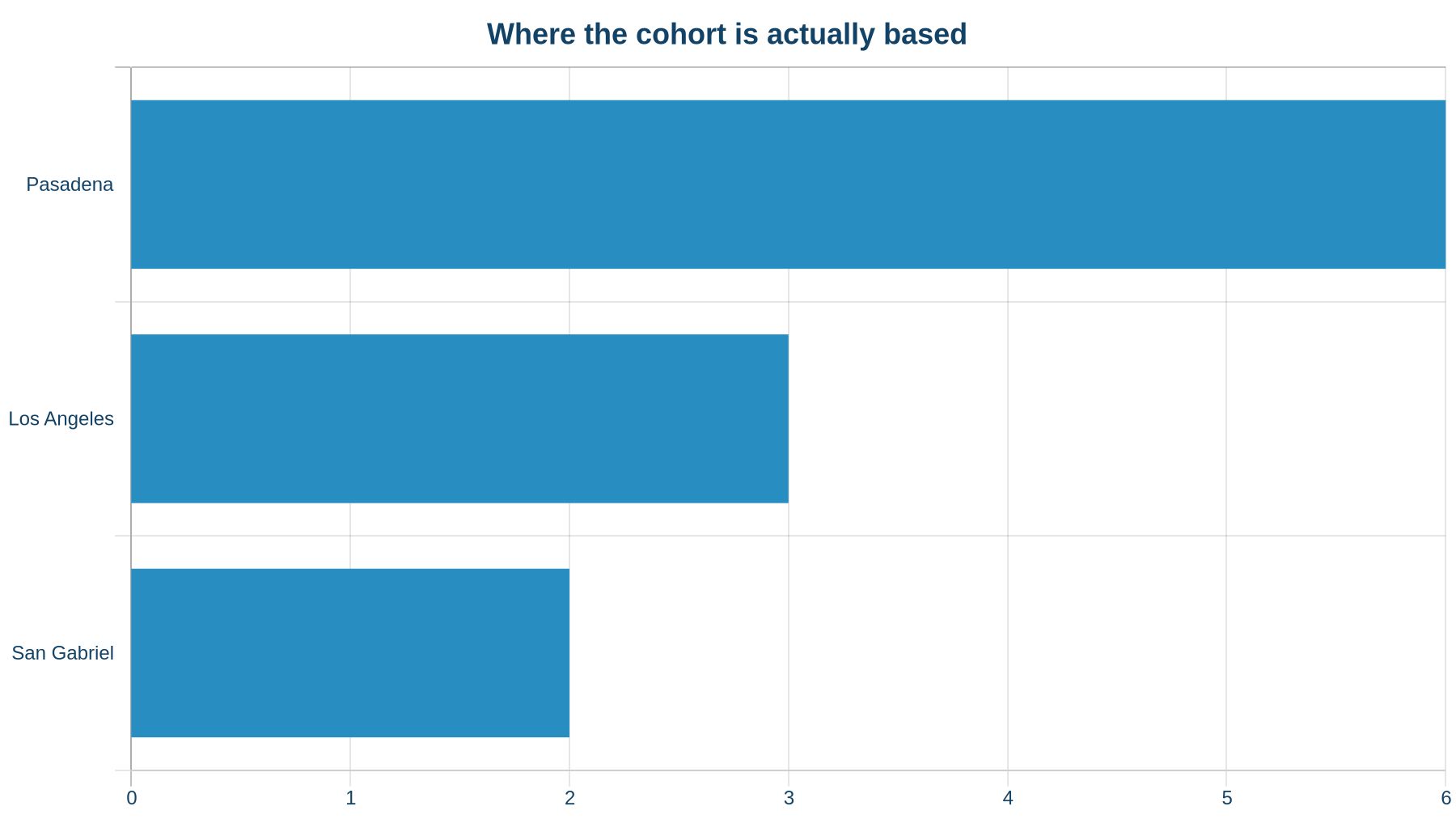
Not one of the 15 profiles competing for San Marino locksmith searches was physically located in San Marino. The top host cities were Pasadena (6 profiles), Los Angeles (3), and San Gabriel (2). The cohort density in this market was just 0.19 profiles per square kilometer within 5 km of the city center.
That low density matters. San Marino is a small, affluent, low-commercial-density city — it doesn’t have a deep bench of local service businesses with established Google Business Profile presences. That sounds like an opportunity, and it is. But it also means a well-reviewed Pasadena operator with strong review velocity can dominate AI citations for San Marino searches without ever setting foot in the city. The AI didn’t penalize anyone for being based in Pasadena. It surfaced whoever had the strongest review signals.
If you’re a locksmith or HVAC tech actually working San Marino jobs, you’re competing against Pasadena-based profiles with 80, 100, 160 reviews. If your count is sitting at 30 or 40, the AI doesn’t know you’re the better choice. It only knows what the signals say.
This dynamic plays out differently in a dense urban market like central LA, where dozens of profiles compete for every query and proximity carries more weight. In a low-density market like San Marino, review strength is the tiebreaker — and right now, it’s breaking against most businesses serving the area.
The Fix Is Not More Blog Posts
Most agencies will tell you to “create more content” and sell you a blog package. That’s the wrong answer for a locksmith or HVAC tech.
The signals that drove AI surfacing in our San Marino cohort were review volume and review recency — not keyword density, not blog frequency, not schema markup on a service page nobody reads.
Google’s AI Mode is also now showing developing-topic link carousels — horizontal rows of article cards inside AI responses — and it surfaces “Preferred Sources” within those carousels. More than 600,000 unique sources have been selected as Preferred Sources as of August 2026. That’s a content-layer opportunity, but it’s downstream of the profile signals. Get the profile right first.
Here’s what actually moves the needle for a service business in the SGV:
Review velocity. The AI reads freshness. A profile with 85 reviews and one posted 25 days ago reads as active. A profile with 35 reviews and nothing new in seven weeks reads as dormant. You need a repeatable system for asking after every job — not a one-time push.
Review count. The gap between surfaced and skipped in our San Marino audit was 85 vs. 35. That’s not a small difference. If your competitors in Pasadena and San Gabriel are accumulating reviews and you’re not, you’re already behind.
Profile completeness. In our cohort, 0% of skipped profiles were missing hours — so hours alone didn’t explain who got skipped. But incomplete profiles (missing services, sparse descriptions, no photos updated in months) give the AI less to work with when constructing a citation.
NAP consistency across directories. Search your business name on Yelp and Angi right now. If the phone number or address differs from your Google Business Profile by even one character — a suite number, an abbreviation, an old area code — flag it for correction this week. The AI defaults to the cleaner source, and that source is usually not your GBP.
If you want to see how your profile stacks up against the profiles that are getting cited, run it through our free Map Pack Grader — it scores your reviews, rating, and photos against the winners in your city and shows the gaps. Closing them is what our Google Business Profile management does — that’s the layer where the surfacing decisions get made.
What to Do Monday Morning
Pull up your Google Business Profile and answer three questions:
- When was your last review posted? If it’s more than 30 days ago, that’s the first problem to fix.
- How many reviews do you have? In our San Marino cohort, the skipped profiles had a median of 35 reviews; the surfaced ones had 85. If you’re under 50 and a Pasadena competitor is over 80, you are losing AI citations to them right now.
- Are your services, hours, and description fully filled out — not just “good enough,” but actually complete?
Then ask the AI itself. Our free Does AI Recommend You? check asks ChatGPT, Perplexity, and Gemini for the best locksmith in San Marino and shows whether they name you or someone from Pasadena.
You don’t need to understand how AI Overviews work at a technical level. You need to look like the most active, most trusted, most reviewed option in your service area. The AI will find you when you do.